
Related videos:
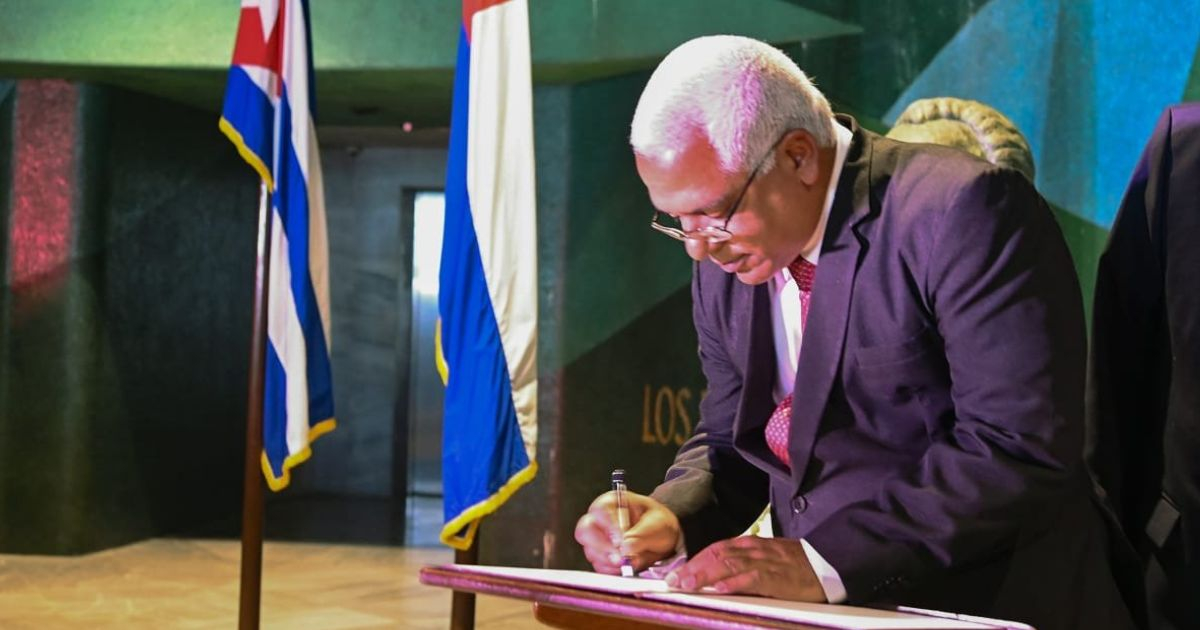
The jurist Oscar Manuel Silvera Martínez assumed the presidency of the Supreme People's Court (TSP) this Tuesday during an official ceremony held at the José Martí Memorial in the Plaza de la Revolución, led by Miguel Díaz-Canel, Esteban Lazo, and other high-ranking officials of the Cuban regime.
According to the announcement from the Presidency of Cuba, the event also marked the beginning of the Judicial Year 2026, in which Silvera promised that the Cuban judicial system would continue to be “a guarantee of the Revolution” and defended his loyalty to the Communist Party and the political leadership of the country, leaving no room for doubt: the priority is to maintain the regime, not “justice.”
"The Revolution will always guarantee a delivery of justice that is worthy of the dignity and courage of the people (...). We will defend the Homeland against provocations, insults, and aggression from its enemies," Silvera affirmed in his speech, clearly demonstrating his unwavering support.
During the ceremony, the president of the Court remembered the "heroes and martyrs" of Cuba and those "fallen in combat in the sister Bolivarian Republic of Venezuela," referring to the Cubans who died on military missions in that country.
Silvera dedicated part of his speech to supporting the Cuban leader and condemning the recent Executive Order signed by Donald Trump, which declared Cuba "a threat" and sanctions countries that trade oil with the island. He described the measure as a "violation of International Law" and a "coercive and illegal act."
"The members of the judicial bodies reaffirm our support for the Revolution, and we will defend it with the same courage as the historic generation led by Fidel and Raúl," he said, repeating the same old rhetoric typical of 'suitable' officials.
In his speech, the new president of the TSP also addressed the challenges facing the judicial system for 2026, including the digital transformation of the courts, the expansion of the electronic judicial file, and the improvement of services for citizens who are on probation.
Oscar Silvera, who served as the Minister of Justice and was a member of the Executive Group for Legislative Capacity responsible for implementing the norms derived from the 2019 Constitution, was proposed by Miguel Díaz-Canel and approved by the National Assembly of People's Power to hold the position.
With this designation, the regime consolidates political control over the judiciary, which in Silvera's words, "belongs to the people and to the Revolution" and operates under the principle of "defending the Homeland against any aggression." Is it true?
Filed under: