
Related videos:
In an unexpected move that confirms the instability within the Cuban regime, Miguel Díaz-Canel announced this Thursday a series of changes in the country's judicial and political leadership, amid rising social discontent and a crisis of internal legitimacy.
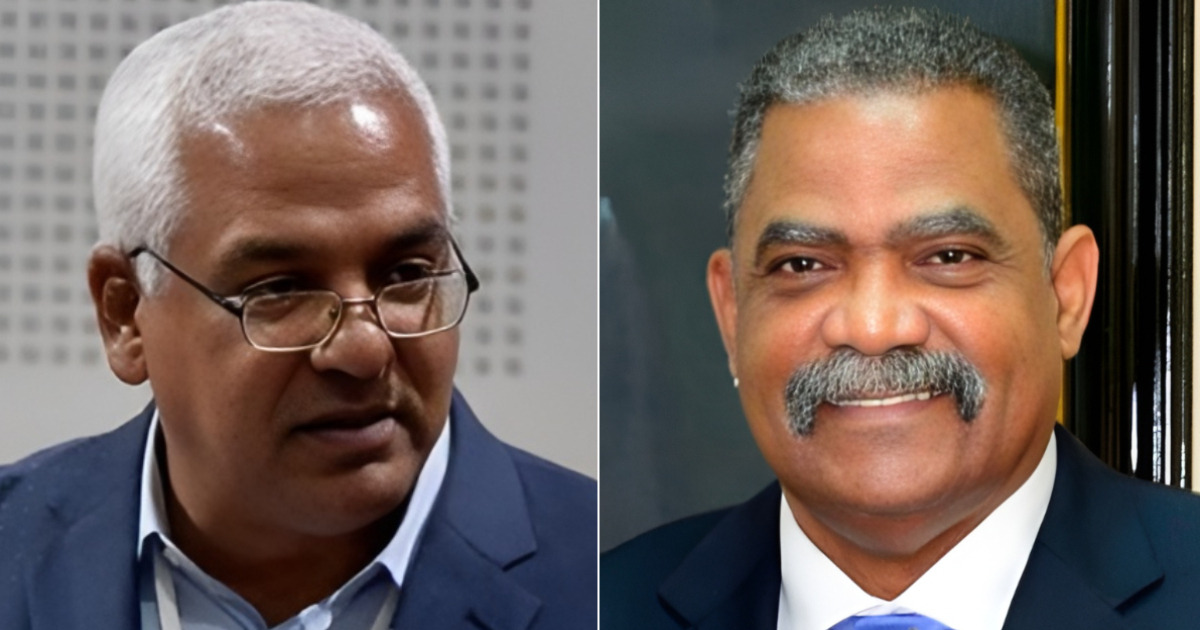
During a session of the State Council, the leader announced that the veteran magistrate Rubén Remigio Ferro had been “relieved of his position” as president of the Supreme People's Court, the highest judicial body in the country, and that Óscar Silvera Martínez, the current Minister of Justice, will take over in his place.
The figure of Remigio Ferro has been shadowed by the privilege of his family. His son, Rubén Remigio, has been the focus of numerous reports showcasing his extravagant and luxurious lifestyle, which is far removed from the austerity that the regime preaches.
According to posts on social media and digital portals, the young man is fond of expensive accessories, wears brands such as Nike, Lacoste, and Louis Vuitton, and frequently travels with his partner to destinations like Paris, London, Cancun, or Buenos Aires.
The images shared on their social media portray a lifestyle that starkly contrasts with the reality of young people in Cuba, where the average salary is insufficient to meet basic needs.
This contrast—between the misery of the people and the extravagance of the children of high-ranking officials—has become a symbol of the level of corruption and moral disconnection that prevails among the elites of the judicial and political power in the country, and it may have influenced their “liberation.”
The decision was presented as part of a supposed process of "natural renewal," although everything points to a strategic realignment within the Communist Party.
According to the report from Cubadebate, the lawyer Rosabel Gamón Verde, who has been the first deputy minister of the department, was proposed to replace Silvera as head of the Ministry of Justice. If her appointment is confirmed, she would become one of the few women leading a ministry in the current cabinet.
Wave of resignations in Parliament and regime organizations
The president of the National Assembly of People's Power (ANPP), Esteban Lazo Hernández, also reported that the resignations of three key figures in the political apparatus were received:
- Homero Acosta Ávila, secretary of the Council of State and a trusted man of Raúl Castro.
- Ulises Guilarte de Nacimiento, former general secretary of the Central Workers' Union of Cuba (CTC).
- Ricardo Rodríguez González, former president of the University Student Federation (FEU).
According to the official note, only the resignations of Guilarte and Rodríguez were accepted. Homero Acosta's has not yet been confirmed, which fuels speculation about possible internal tensions among factions of power.
A change that comes after the storm
The departure of Ricardo Rodríguez González comes after the unprecedented digital storm unleashed in June, after publicly supporting Díaz-Canel and the state-owned company ETECSA for the increase in telephone and internet rates.
Thousands of university students and citizens reacted with indignation, flooding social media with the slogan "It doesn't represent us," in open rejection of his leadership and the political servility of the FEU. Rodríguez's downfall symbolizes, for many, the rift between the new Cuban generations and the official institutions.
The Twilight of Guilarte and the Union Crisis
For his part, Guilarte de Nacimiento, who officially handed over the leadership of the CTC in August after 12 years in office, has now formalized his resignation as a deputy.
Under his leadership, the Workers' Central was accused of acting as a compliant arm of the Communist Party, lacking independence and a genuine defense of labor rights.
The leadership change in the CTC, taken on by Osnay Miguel Colina Rodríguez, has not generated enthusiasm among the labor sectors, who see the change as "more of the same."
Guilarte's resignation, however, marks the end of a cycle in which socialist trade unionism deepened its historic disconnection with workers.
Readjustment and signs of crisis
These movements occur in the context of a profound economic crisis, widespread blackouts, and growing social discontent, which have forced the regime to maneuver to maintain political control.
Analysts consulted by CiberCuba indicate that the changes reflect internal fractures and a loss of trust among the elites.
The recent dismissals, resignations, and substitutions make it clear that Díaz-Canel's government —supported by Raúl Castro and the military group GAESA— is attempting to restructure its power in response to the growing isolation and loss of credibility within the country.
Meanwhile, in the streets and on social media, the perception is different: the regime is wavering, and the changes in the leadership are not seen as signs of renewal, but rather as desperate attempts to survive a worn-out system.
“Pieces are moving, but the board remains the same,” wrote an internet user from Havana. “What changes are the names, not the dictatorship.”
The "renewal" announced by Díaz-Canel does not extinguish the fire. On the contrary, it seems to stoke the suspicion that Cuba is undergoing a new phase of internal strain, in which even the loyal are not safe.
Filed under: