
Related videos:
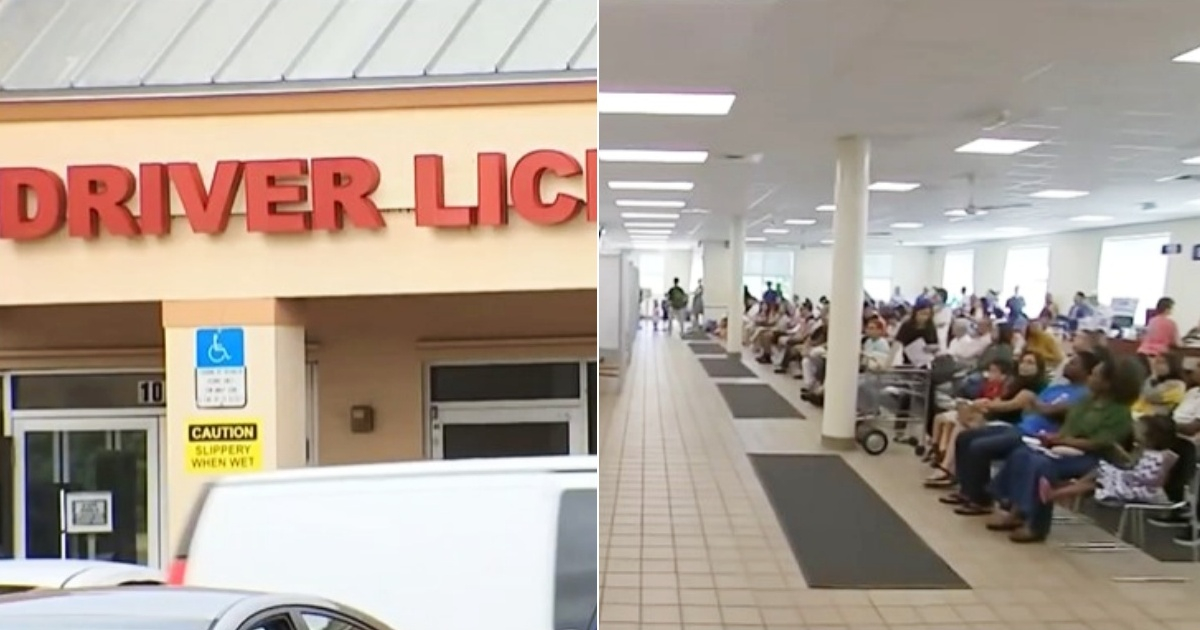
Daniela, a young resident of South Florida, eagerly went to the Miami-Dade Tax Collector's office this Thursday to pick up her driver's license.
She had completed all the steps of the process: she took a course, passed her exam in Spanish, and attended the corresponding appointment. However, upon arrival, she received a disconcerting news: she must retake the exam.
Her dismay turned to tears as she held the papers that confirmed her approval, as reported by Telemundo 51.
Not only were they denied the license, but they also face a new obstacle: starting today, all exams will be in English only.
What justification did they give you?
The explanation given to Daniela was that her case had been "randomly selected" for a mandatory retake of the exam, a measure permitted by Florida law.
According to this regulation, "a client who takes (and passes) the knowledge exam or the practical driving test for Class E through an authorized external administrator may be randomly selected for a mandatory retake of the exam without prior notice."
Only after passing again in a state or tax collection office will your final license be granted.
Initially, Daniela could have taken the exam again this Thursday, but the appointments were already fully booked.
The problem is that starting from this Friday, February 6, a new policy will take effect that eliminates exams in other languages, including the option to take them in Spanish.
"It's frustrating because I will have to do it when I learn English," Daniela explained to the aforementioned media outlet.
"We try to do everything right, and it keeps getting more complicated."
A controversial change
The Florida Department of Highway Safety and Motor Vehicles (FLHSMV) confirmed that as of February 6, all driving tests, both theoretical and practical, are administered exclusively in English.
This includes all classifications of driver's licenses, including oral exams, and translation services are also eliminated.
Previously, Florida offered the exams in multiple languages, including Spanish, which made it easier for thousands of immigrants to access their licenses.
The new measure has been defended by Governor Ron DeSantis, who described it as a “good reform,” arguing that “people need to be able to read traffic signs.”
The official justification also points to road safety reasons. Some state officials have argued that this policy will help reduce accidents by ensuring that all drivers understand the language of traffic signs.
The tax collector, DAriel Fernández, has downplayed the issue and has urged to consider it a challenge, a measure that imposes "improvement" for drivers.
Security or exclusion?
However, several experts and organizations have questioned the effectiveness of this measure. According to PolitiFact, there are no "academic studies or government reports indicating that drivers who take the tests in foreign languages pose a greater threat."
They also add that "the effect of Florida's policy on overall road safety may be minimal because traffic signs often prioritize universal symbols over words."
In fact, one of the most immediate and concerning consequences of this change could be an increase in the number of unlicensed drivers.
People who do not speak English well but need to drive for work or to take their children to school may choose to drive without valid documents due to the impossibility of passing the exam.
Filed under: