
Related videos:
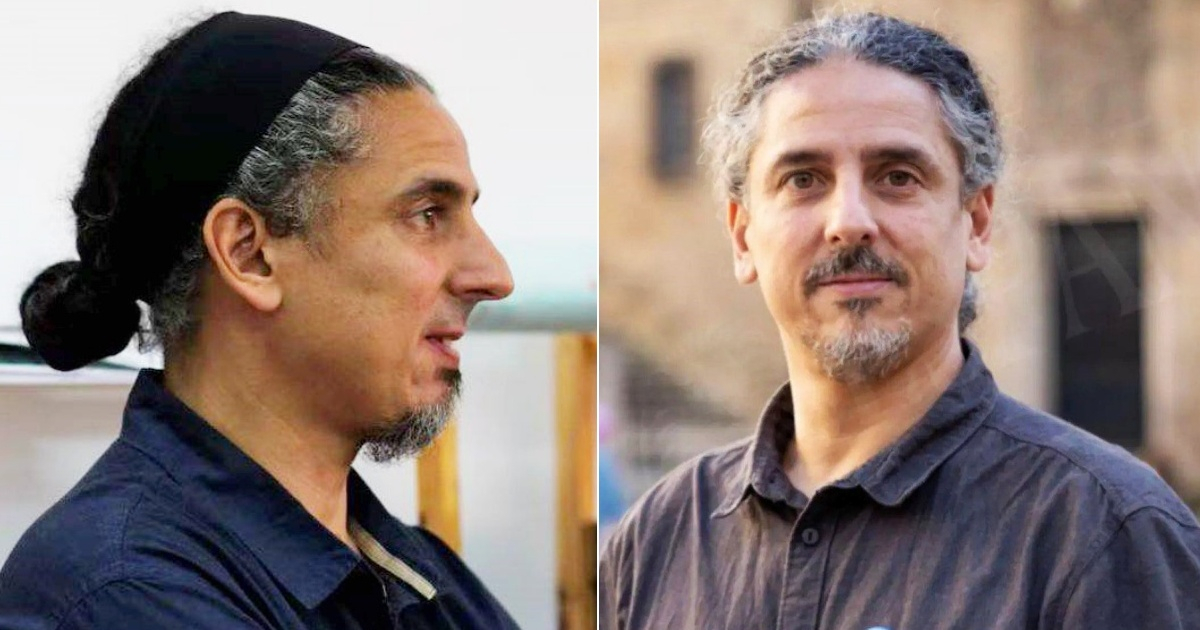
More than two months after his arrest in Havana, the extradition of Martiño Ramos Soto, a Spaniard convicted of sexually abusing a minor in his home country, remains stalled.
Although the former Galician professor has been in custody in Cuba since November 21, there is still no date set for his transfer to Spain, nor any public information about the actual status of the process.
Meanwhile, suspicions are growing about a possible lack of cooperation from the Cuban authorities regarding the extradition of someone who is also a former leader of "En Marea," a left-wing political party in Galicia.
Are there any obstacles from Havana?
According to the newspaper El ESPAÑOL, several sources close to the investigation claim that the Cuban authorities are placing obstacles in the processing of the extradition.
These obstacles are not limited to the well-known absence of a bilateral extradition treaty between Spain and Cuba—which complicates any timeline—but would have translated into additional formal requirements, delays in communication, and a restrictive use of state discretion.
“There is no official confirmation of a 'no' to the delivery, but there is a series of procedures that, in practice, block any timeline”, the cited sources indicate.
This apparent change in attitude contrasts with the initial reports coming from the island, which mentioned a supposed willingness of the Cuban government to cooperate.
Now, on the contrary, what prevails is institutional silence and a series of delays that threaten to bury the case in diplomatic bureaucracy.
The Spanish government remains silent
As concerns grow among the victim's family and political representatives, the Government of Spain has chosen a stance of opacity.
From the Ministry of Foreign Affairs, the only official response has been that "the request is being processed through official channels", without specifying deadlines, the status of the file, or ongoing procedures.
This hermeticism has been criticized by several senators from the Popular Party (PP) in the Galician city of Ourense, who submitted parliamentary questions to find out what diplomatic actions were being taken and whether there were specific difficulties with the Cuban government.
The official response, however, returned to a generic formula: “The request has been processed through official channels.”
The lack of transparency is particularly concerning because, as noted by El Español, it involves “a convicted sexual abuser of a minor, with sadistic practices, who fled to avoid imprisonment and whose sentence execution now relies on a diplomatic negotiation that no one is publicly accountable for.”
"We don’t know anything. They aren’t telling us whether the repatriation has been agreed upon, if there are any advancements, or at what stage the process is," the victim's lawyer reported, who claims that the affected party is still not receiving updated information regarding the case.
A labyrinth without a treaty
One of the main obstacles is the absence of a bilateral extradition treaty between Spain and Cuba, which requires managing the case through ad hoc judicial cooperation mechanisms.
In these non-treaty procedures, the requested State - in this case Cuba - can impose additional conditions, review whether the crime fits within its own legal framework (principle of double criminality), assess the proportionality of the penalty, and condition the extradition on specific guarantees.
All of this, even if it is in accordance with the law, paves the way for indefinite delays.
And although sexual offenses against minors are considered serious in both countries, the wide margin of discretion allows Cuba to slow down the proceedings without this implying a formal denial.
The opacity surrounding the case, both from the Cuban and Spanish sides, has generated a growing perception of obstruction and has raised alarms in judicial and political sectors that fear the convicted individual may exploit legal loopholes to evade prison.
A leak that the system allowed
Ramos left Spain just a few days before the Supreme Court upheld the ruling of the Provincial Court of Ourense.
No one requested his provisional imprisonment after the first-instance sentence. That window of freedom facilitated the escape of a convict for serious sexual offenses.
The subsequent sequence—passing through several countries, settling in Cuba, building a public identity as a photographer, and integrating into cultural circles in Havana—revealed several flaws.
The most serious issue is the fragility of control over unfirm penal sentences and the weakness of the return mechanisms when the fugitive seeks refuge in a country without an extradition treaty.
Far from hiding, and as previously reported exclusively by El Español, Ramos came to showcase a normalized life on social media under an alias.
He rented a place to live, frequented cultural settings, and, according to police sources, attempted to regularize his situation through a marriage of convenience, which ultimately led to his arrest on November 21.
Since then, the case has been caught in a process that relies on political and judicial cooperation between two states with different frameworks.
Filed under: