The Cuban regime reported on Thursday the dismantling of an international drug trafficking network that, according to their account, operated from the United States with the support of Cubans residing on the island.
The report was broadcast by the National Television News and showcased as a success of the authorities against the synthetic drugs that were attempting to enter the country.
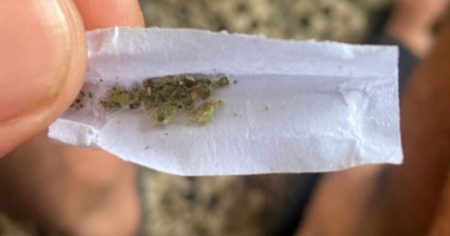
According to official information, the operation prevented more than a million doses of synthetic cannabinoids, known as químico or papelito, from reaching the population.
Drugs were introduced through aerial shipments in yogurt, gelatin, dietary supplements, and medication containers, to later be processed with chemical precursors such as acetone and distributed in various municipalities of Havana, including San Miguel del Padrón, Regla, and Diez de Octubre.
Arnoldo Ramos, head of the Criminal Investigation Section, explained that among those involved is a Cuban resident in Florida along with three other individuals based on the island, who are allegedly responsible for coordinating the entry of the substances and their internal distribution.
In the operation, 24 people were arrested, and more than 11 million Cuban pesos, several vehicles, homes, and materials used in drug manipulation were seized.
The authorities stated that the confiscated money would be sent abroad to finance new illegal operations and that the Cuban government informed the United States about the citizens involved living in Florida, without having received any response regarding the requests for cooperation or extradition.
The head of the specialized anti-drug agency, Yoan Saporta, noted that during the searches, syringes, gloves, masks, and other tools used in the production of the narcotic were seized.
The television report concluded by emphasizing the zero-tolerance policy towards drug trafficking and reiterated that Cuba is not a transit point or storage facility for drugs.
In recent days, the regime has intensified its rhetoric on security and internal control, showcasing operations of this kind as evidence of their effectiveness, in an effort to bolster their international image and distance themselves from any links to drug trafficking in the region.
The Cuban regime asserts that the most prevalent synthetic drug on the island, known as "químico," originates from the United States and that over the past two years, more than 70 trafficking operations have been thwarted.
The Ministry of the Interior attributes the rise of these substances to the use of private messaging and cryptocurrency payments to evade customs controls.
In response to international accusations, the government defended its "zero tolerance" policy and denied any connection to drug trafficking.
In a press conference, high-ranking officials accused the United States of creating a military threat in the Caribbean and dismissed the revelations of former Venezuelan general Hugo “El Pollo” Carvajal, who had implicated Cuba in the design of the Cartel of the Suns.
Filed under: