
Related videos:
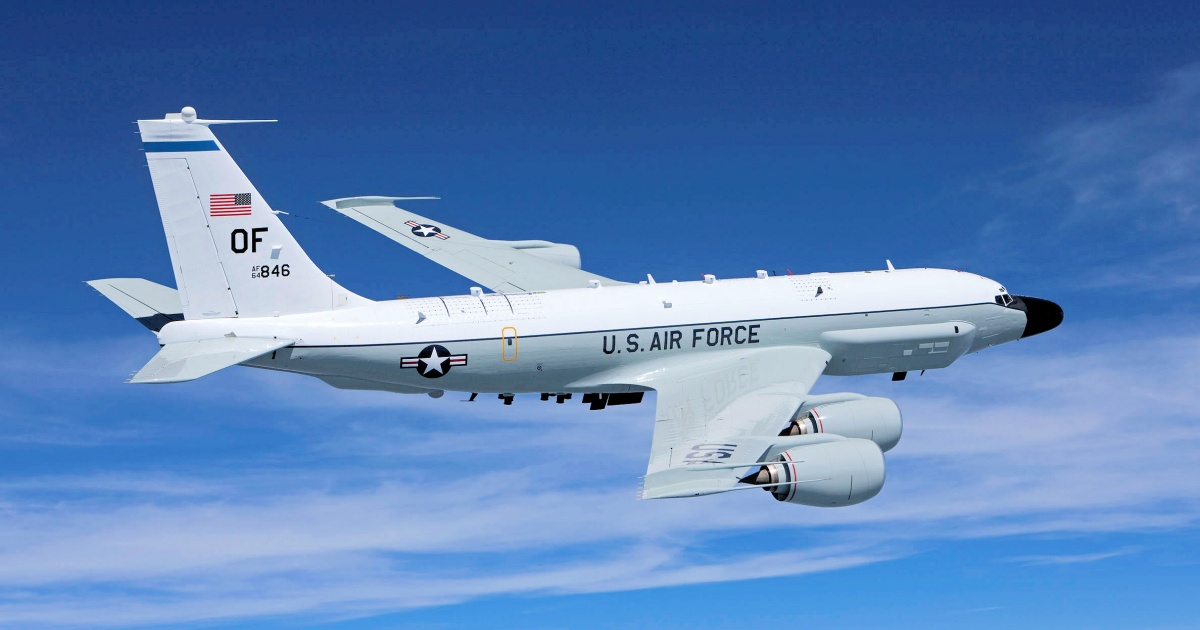
A RC-135V/W Rivet Joint spy plane, one of the most sophisticated intelligence aircraft of the United States Air Force, carried out a reconnaissance flight along the northern coast of Cuba on Wednesday, February 4, from the east to the west of the island.
The route, visible through the tracking platform FlightRadar24, began around 6:33 p.m. (local time) and traveled over international waters, parallel to the Cuban coastline, until the aircraft turned north at the height of Pinar del Río, heading towards its base in Florida.
The mission was not only visible through civilian aerial tracking means but also by satellites, which is interpreted as a clear and deliberate signal aimed at the Cuban government.
On the same day, in addition to the Rivet Joint, two P-8 Poseidon aircraft—specialized in maritime surveillance, anti-submarine warfare, and intelligence gathering—flew over areas to the west and east of Cuba, reinforcing the impression of a coordinated operation.
“ISR/ELINT Flight to the North of Cuba and the Caribbean: Signal Collection, Communications Analysis, and High Altitude Strategic Surveillance”, outlined the profile of X Falcon Eyes, specialized in monitoring military air traffic.
“There are negotiations, but we feel your breath on our necks. The narco-tyranny is not invisible; every shipment, every route, and every phone call is recorded. We’ll talk about the Russian and Chinese radars later,” he added.
According to this observer, the flight of the Rivet Joint was integrated into the so-called Southern Spear Operation, a strategic pressure campaign against networks linked to drug trafficking and the security apparatus of the Cuban regime.
These actions were complemented by the flyover of the MQ-4C Triton (Global Hawk) spy drone identified as BLKCAT5, which was tracked on February 6th north of the Cuban archipelago.
Cutting-edge spying technology
The RC-135 Rivet Joint -identified on this occasion by tail number 64-14841- is a modified aircraft based on a Boeing, equipped with cutting-edge signals intelligence (SIGINT) collection systems.
It can intercept, analyze, and geolocate electromagnetic emissions in real-time, ranging from personal communications such as calls and emails to electronic signals associated with military systems like radars, air defense networks, and other strategic devices.
The Rivet Joint flights have one of their main objectives to define the enemy's "order of battle": to map their most relevant military assets, understand their response capabilities, and establish their tactical disposition.
The collected information allows U.S. intelligence services to prepare operational scenarios, both preventive and reactive.
In addition to radar analysis and other signals, the RC-135s are equipped with devices that allow them to intercept communications—potentially including cell phone calls and encrypted transmissions—which are useful for strategic planning or for preemptively undermining the adversary's response systems.
Operational capabilities and global deployment
With a transport capacity of more than 30 people, including intelligence operators, electronic warfare officers, pilots, and maintenance technicians, the Rivet Joint aircraft have been central to U.S. airborne espionage operations from the Vietnam War to recent conflicts in the Middle East, Afghanistan, Venezuela, and the South China Sea.
Its estimated range is 5,500 kilometers, although they have the ability to be refueled in mid-air, allowing them to operate over extended periods.
Most of their internal systems are classified, but it is known that they include complex networks of antennas, sensors, and processing stations capable of scanning and archiving large volumes of digital and electromagnetic data.
A pattern of increasing strategic pressure
It is not the first time that this type of flight has occurred near Cuban airspace. On January 30, another RC-135V was tracked taking off from Homestead Air Force Base in southern Florida. On that occasion, the aircraft turned off its transponder for part of the route, making it impossible for civilian tracking platforms to follow it.
The key difference with the flight on February 4 is that this one was intentionally visible, which reinforces its deterrent or intimidating nature.
These unmanned aircraft, operated by the U.S. Navy, have the capability for continuous surveillance for over 24 hours at altitudes exceeding 15,000 meters.
A sensitive geopolitical environment
The intensity of these intelligence flights appears to be related to the growing tensions in the regional environment and the more assertive policy of the U.S. administration towards Russia and China's allied regimes on the continent.
During the second half of 2025, for instance, the Rivet Joint was actively operating near Venezuela at a time when the U.S. was finalizing actions to pressure Nicolás Maduro to leave.
The Cuban case is not unrelated to that logic.
Recent statements from Pentagon officials regarding Russian military presence in Cuba, the potential reactivation of military agreements with Beijing, and accusations of ties between Havana and drug trafficking or transnational crime networks could be driving this intensification of intelligence missions in the Caribbean.
The visible reappearance of American spy planes over the sea surrounding Cuba is not a mere coincidence or solely a technical matter. It is a maneuver laden with symbolism and intent.
By leaving unmistakable traces of its activity, Washington seems to send a direct message to the Cuban regime: all military activity, every transmission, and every movement is under surveillance.
At a time when the Latin American geopolitical landscape is becoming more unstable and multipolar, flights like this could serve both as a show of strength and a reminder of capabilities.
Cuba, caught between historical alliances and internal crises, finds itself once again under the radar—both literally and strategically—of the great powers.
Filed under: