
Related videos:
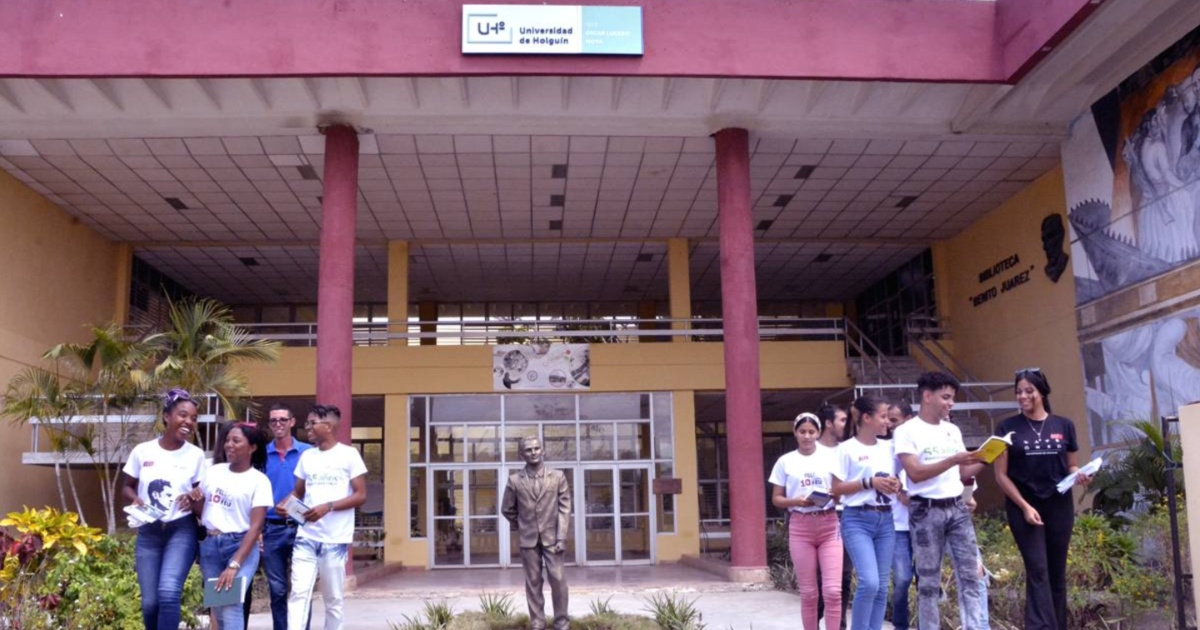
The University of Holguín has temporarily suspended its academic activities due to the energy situation facing the country, according to messages circulated among students in institutional groups.
In the message forwarded via WhatsApp, it is communicated to the students that they must return to their homes and it is informed that the second and third exam sessions are suspended "until March," reported communicator and activist Magdiel Jorge Castro on his X profile.
"All students will return home due to the energy situation during tomorrow's session. The 2nd and 3rd convocations are suspended until March, and further instructions will be provided regarding this matter. The meeting course will not take place. Students who remain in the 2nd and 3rd pending convocations for evaluation should be noted down," states the message shared by Castro.
According to the activist, "the students from the IPVCE have also been sent home," which, in Castro's view, confirms that "the collapse is happening and they are trying to downplay it."
The measure is said to have been adopted as a consequence of the electricity and fuel supply issues that have affected the country in recent weeks.
So far, there is no official confirmation from the University of Holguín or the education authorities regarding the suspension of classes.
In this regard, Radio Banes reported through its Facebook profile that “given the tense situation regarding the electrical service in the municipality, decisions are being made to protect priority entities in providing services to the population.”
The Clinical Surgical Hospital, the Food Production Center, ETECSA, and the Maternal and Child Hospital would be among the "protected" facilities.
During his television appearance this Thursday, Miguel Díaz-Canel acknowledged that the country is experiencing an “acute fuel shortage” and that the government has implemented an emergency plan to tackle what he described as a “very difficult” period.
According to what he explained, since December 2025, no Venezuelan oil has reached the island due to the blockade of supplies from that country.
The leader admitted that the lack of fuel affects not only electricity generation but also basic activities related to the population, and he announced that the Council of Ministers is working on guidelines to manage the crisis.
"We will take measures that, although they will not be permanent, will relate to the availability of fuel at any given moment," he said, once again asking for "resilience and sacrifice" from the Cubans.
Díaz-Canel also stated that the Government took as reference the guidelines of the late Fidel Castro during the Special Period, including the so-called "zero option," and that some of the measures will be "restrictive," aimed at promoting savings and postponing activities until energy conditions improve.
The statements from the ruling government have heightened public concern, particularly in sectors such as education and health, where the lack of electricity and transportation could completely disrupt daily activities in the coming weeks.
Filed under: