
Related videos:
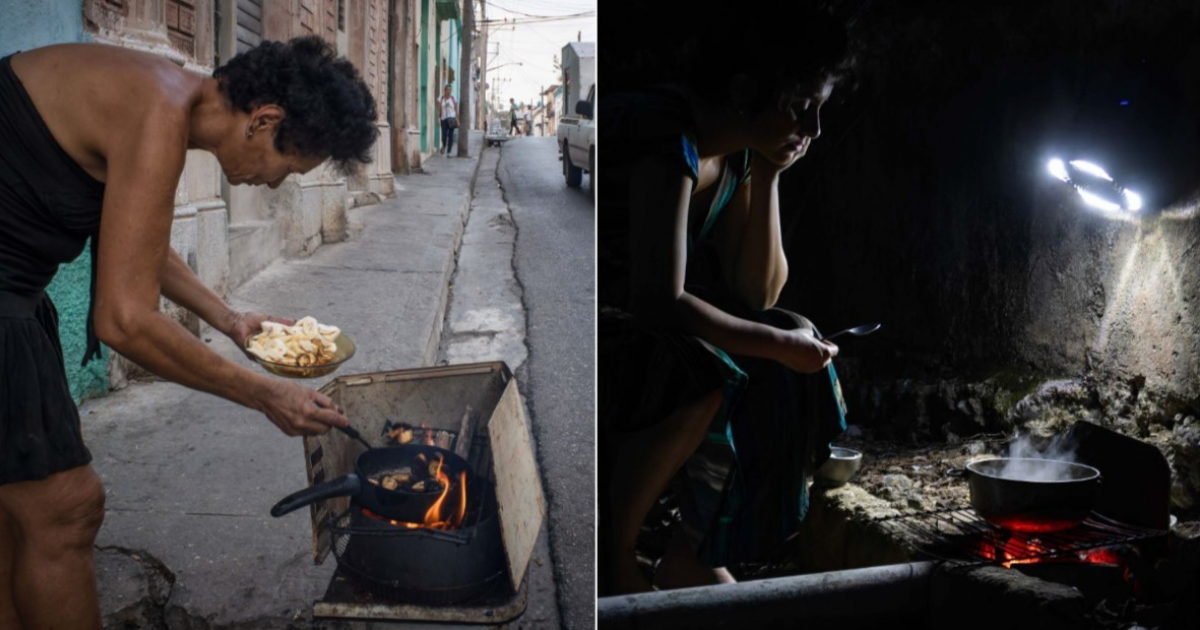
In a Cuba marked by blackouts lasting over 24 hours and an electrical system on the brink of collapse, cooking has become an act of survival.
Due to the lack of gas and electricity, families are turning to communal meals prepared with wood or charcoal to avoid hunger, but this apparent “solution” also carries risks.
The organization Food Monitor Program (FMP), dedicated to monitoring (in)security in Cuba, warned on its X profile that community meals are no longer a form of recreation and much less a form of resistance, but have become a desperate and survival response to the energy and food crisis affecting Cuba.
In their latest article titled “Community Meals: Resistance or Necessity?”, FMP highlighted that prolonged power outages and the lack of domestic gas force thousands of Cubans to cook in public spaces using firewood, charcoal, or even plastics, exposing them to contamination and respiratory risks.
The deterioration of the National Electroenergy System and the Cuban regime's inability to guarantee basic services have pushed vulnerable neighborhoods – as well as a few not-so-vulnerable ones – to develop precarious forms of survival.
"Community meals are not always a form of resistance; many times, they are the only alternative in the face of necessity," the organization noted.
Moreover, cooking has become a luxury: a bag of coal costs over 1,500 CUP, while the average salary is around 5,000 CUP.
In the most impoverished neighborhoods, a little rice, root vegetables, and shared bones are the only sustenance for the day, the article emphasized.
"These networks cushion the precariousness, but they do not resolve it," warns FMP, which raises concerns about the danger of romanticizing solidarity and normalizing the deterioration of basic services.
The lack of electricity, which causes the loss of perishable food, strengthens food insecurity and informal networks of barter and survival.
“To what extent can a society sustain itself through informal mechanisms?”, questions the report.
In today's Cuba, cooking in the street is neither a political act nor a metaphor for resistance: it is the last way to stay alive, literally.
Filed under: