
Related videos:
The Cuban state media on Thursday highlighted the critical situation of garbage in Havana, amid a backdrop of ongoing deterioration of communal services, a lack of fuel, and growing public discontent over the accumulation of waste in the streets and neighborhoods of the capital.
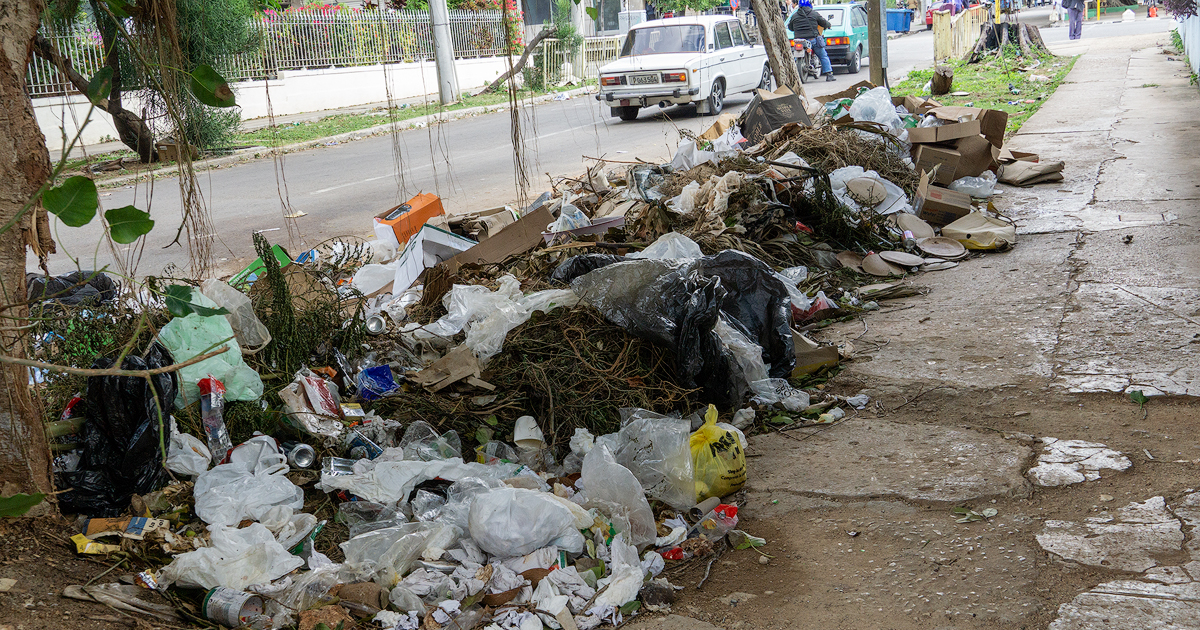
Cubadebate published an extensive photo report on the mini-dumps that are multiplying in the city, acknowledging the shortage and poor condition of the containers, as well as the inability of the waste collection system to cope with the volume of refuse generated by the capital. The official medium admits that the problem is not new, but its persistence and visibility have created a growing public concern among the people of Havana.
In the article, the state media identifies the main causes as financial limitations, the deterioration of equipment, the low technical availability of garbage trucks, staff shortages, and a lack of containers. It also acknowledges that Havana currently generates more waste than can be collected with the available resources, and that the existing landfills are nearly collapsed.
The post triggered a deluge of reactions on social media. In the , irony, sarcasm, and direct criticism of both the government and the official press are prevalent. Many users questioned why the media is only now addressing an issue that, they claim, has been out of control for years, while others criticized the lack of concrete solutions and the attempt to shift responsibilities onto the public.
Concepts such as "creative resistance," "biomass," or "biogas" were repeatedly used in a mocking tone by commentators, who expressed their frustration with what they see as a repetitive cycle of diagnoses, promises, and temporary campaigns with no lasting results. Numerous messages also emphasized that the waste crisis is not limited to Havana but extends to other provinces in the country.
For many residents of Havana, official recognition contrasts sharply with everyday experiences. In municipalities like Centro Habana, La Habana Vieja, Boyeros, or Arroyo Naranjo, waste remains on the corners for days or even weeks, accompanied by sewage, mosquitoes, and rodents, posing a significant health risk, especially for children and the elderly.
The situation arises after the government launched volunteer work campaigns on weekends to collect garbage several weeks ago, widely reported in state media and presented as a turning point. The momentum lasted briefly, and as has happened on other occasions, after two or three weeks, the collection faltered again and the micro-dumps reemerged.
That deterioration has accelerated again due to the severe lack of fuel that has put many of the garbage collection trucks out of service, a problem worsened after the end of the Venezuelan supply and the pressures from the Government of Donald Trump, which has once again left Havana buried under mountains of trash.
This Thursday, in a public appearance, Miguel Díaz-Canel acknowledged that Cuba is once again facing conditions similar to those of the Special Period and admitted that there are no immediate solutions to the energy crisis. During his speech, the leader defended the idea of using waste as a source of energy through biogas and biomass, a proposal that contrasts sharply with the critical sanitary and hygiene situation highlighted just hours earlier by the official press.
In that same intervention, Díaz-Canel also acknowledged that the country has returned to conditions comparable to the harshest years of the Special Period, a scenario of prolonged blackouts, shortages, and the collapse of basic services that the leader himself publicly admitted in his televised message.
For many Cubans, the coverage from Cubadebate does not signify a change in course, but rather a late reaction to a reality that is impossible to hide. Amid prolonged blackouts, food shortages, and the collapse of basic services, garbage has become one of the most visible symbols of national deterioration.
With the problem now impossible to hide in the streets, citizens continue to face the same question that has been asked for years: whether this time there will be sustainable solutions or if public acknowledgment will once again amount to mere words.
Filed under: