
Related videos:
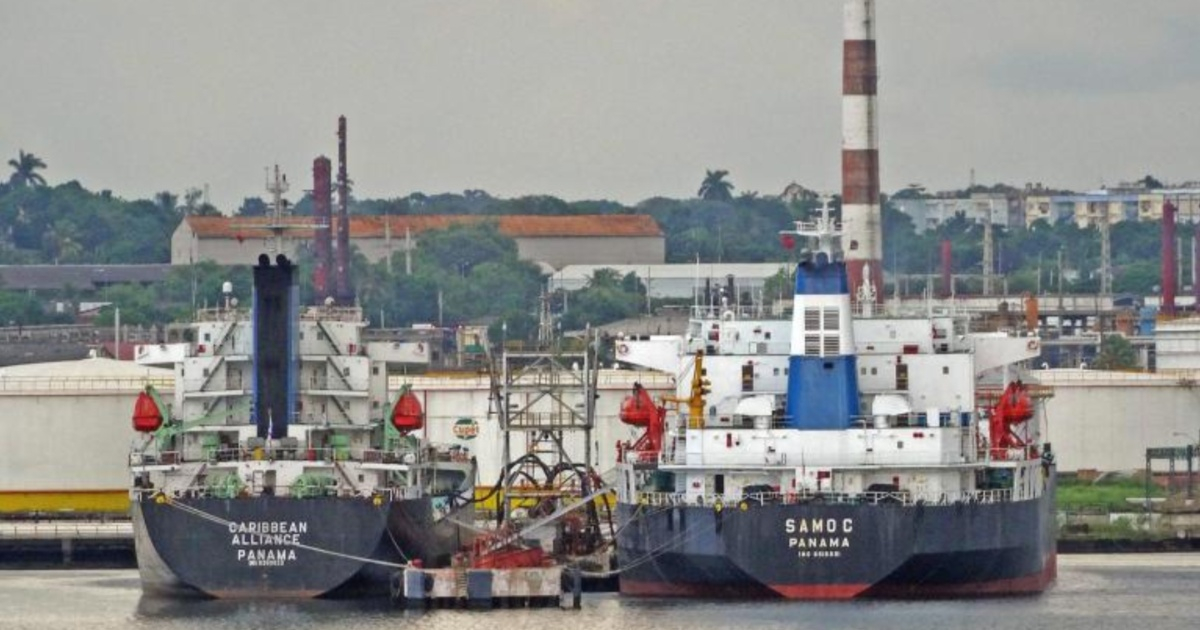
The tanker M/T Caribbean Alliance, flying the Panamanian flag, departed this Sunday from the port of Santiago de Cuba, heading to the port of Mariel. This movement has once again sparked curiosity on social media regarding tanker traffic around the island amid the fuel crisis.
According to the information shared on the site Vessel Finder, the tanker is said to have arrived in Santiago de Cuba on February 5 and has now set sail towards Mariel.
User Joankelin Sánchez's posts drew attention to the M/T Caribbean Alliance, which had departed from Mariel in September and did not arrive in Santiago de Cuba until February 5th.
The journey —according to the internet user themselves— would normally take about three days, but in this case, it has taken more than four months.
In another of his messages, Sánchez stated that the vessel was in Santiago with 90% of its cargo and a draft of 8.1 meters (out of a maximum of 9), data he attributes to maritime trackers.
From there, he emphasized as "curious" the long interval between departure and arrival, although he did not provide a confirmed explanation for the causes of the delay.
Citizen monitoring of these movements has intensified in the early days of February, as several reports about tankers in Cuban ports have sparked an unusual public interest amid a fuel crisis in Cuba.
In that context, the case of the M/T Caribbean Alliance has become one of the most discussed due to the contrast between what seems to be a short route and the time recorded by the trackers.
The ship is an oil tanker built in 2006 (20 years old) and currently sails under the flag of Panama. It is described by Vessel Finder as a tanker for petroleum products.
Since January 2026, Cuba is experiencing a new chapter in its prolonged fuel crisis, which has led to emergency measures and increasing social unrest.
The government announced the suspension of gasoline sales in Cuban pesos and the restriction of supply to dollar transactions.
The measure responds to the "acute shortage" of fuels and highlights the lack of reserves and the precariousness of the distribution system.
Despite the crisis, Prime Minister Manuel Marrero Cruz assured that “Cuba does not stop, does not stand still,” during an extraordinary appearance broadcast on state television.
The leader urged the maintenance of production and basic services through "controlled decisions" and announced measures to address energy shortages and promote renewable sources.
The official statements were met with skepticism by a population affected by blackouts and mobility restrictions.
Filed under: