
Related videos:
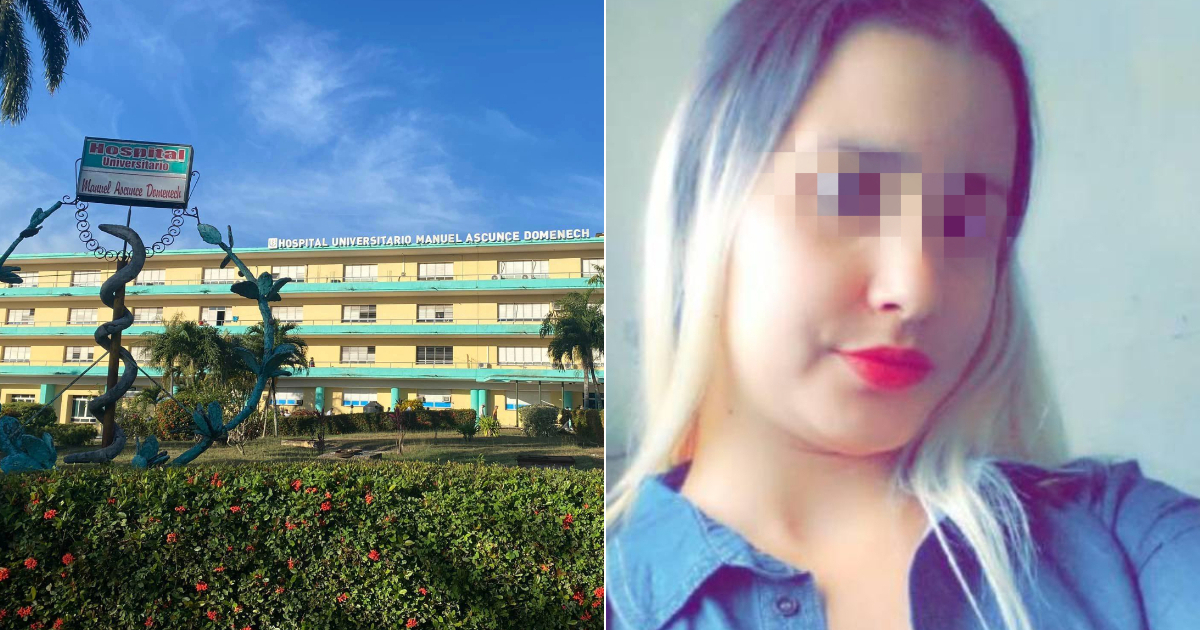
The Clinical Surgical Teaching Provincial Hospital Manuel Ascunce Domenech in Camagüey officially addressed the death of Ana Ivis Suárez Batista, the 26-year-old whose passing caused an outcry after family members publicly denounced the lack of an essential medication while she was hospitalized in that institution.
The statement, published on the hospital's official page on , begins with condolences to the family and healthcare staff, and provides a detailed medical explanation of the patient's clinical condition.
According to the institution, the young woman had been suffering from type 1 diabetes mellitus for several years, in addition to hypothyroidism and chronic kidney disease. The hospital noted that she arrived at the emergency department “in a coma with diabetic ketoacidosis, in septic shock secondary to severe community-acquired pneumonia,” at which point —according to the text— the established protocols were activated.
In one of the central points of the statement, the center's management explicitly acknowledges that they did not have norepinephrine, the first-line vasopressor for the treatment of septic shock. “In reality, the hospital does not have norepinephrine, which is the first-line medication for septic shock,” the statement admits.
In light of this deficiency, the doctors used epinephrine, a second-line medication. The text devotes several paragraphs to justifying this decision, emphasizing that its use is supported by international guidelines and that it constitutes “an acceptable and recognized therapeutic alternative,” although it acknowledges that the response to these medications “is unpredictable and depends on multiple factors.”
The hospital also explains the pharmacological differences between both vasopressors and states that the choice of epinephrine, in the absence of the first-line medication, was in accordance with accepted clinical practice.
Beyond the medical approach, the statement outlines a clear political stance. The institution affirms that the inability to obtain norepinephrine “is not an isolated fact,” but rather a direct consequence of the “economic, commercial, and financial blockade of the United States against Cuba,” which it blames for hindering the acquisition of medications, equipment, and medical supplies.
According to the text, this policy affects a significant portion of the national basic drug list and causes numerous pharmaceutical companies to refuse to sell to Cuba, even in critical areas of the healthcare system.
The statement concludes with a confrontational tone towards the media and critical platforms, labeling them as "mercenaries," accusing them of dehumanizing the case and turning “a human drama into ammunition for a political agenda,” while —according to the institution— ignoring the context that explains the shortage of resources.
The publication of the text provoked a strong reaction on social media. Many users expressed condolences to the family and reiterated their respect for the work of medical staff, but at the same time questioned the approach of the statement.
Among the most frequently mentioned comments are criticisms of the politicization of a patient's death and questions regarding the blame placed on the blockade for the absence of a medication deemed essential in intensive care services.
Other messages highlighted the contradiction between the lack of medications in public hospitals and the availability of drugs in the informal market, as well as the inequality in access to health resources within the system itself.
There were also expressions of support for doctors and nurses, highlighting that they work in extreme conditions and cannot compensate for the lack of basic supplies with mere willpower.
Ana Ivis Suárez Batista, 26 years old, passed away at the Manuel Ascunce Domenech Provincial Teaching Clinical Surgical Hospital in Camagüey. The young woman had been struggling for years with health issues related to diabetes, a condition that made her particularly vulnerable to any complications.
The family tried to obtain norepinephrine, the medication she urgently needed to stay alive, but were unable to do so in time. According to a source close to her situation, they went out to search for the drug in the informal market while the young woman remained in serious condition and on a ventilator.
The death of the young woman caused shock in Camagüey and brought to the forefront the complaints about the lack of medications in the Cuban healthcare system, even in emergency situations where every minute is crucial.
While the healthcare system continues to be officially presented as one of the country’s main achievements, cases like Ana Ivis's reflect an increasingly common reality: desperate families, hospitals lacking basic resources, and outcomes that many deem avoidable.
Filed under: