
Related videos:
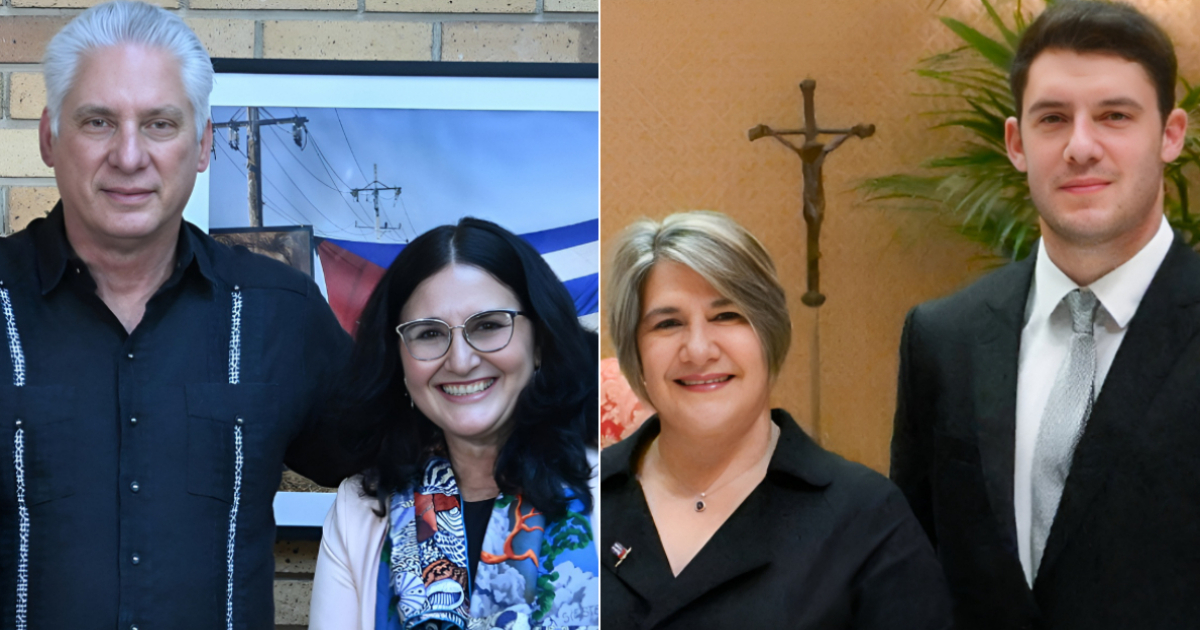
A digital storm erupted this Monday on Facebook of CiberCuba when Cubans read the response given by the diplomat Johana Tablada de la Torre to a user who asked if it was also the "blockade" that caused the son of the "not first lady", Lis Cuesta Peraza, to study at an exclusive private university in Spain.
"The people are tired of struggling while Manuel Anido Cuesta studies at an expensive university in Spain, just like René González's daughter and the children of the high-ranking officials vacation abroad and do not hide it," Lissette Iglesias Rossell reproached the official from the Ministry of Foreign Relations (MINREX).
Tablada de la Torre, who shares the position of ambassador in Mexico with her husband, the diplomat Eugenio Martínez Enríquez, had no better argument than to respond: “If the criminal blockade didn’t exist, there wouldn’t be any shortages,” making a mistake in the correlation of verb tenses, which is minor compared to the ethical flaw in her justification.
In just a few hours, hundreds of comments flooded the post, showcasing a shared sentiment: the people's frustration with corruption, privilege, and the hypocrisy of the official discourse.
The already sensitive topic resurfaced and reignited the offense that the publication in June 2025 posed to Cubans: Manuel Anido Cuesta, stepson of the ruler Miguel Díaz-Canel, was enrolled in an executive program at IE University Business School in Madrid, one of the most expensive private institutions in Europe.
While her stepfather urged Cubans to "prepare the food", to have “creative resistance” and patience to endure blackouts lasting up to 12 hours daily, Cuesta Peraza's son - an official with a salary from the Ministry of Culture - was romancing in Madrid with Ana de Armas, making the headlines of the magazine Hola for his luxurious lifestyle.
"We will pay for it, the people."
Among the thousands of messages, one of the most frequently repeated was a simple phrase: “We pay for it, the people”.
Behind that sentence lies a collective sentiment: that the luxuries of the ruling class are financed with the sacrifices of ordinary Cubans.
“With what money do they pay for that university? With the sweat of those who can't even afford a liter of oil”, wrote a user. Another mocked: “Poor kid, he had to go to Spain to study because of the blockade. What a huge sacrifice!”.
Many wondered why Díaz-Canel's stepson does not study at the University of Havana, considered by the regime to be a "model of free excellence."
“If the Cuban educational system is so good, why is Lis Cuesta's son studying at a capitalist university that costs 12 thousand euros?”, questioned another comment.
Outrage and Sarcasm: The People Respond to Power
The tone of the comments ranged from anger to mockery. "The blockade doesn't block the euros", was seen in dozens of responses. Others were more scathing:
"Surely the blockade is to blame for Ana de Armas leaving him." "The boy didn't study at Harvard because of the embargo." "The blockade only prevents them from living in the same country they govern."
There were also those who pointed to the political background: "These studies are not scholarships; they are part of the payment for loyalty and the preparation of the new caste that will continue to exploit the people."
Another, more blunt comment captured the general sentiment: “While the First Lady's son studies in Spain, mine walk miles because there's no transportation to get to school.”
"Let them explain where the euros are coming from."
The economic issue was central. Many users demanded concrete explanations regarding the source of the funds that allow the young man to reside and study at one of the most expensive universities in Madrid.
"How many months' salary of a doctor or a teacher are needed to pay for just one of those enrollments?", asked a Cuban. "With what it costs for their education, an entire school could be maintained in Cuba."
Others demanded transparency: “They should explain in the Round Table where the money for those scholarships comes from”, “Let the Comptroller investigate how the children of the powerful can live like millionaires abroad while the people don't even have electricity”.
"The blockade is us, the Cubans."
A significant portion of the comments pointed directly to Tablada de la Torre's argument, who had blamed the "criminal blockade" for the country's shortages. The popular response was emphatic:
“They are the ones who have the blockade, blocking the people from living with dignity”; “It's not the blockade, it's the plunder”; “They have been telling the same story for 60 years. They don’t even believe it themselves anymore”.
Some recalled that Cuba trades with more than 190 countries and that the U.S. embargo does not prohibit humanitarian transactions or the purchase of food.
“Blockade is what a farmer experiences when the State prevents him from selling his harvest. Blockade is what is done to an entrepreneur when their business is confiscated”, wrote a user.
From mockery to contempt
The figure of Tablada de la Torre also became the target of personal rejection.
“He has the name to match, face of a board”; “The board he has for a face feels no shame” “Another one defending the indefensible for the privileges she receives”, was read in dozens of reactions.
Popular humor quickly made its presence felt: memes, wordplay, comparisons with telenovela characters, and even jokes about "blocked scholarships" flooded the comments section. One of the most shared read:
“If my son studies in Cuba, it's the blockade's fault. If yours studies in Spain, it's due to his own merit.”.
“They have a lot of nerve.”
Many comments referred to the cynicism of the political elite: “They speak of equality and socialism, but all their children live like princes in capitalism”.
“They should spend a week with power outages, cooking with wood and studying with flashlights, to see if they still have a speech”, suggested a user. Another summarized the common sentiment: “What hurts the most is not that they live well, but that they do it with the people's money and then mock us”.
A rift between the power and the people
The digital debate revealed what the government refuses to acknowledge: the irreparable chasm between rhetoric and reality.
The old narrative of the blockade no longer convinces, and every new privilege revealed —every child in Europe, every hidden mansion or business— reinforces the perception of a caste disconnected from the people.
“There is no revolution without morality, and they lost it long ago”, wrote one. “Cubans no longer believe in tales. They just want to live without being the ones who pay for the luxuries of others”.
The moral blockade
In the avalanche of reactions, there was a recurring idea expressed emphatically, in different words but with the same meaning: “The true blockade is that of the consciousness of those in power.”
And so, amid sarcasm, anger, and exhaustion, the Cubans who commented on the post from CiberCuba once again highlighted what the regime tries to conceal: that while it proclaims equality and sacrifice, its children study in European luxury, with money that the people do not have.
Filed under: