
Related videos:
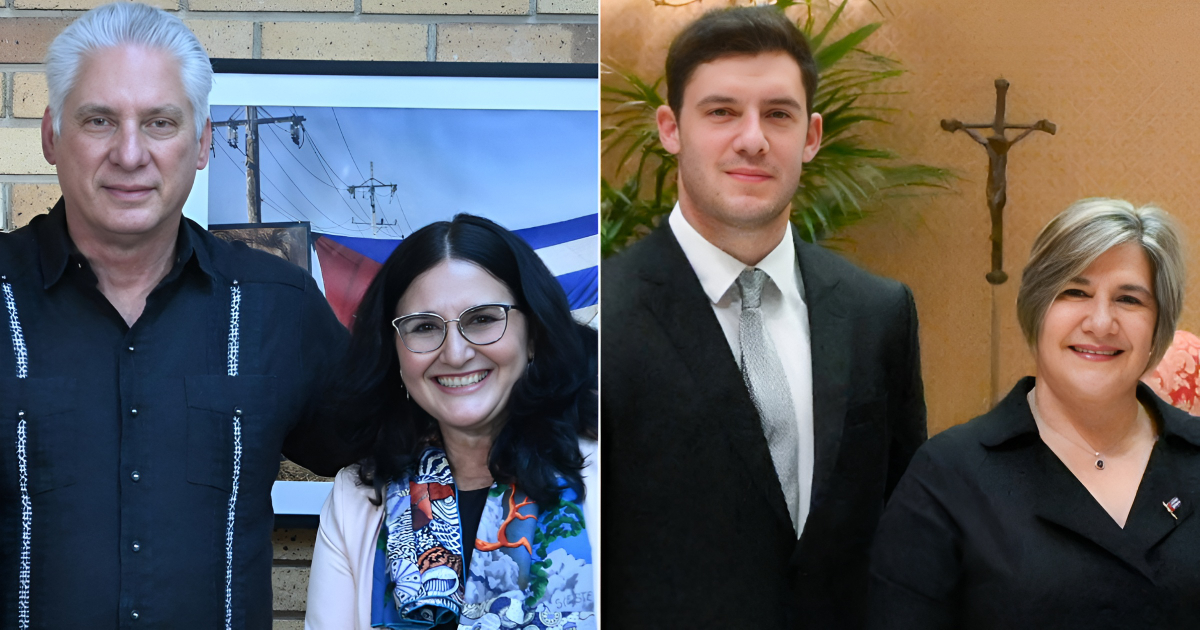
The diplomat Johana Tablada de la Torre once again found herself at the center of controversy after posting a political reflection on Facebook with the paternalistic tone that defines her.
In her statement, the official compared Cuba to a “home” and the United States to a “bully” that cuts off “water, electricity, gas, and the rights” of Cubans.
"It is good, healthy, and productive when we, as brothers, discuss among ourselves and agree or disagree on what color we want to paint the house and the neighborhood," he wrote, then warning that, in the face of external threats, "it is logical for us, as brothers and neighbors, to set aside our differences to make it clear to the abusers that they have no right to impose anything on us."
The message was intended to be an allegory about national unity in the face of "imperialist aggression." However, what it achieved was to create a public rift concerning inequalities, the privileges of the ruling class, and the fatigue of the people in response to an increasingly empty discourse.
"The people are tired": The comment that changed everything
Among the dozens of responses the post received, the one from Lissette Iglesias Rossell stood out, a user who expressed the frustration of many Cubans:
“The people are tired of being asked for creative resistance. It's enough to see the difference between the majority of the Cuban population, undernourished and poorly dressed, while the leaders are all plump, well-groomed, and flaunting expensive clothes, watches, and phones. The people are tired of facing hardships while Manuel Anido Cuesta studies at an expensive university in Spain.”
The direct reference to Manuel Anido Cuesta, stepson of Miguel Díaz-Canel and son of the "not first lady" Lis Cuesta Peraza, sparked a massive debate.
In June 2025, the independent press revealed that Anido Cuesta was studying at IE University, one of the most expensive private universities in Madrid, with tuition fees exceeding 12,000 euros, while Cuba was suffering from blackouts, inflation, and salaries barely exceeding 15 dollars a month.
“If the criminal blockade didn’t exist…”: The usual wild card
Tablada de la Torre's response was swift.
Instead of denying, clarifying, or qualifying the accusatory comment that appeared on her Facebook, the official resorted to the old slogan to refute it: "If the criminal blockade did not exist, there would be no shortages."
With that statement, the diplomat attempted to shift the blame to the U.S. embargo in an abstract manner, without explaining why the children of leaders can afford luxuries in Europe while millions of Cubans survive on the bare minimum.
The response further outraged users. Yoander Rubio Carmona wrote: “How is it that the leaders live much better than the people? That blockade is selective, it only affects the people!”
For his part, Iglesias Rossell insisted: “What blockade, the one that allows tons of chicken from the United States? The one that supplies the hotels or the bar of Sandro Castro when the entire country is shut down? Years ago, Russia provided over 1.3 billion to repair thermoelectric plants. Where is that money?”
Defenders of the regime, between denial and ridicule
Some regime defenders intervened to try to halt the avalanche. A user claimed that "any young Cuban, from any family, can study at foreign universities."
His response provoked laughter and criticism among discerning internet users: most recalled that even a full state salary would not be enough to cover a week of university life in Europe.
Another official profile claimed that "it is a lie that the key leaders in Cuba are overweight," and that their watches and phones "are in line with their work." His comment ended up being a caricature of the official discourse that drew laughter in the forum.
The luxury of power against the sacrifice of the people
The publication by Tablada de la Torre calling for the unity of Cubans beyond their "differences" reminded users of Anido Cuesta's lifestyle in Madrid.
According to Martí Noticias, Díaz-Canel's stepson was residing in June 2025 in an exclusive area of the Spanish capital and was attending social events and those of the regime alongside personalities such as Ana de Armas, with whom he maintained a romantic relationship.
Meanwhile, in Cuba, power outages continued to exceed 18 hours a day in many areas of the country, hospitals were deteriorating further, and public transportation remained virtually paralyzed.
Far from identifying with Díaz-Canel's calls to develop a "creative resistance," Cubans increasingly reacted to the evidence of privileges and impunity of the leaders.
“They talk about defending the house, but they have already moved to another one,” commented a user on Tablada de la Torre's post, appealing to the brotherhood among compatriots.
From heroic rhetoric to everyday embarrassment
The incident revealed the weariness of the revolutionary narrative.
Each new intervention by Tablada de la Torre, Bruno Rodríguez Parrilla, or Carlos Fernández de Cossío follows the same structure: denial of the problem, an appeal to the external enemy, and a closing call for "unity."
But that speech, repeated for more than six decades, has lost all power of persuasion.
Today, Cubans live with daily contradictions: while the regime accuses the United States of "fostering mass migration," it simultaneously complains about the "failure to comply with migration agreements." And while it preaches austerity and resilience, its own children study and live in Europe.
The crisis is no longer just economic, but also moral and narrative. Official spokespersons like Tablada de la Torre defend a system that is fracturing from within, where the "siege" is no longer the embargo, but the wall of privileges that separates power from the people.
"It’s not the blockade, it’s the double standard."
The most frequently repeated closing in the comments summarizes the public sentiment: "It's not the blockade, it's the double standard."
In Cuba, blackouts, shortages, and repression can no longer be explained with slogans. What outrages Cubans is not just the crisis, but the cynicism with which their leaders justify it.
Tablada de la Torre's metaphor about "painting the house" ultimately turned against him: how can one speak of painting when the house is dark, without water, and half-collapsed?
While the children of the powerful study in Europe, everyday Cubans continue to wait for the light. And not just the one from the electrical system.
Filed under: