
Related videos:
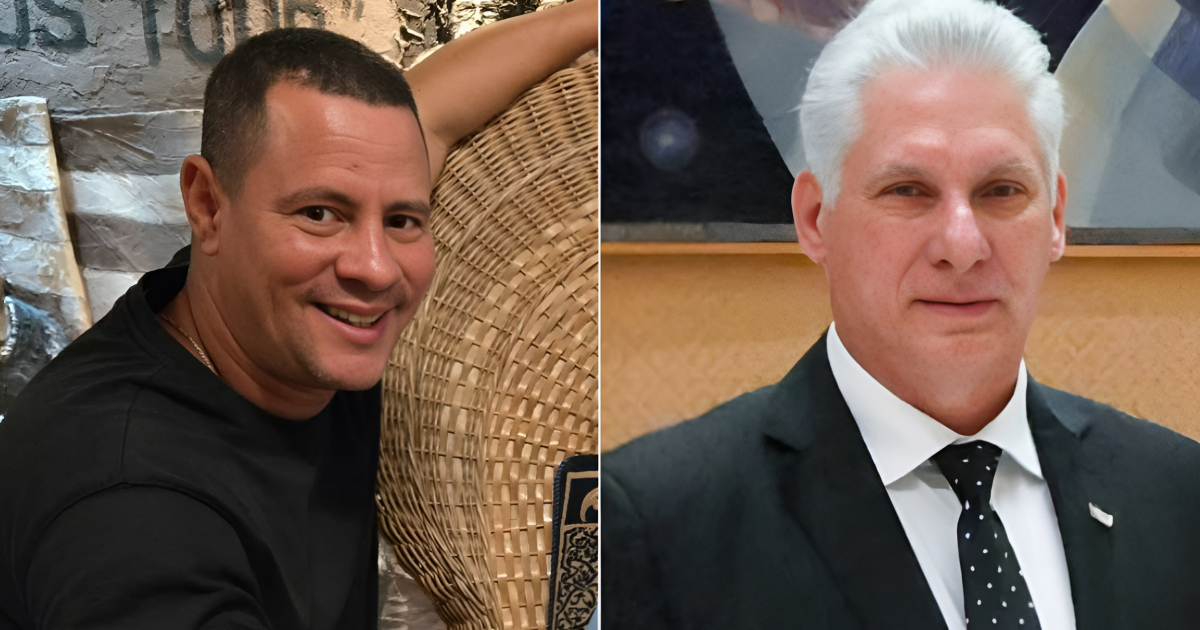
Israel Rojas, leader of the duo Buena Fe and a monotonous voice of the Cuban cultural establishment, returned this week to the political arena to comment on the special appearance of Miguel Díaz-Canel.
In a text published on Facebook, the troubadour fully supported the intervention of the ruler and defended state secrecy as a legitimate strategy in response to what he described as a “policrisis.”
Rojas claimed to have listened to the presidential address "intermittently," amid power outages and connection cuts — an involuntary confession of the country's true state — but praised the "interesting" measures announced by Díaz-Canel.
Among them, the authorization for partnerships between state and private actors, the opening up to investments from Cubans living abroad, and the promotion of solar panels for individuals stood out.
Beyond the confetti of the Palace, the musician focused on defending the government's silence. “It is legitimate not to announce everything that is done with countries or international organizations,” he wrote, justifying secrecy in the name of national security.
His argument aligned with that line of propaganda that seeks to turn the lack of transparency into a patriotic virtue. In discussing "policrisis," Rojas acknowledged that the country's situation is serious, but he diluted the responsibilities of those in power with a collective rhetoric: everyone suffers, everyone must endure, everyone must trust... and in silence.
That confidence, however, seemed more of a call to faith than a response to reality. When the troubadour asked to “foster confidence in ourselves,” he did so from a context that implicitly acknowledges that the regime can no longer provide certainties or solutions, only narratives and slogans.
From Epic to Resentment
But while the musician tried to appear calm and constructive in his analysis, the coverage by CiberCuba of his episode with the “venerable elder and his family” caused him to lose his temper once again, resulting in yet another outburst on social media.
"CiberCuba says they spoke to me through the 'earpiece'. That same thing, but in the superlative, they have it at '7'," he wrote, accompanying the text with laughter and emojis, in what turned out to be a crude and sexist message that revealed his true state of mind.
The wordplay —“pinganillo” (earpiece) transformed into “pinga” (penis) and “7” (anus, in the Cuban charade)— revealed a level of aggression and vulgarity that contrasted with its message of respect and unity.
The troubadour who seeks love, trust, and serenity responded with sexual innuendos and disdain, confirming his discomfort with criticism and his inability to engage in a debate of ideas.
The Troubadour of Disenchantment
The contradiction is evident: while Díaz-Canel tries to maintain the narrative of "unity and resistance" and Rojas supports it with patriotic rhetoric, the anxiety of power seeps through the cracks of language.
The use of terms like “policrisis” and the appeal to “trust” are symptoms of a government that has lost its moral authority and seeks refuge in the lexicon of faith.
Rojas, instead of reinforcing the credibility of the discourse, makes it even more fragile: his paternalistic tone, his docility before power, and his outbursts of anger portray him as what he is today —an overwhelmed troubadour, caught between the cult of the leader and his own frustration.
The singer who wanted to be the voice of the people has ended up being the voice of discouragement, defending silence and responding with rudeness to anyone who reminds him of it.
Filed under: