
Related videos:
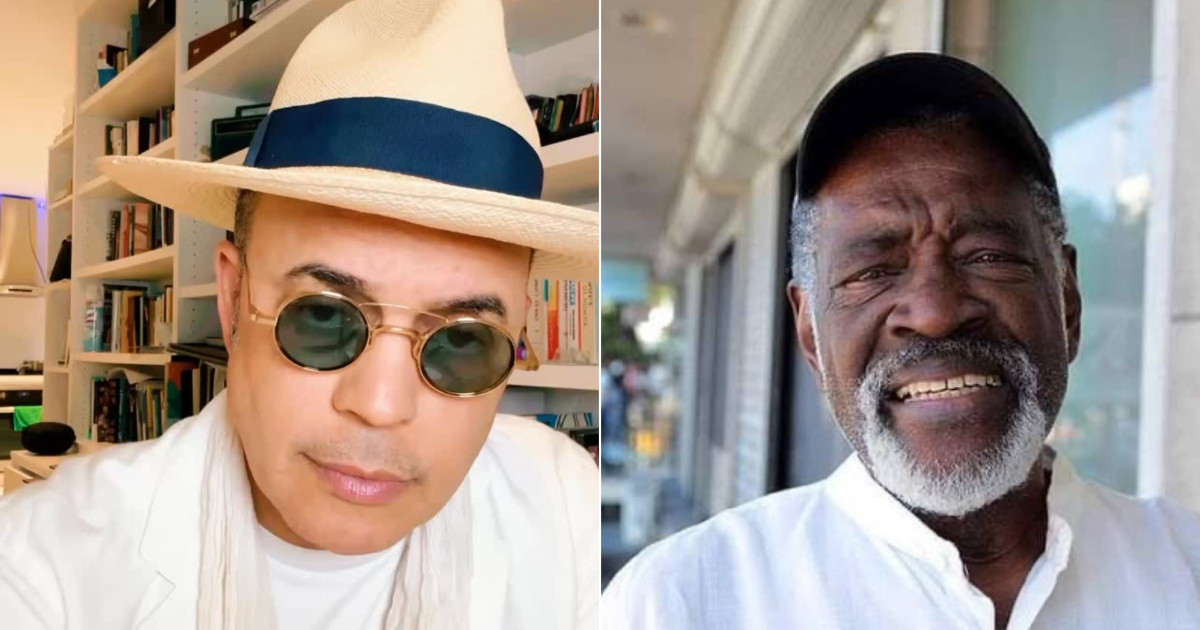
The Cuban comedian and actor Alexis Valdés bid farewell this Tuesday to the veteran performer Alden Knight, who passed away in Havana at the age of 89, with an emotional message posted on his social media, where he recalled not only the actor's artistic greatness but also his personal warmth and the impact he had on his childhood.
"Alden Knight has died, an iconic actor of Cuban television. From the same generation as my father," wrote Valdés, who recalled the artist's prominence in the 1960s, 1970s, and 1980s, a golden era of dramatizations in Cuba.
Alexis highlighted that Knight was one of the first Black actors to star in television series, emphasizing his elegance, dignity, and stage presence. He even noted the influence that the legendary African American actor Sidney Poitier may have had on him, both in terms of physical resemblance and attitude: "That attitude of a Black man of great dignity."
The comedian fondly recalled Alden Knight's smile, "big and unique, surely one of the best from those television times," and how he treated him with the affection of another family member, as he shared, was the case with many actors who were friends of his father's.
Among the most memorable roles, Valdés recalled Zumbi from the series "La guerra de los palmares," one of the most remembered characters of the actor on Cuban television, accompanied—according to his memory—by a musical piece performed by Pedro Luis Ferrer. "Although my memory does play tricks on me," he admitted honestly.
The message concluded with a farewell filled with respect and admiration:
“Rest in peace Alden, excellent actor, declaimer, folklorist, always an artist.”
A trajectory of more than six decades
Alden Knight, born on August 15, 1936, in Florida, Camagüey, under the name Charles Alden Knight James, was one of the most versatile and consistent figures in the Cuban cultural scene. His career spanned more than six decades, with a prominent presence in theater, film, television, radio, recitation, teaching, and music.
He participated in more than a hundred stage productions and numerous film productions, including El otro Cristóbal (1963), El bautizo (1968), El otro Francisco (1975), Una mujer, un hombre, una ciudad (1978), and Lejos de África (1996).
Additionally, he was a renowned reciter and promoter of Nicolás Guillén's work, to whom he dedicated recording sessions and numerous performances, establishing himself as an advocate for Cuban folklore and cultural identity.
With his passing, one of the most enduring figures in Cuban radio, theater, and television has vanished. In the days leading up to his death, colleagues and friends had raised concerns about his delicate health after he was admitted to intensive care at Manuel Fajardo Hospital in Havana.
Filed under: