
Related videos:
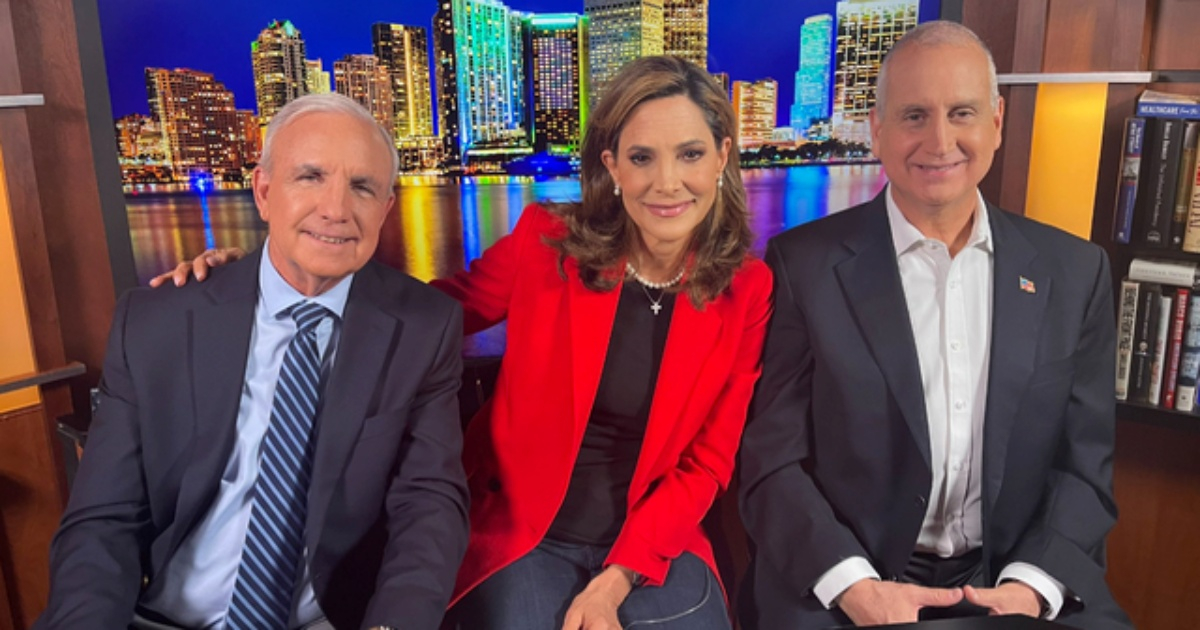
A political offensive led by Republican congressmen Carlos A. Giménez, Mario Díaz-Balart, and María Elvira Salazar aims to eliminate what they consider "trade valves" that still allow the regime in Havana to benefit economically through licenses granted by U.S. federal agencies.
The request, submitted to the Department of the Treasury and the Department of Commerce, comes at a critical time for the Caribbean country, which is experiencing a severe energy and economic crisis.
"Deep concern" about active business licenses
Legislators sent an official letter to Bradley Smith, director of the Office of Foreign Assets Control (OFAC), and to Jeffrey Kessler, Under Secretary of Industry and Security, denouncing that certain active commercial licenses could be undermining the sanctions imposed by the Cuban Liberty and Democratic Solidarity Act (LIBERTAD) of 1996.
“We are extremely concerned about U.S. companies currently engaged in disruptive business activities with entities controlled by the Cuban regime, a state designated as a sponsor of terrorism,” the lawmakers stated in the letter.
In their view, these operations contradict Title I of the LIBERTY Law, which states that sanctions must be maintained “until concrete progress is made toward democratic governance, the rule of law, and respect for fundamental freedoms” in Cuba.
They are accused of diverting resources to the military
According to the signatories, the licenses issued by OFAC and the Bureau of Industry and Security (BIS) allow transactions that ultimately benefit the Cuban state apparatus, particularly conglomerates under military control.
"These activities could provide financial resources, material support, or dual-use capabilities that could be diverted for internal repression or intelligence operations," they reported.
The congress members attached a 50-page document listing authorized merchandise, including luxury cars and high-value items, sent from Miami to addresses in Plaza de la Revolución, Marianao, and other strategic locations in Havana.
What is being exported?
According to a report by Fox News, the exports authorized by the licenses include products ranging from construction materials to luxury items such as hot tubs.
These goods, they point out, "do not go to the Cuban people, but directly enrich the regime."
The policy analyst for Latin America, Andrés Martínez-Fernández, noted that even when exports seem directed toward civilian needs, they often end up in the hands of the power elite.
“We are exporting construction products - and everything is collapsing in Cuba, except for the houses of government officials and their regime collaborators,” he declared to Fox News.
They demand a review and revocation of licenses
In light of what they consider to be a blatant contradiction with the sanctions policy, the congress members demand a thorough review of all active licenses related to Cuba and the immediate revocation of those that provide economic benefits to the Cuban state.
They also request that control over future applications be intensified.
"Revoke any license that directly or indirectly provides economic benefits to entities controlled by the regime, in accordance with the restrictions mandated by the LIBERTY Act [and] intensify the scrutiny of future license applications," they demanded in their letter.
"We hope that your agencies vigorously enforce the U.S. sanctions against the Cuban dictatorship and uphold the common-sense policy of the Administration against the brutal regime on the island," they wrote, fully endorsing the hardline stance of President Donald Trump and Secretary of State Marco Rubio.
The lawmakers' request reinforces a strategy of economic isolation aimed at closing any loophole through which the Cuban regime could obtain foreign currency.
In her words, "the explicit will of Congress" is to maintain the sanctions until there is a real political transition in Cuba.
"This activity risks undermining the core objectives of the United States' sanctions policy and contradicts the intent of Congress," they reiterated, in direct reference to the provisions of the LIBERTAD Act.
Filed under: