
Related videos:
When Nicaragua eliminated visa-free entry for Cubans on February 8, 2026, it closed a chapter that cannot be understood without looking towards Havana. What began in November 2021 as a supposed "humanitarian" measure ultimately turned into a massive escape valve for a population suffocated by the structural crisis of the Cuban socialist model.
For five years, Managua served as a backdoor exit for thousands of Cubans who saw no future on the island. The visa exemption was not an isolated or spontaneous phenomenon: it coincided with the worsening of the economic collapse in Cuba, characterized by rampant inflation, prolonged blackouts, chronic food shortages, and a loss of purchasing power.
The root of the exodus: internal failure
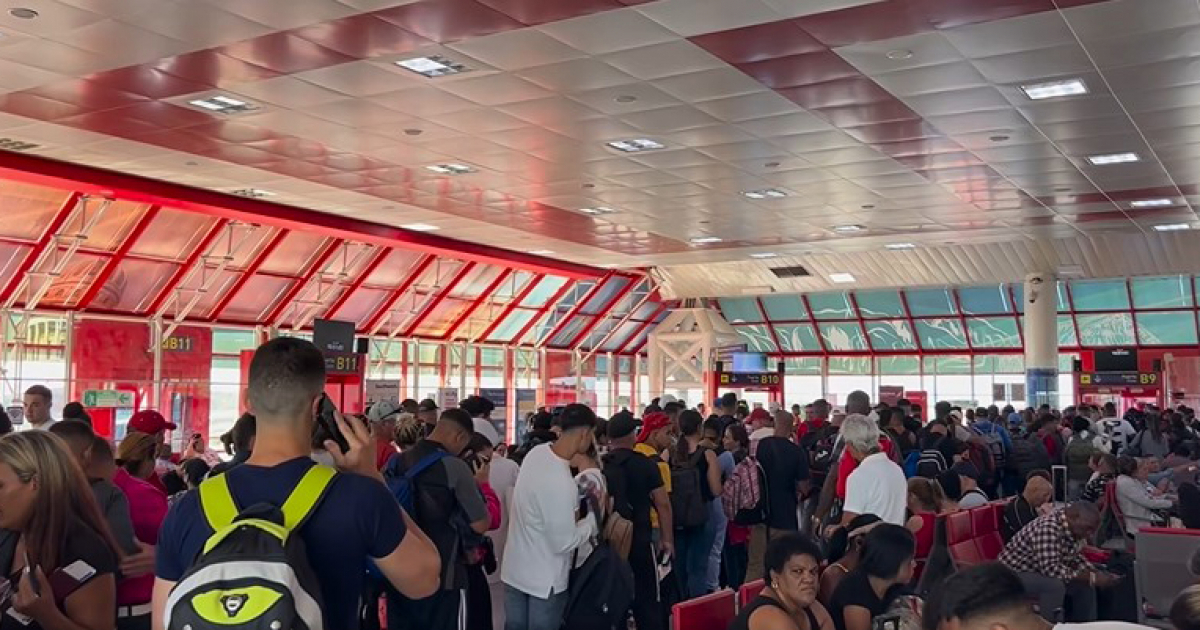
The official discourse in 2021 spoke of tourism and family exchange. The reality was different. Most travelers were not going to meet relatives or visit Managua; they were using Nicaragua as a transit point to the United States.
The exodus was not caused by external decisions, but rather by an internal deterioration that had accumulated over decades. The combination of economic centralization, political repression, and a lack of structural reforms drove hundreds of thousands of Cubans to seek alternatives outside the country.
Nicaragua, also governed by an authoritarian model, found in this opening a mechanism that served its own political and economic interests. However, when the migration flow began to generate diplomatic pressures and regional costs, visa-free travel ceased to be advantageous.
2026: political adjustment, not structural solution
The return to the consulted visa does not eliminate the underlying problem. It introduces an administrative filter, but it does not address the main cause: the deep crisis of the Cuban system.
For thousands of people who had already invested in tickets and paperwork, the decision creates immediate uncertainty. For those planning to emigrate, it presents new obstacles and potential delays. However, the pressure for migration will continue as long as the conditions within Cuba do not change.
The experience from 2021 to 2026 shows that when one route is blocked, another emerges. The Cuban migration phenomenon does not depend on a specific airport, but rather on the lack of opportunities and freedoms within the island.
Nicaragua's measure comes at a particularly delicate time for the Cuban regime. The political and economic model is experiencing one of its most fragile periods in decades, marked by rising social unrest, a persistent energy crisis, and institutional deterioration.
In a scenario of accelerated wear and potential transition, limiting the Nicaraguan route can have contradictory effects. On one hand, it temporarily reduces an escape route; on the other, it increases internal pressure by making it more difficult for those seeking to emigrate.
Historically, the regime has used migration as a mechanism for social decompression. When that valve tightens, discontent tends to concentrate within the country.
If the political transformation process in Cuba accelerates in the coming months or years, regional migration policies could be reconfigured once again. Managua has shown that its decisions are not ideological, but rather pragmatic.
The fundamental question is not how long the consulted visa will take, but rather how long a model that expels its own population as the only alternative for survival can sustain itself.
Filed under: