
Related videos:
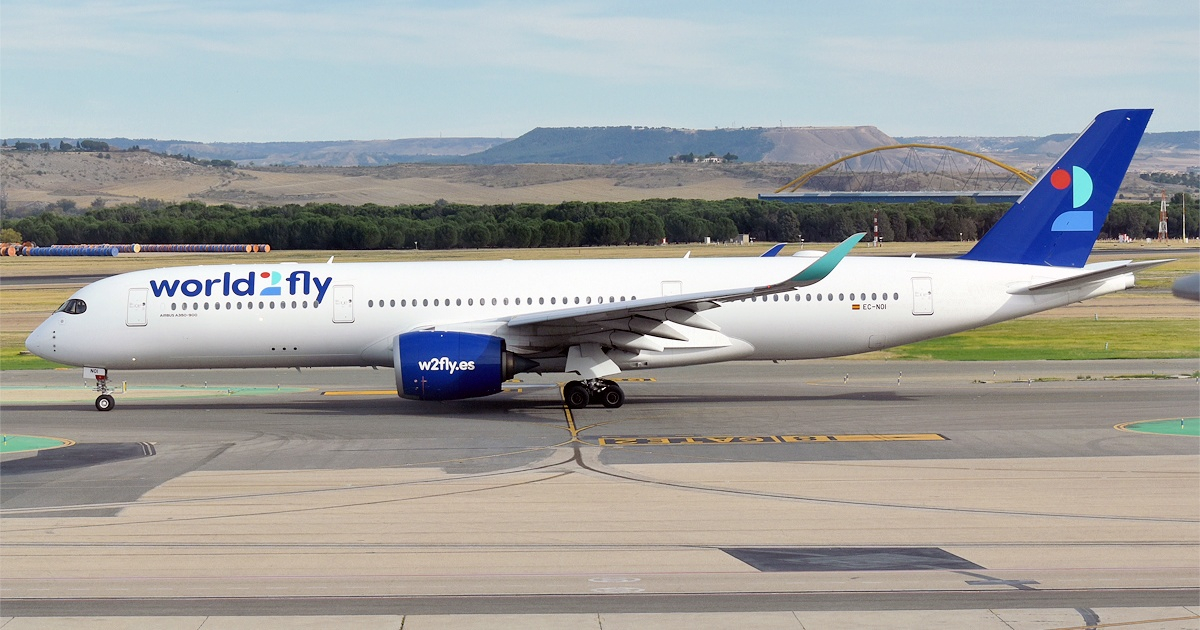
The airline World2Fly, part of the Iberostar hotel group, announced this Wednesday a temporary modification in its flight operations between Havana and Madrid due to a lack of aviation fuel at Cuban airports.
From now on, all your journeys from the Cuban capital to Spain will include a technical stop in Santo Domingo, Dominican Republic, to ensure refueling.
“Following the notification issued by the Cuban authorities regarding the unavailability of aviation fuel (JET A1) at the country's international airports, W2Fly informs that, starting Wednesday, February 11, flights will include refueling in Santo Domingo,” the airline stated in an official communication.
World2Fly emphasized that this measure applies only to the outbound journey, and that the rest of the commercial operations continue "with total normality."
The airline, which until now had maintained a direct and non-stop operation between Havana and Madrid, reaffirmed its commitment to travelers.
“Ticket sales remain available through the website and the usual channels. We are staying alert for any updates that may require changes in operations,” emphasized the airline, which operates on the island as part of the tourist strategy of the Iberostar group.
A crisis affecting multiple airlines
World2Fly's decision is not isolated.
In recent days, other major airlines connecting Cuba with Europe, such as Iberia and Air Europa, have implemented similar adjustments to navigate the fuel shortages on the island.
Air Europa was the first to publicly announce its measure, stating on Monday that its flights between Havana and Madrid would include a technical stop in Santo Domingo.
"Due to the lack of fuel at José Martí International Airport, if you are traveling from Havana to Madrid on February 10, 11, and 12, we would like to inform you that, although our operations are confirmed, the flights will have some adjustments and a technical stop for refueling in Santo Domingo will be necessary," the company explained in a message to its passengers.
It also warned that the changes could affect the expected arrival times in the Spanish capital.
For its part, Iberia adopted a flexibility policy that allows passengers with already issued tickets to Cuba to make voluntary changes to their travel plans.
Although it has not announced technical stops, the airline assured that it remains attentive to the evolution of the situation.
"There is no confirmation of cancellations, but we continue to monitor the availability of fuel at Cuban airports," it stated in its latest announcement.
Repercussions on Cuba's air connectivity
The energy crisis affecting the Cuban airport system has forced international airlines to seek alternative solutions to ensure the continuity of their operations.
The logistical impact of these measures—extra stops, schedule changes, and increased operational costs—poses a new challenge for passengers and airlines.
Mexican airlines Aeroméxico and VivaAerobus are also continuing to operate their routes to Cuba, although it is expected that they will increase fuel loads from their point of origin, which could result in higher logistical costs.
On the contrary, Air Canada has temporarily suspended its regular flights to Cuba. In a recent statement, the company explained that it will continue to operate special repatriation flights, known as "ferry flights," for the approximately 3,000 Canadians who remain on the island.
Filed under: