
Related videos:
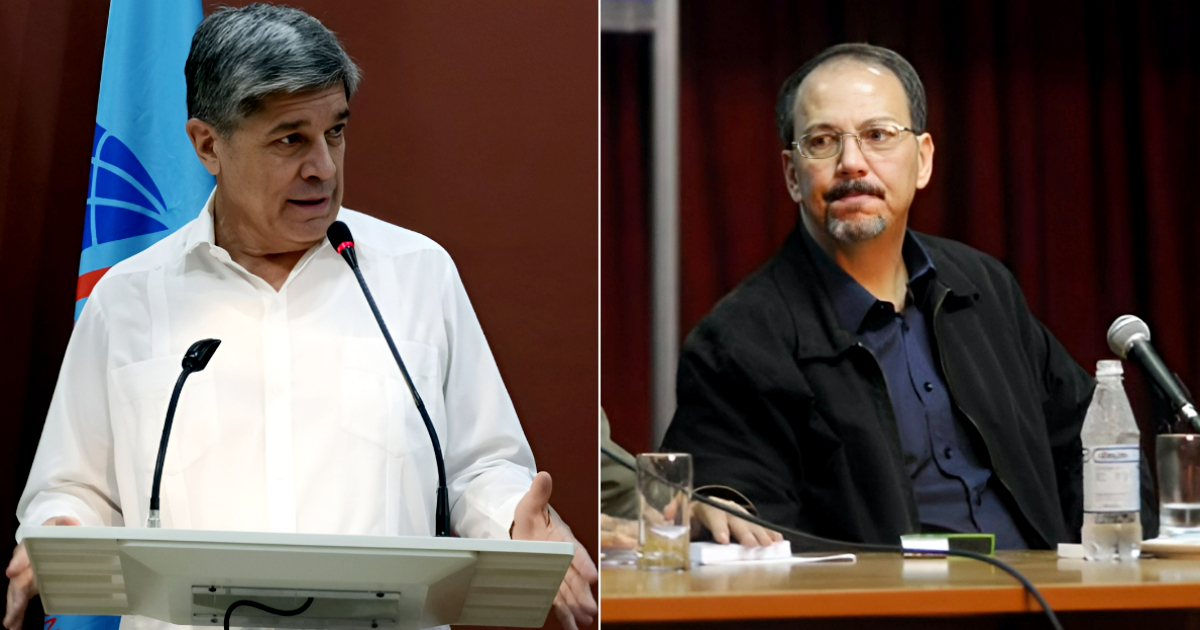
The Cuban Deputy Minister of Foreign Affairs, Carlos Fernández de Cossío, categorically denied this Wednesday that there are any secret or high-level conversations between Washington and Havana to negotiate a political transition on the island.
The diplomat of the Cuban regime described as "rumors" the reports suggesting the involvement of relatives of senior regime figures in alleged discreet negotiations with the U.S. government.
In an interview with La Jornada, Fernández de Cossío stated that such claims "act as a smokescreen" to hide—according to him—the responsibility of the United States in the "criminal energy strangulation" that Cuba is experiencing, worsened by the recent executive order from President Donald Trump that sanctions countries exporting fuel to the island.
“They are rumors that serve to distract public opinion from the real crime: the cruel and inhumane measures of Washington against the Cuban people,” affirmed the diplomat, who has become the most visible voice of the Cuban Foreign Ministry since early February.
A denial with name and context
The words of Fernández de Cossío directly respond to versions circulated in international media and the Cuban exile community that point to Colonel Alejandro Castro Espín, son of Raúl Castro, as the alleged intermediary in discreet contacts with representatives of the CIA and U.S. officials in Mexico.
According to those reports—unofficially confirmed—the conversations would aim to explore mechanisms for a controlled transition, focused on alleviating economic sanctions and opening strategic sectors to American investment without a total collapse of the political system.
Among the media outlets that have echoed these reports are ABC Internacional, El Colombiano, and platforms from the exile community in Miami, which point to meetings held in Mexican territory under the mediation of officials from Claudia Sheinbaum.
Although no American or Mexican diplomatic sources have confirmed these contacts, the rumor began to circulate following the capture of Nicolás Maduro by U.S. forces in Caracas, an event that has reconfigured the regional power landscape and placed Cuba under increasing geopolitical pressure.
Consulted on this matter, Fernández de Cossío was decisive: “It is not true that there are discussions with relatives of anyone representing the Cuban government with the United States. Mexico is not playing any such role. Its relationship with Cuba is one of friendship and solidarity, not of political mediation.”
The official added that "there are currently no high-level conversations" between Havana and Washington, although he acknowledged the presence of "exchanges of messages," which confirms informal diplomatic contacts but without an established dialogue table.
From Denial to Diplomatic Counterattack
In his statements, Fernández de Cossío compared U.S. sanctions to colonial practices: "The oppressor blames the slave for not obeying enough. That behavior is similar to what the United States does with Cuba."
The deputy minister, who participated in the peace process between the Colombian government and the FARC, stated that Washington's policy aims to "suffocate" the population and restrict the sovereignty of other countries by dictating with whom they can trade.
“Blaming Cuba for the blockade is cynical and deceitful,” he said. “What the United States is doing with its fuel veto is a threat to the entire world.”
Fernández de Cossío also denied that the regime is divided or that there are internal fractures that could lead to a transition.
"Cuba is not a domain of the United States or any other country. It is a sovereign state. We believe that a dialogue with President Trump could be possible, but always from a place of respect and equality," he added.
The new face of the official discourse
The words of the deputy minister do not come in a vacuum. Since early February, Fernández de Cossío has led an intense media offensive that includes interviews with CNN, The Economist, and now La Jornada, as well as messages on social media directed at the international press.
In that series of interventions, the diplomat has repeatedly emphasized the same three narrative pillars: denying any formal rapprochement with the United States, attributing the internal crisis to the "imperialist blockade," and asserting the socialist system as a guarantor of justice and equity.
His speech, according to observers, marks a shift in the regime's communication apparatus: from a defensive silence to an offensive strategy aimed at reclaiming the narrative initiative in the context of international isolation and increasing criticism within the island.
In parallel, government figures and official media have rallied around Fernández de Cossío's narrative. However, outside the state apparatus, his statements have been met with skepticism.
Fernández de Cossío has become the voice of a diplomacy that seeks to project strength amid the collapse, while attempting to mask the internal cracks of a system that faces, perhaps for the first time in decades, the risk of being left without energy—neither political nor electrical—to sustain itself.
Filed under: