
Related videos:
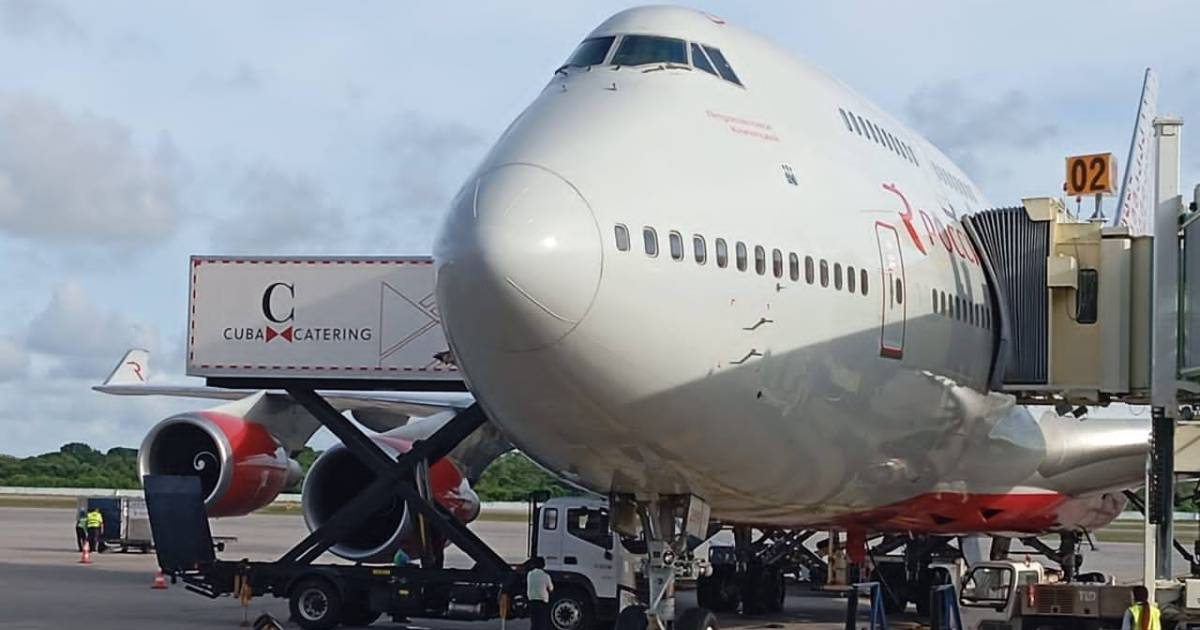
While thousands of Cubans remain trapped on the island with no real options to emigrate or reunite with their families, several Russian airlines initiated a special operation to evacuate about 4,000 tourists from the country before completely suspending their air operations with Cuba.
The companies Rossiya, a subsidiary of Aeroflot, and Nordwind began this week a series of special flights to ensure the return of Russian citizens who are still in destinations such as Varadero and Havana, following the definitive cancellation of routes starting February 24, according to a report by Aviacionline.
According to the Association of Tour Operators of Russia (ATOR), there are currently about 4,000 Russian tourists in Cuba.
Rossiya scheduled six evacuation flights: five from Varadero to Moscow (on February 12, 14, 17, 19, and 21) and one from Havana on February 16. Additionally, Nordwind also initiated special operations to transport passengers from Varadero to Moscow, as detailed by the specialized media.
However, both the Russian and Belarusian media have underscored a detail that does not go unnoticed: these flights are organized to transport foreign passengers and explicitly exclude Cuban citizens.
The independent Belarusian media Nasha Niva, citing the Belarusian Embassy in Havana, reported that the evacuation flights by Rossiya are intended for the transport of passengers “excluding Cuban citizens.” The same clarification was noted by Oreanda News, which specified that the organized flights are for individuals currently in Cuba “except for citizens of the Republic.”
That is to say, while thousands of tourists will be repatriated within days, Cubans will not be able to board those planes even if they have the need or the opportunity to travel.
The operation takes place in a sensitive context for the island. Airlines confirmed that as of February 24, all regular flights between Russia and Cuba will be suspended. According to Oreanda News, the decision is due to difficulties in refueling in Cuban territory.
On its part, Nasha Niva recalled that the island is facing energy problems following threats of sanctions from President Donald Trump, which has led to complications with oil supply and impacts on air transportation. By the end of January, it was reported that Cuba had only enough fuel reserves for two to three weeks.
The aerial suspension comes at a time when Russian tourism is declining. According to data from ATOR cited by Aviacionline, 131,900 Russian tourists arrived in Cuba in 2025, a 29% decrease compared to 2024, alongside a 50% reduction in flight frequencies. Packages for 10 days to destinations like Varadero, Cayo Coco, and Holguín were being sold for between $2,000 and $2,500.
Filed under: