
Related videos:
The Office of the United Nations High Commissioner for Human Rights (OHCHR) stated this Friday that the sanctions imposed by the United States against Cuba violate the UN Charter and international law, as they exacerbate the economic crisis and impact basic rights such as health, food, and access to water.
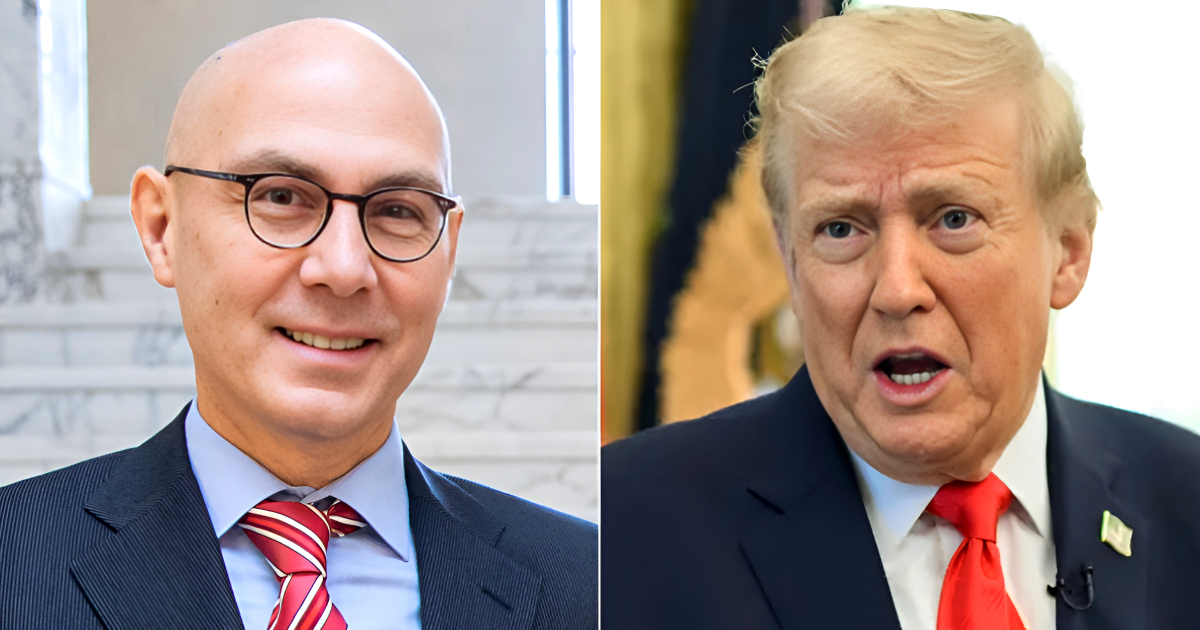
The High Commissioner, Volker Türk, stated that “political objectives cannot justify actions that violate human rights in themselves,” while the spokesperson for the organization, Marta Hurtado, reminded that only the Security Council can impose such sanctions.
The statement will likely be used by Havana as international support against Washington.
However, the very human rights system of the United Nations that today questions the impact of sanctions has maintained a sustained record of warnings and opinions regarding violations of civil and political rights attributed to the totalitarian Cuban state for years.
After the massive protests on July 11, 2021, the then High Commissioner Michelle Bachelet called for the release of individuals detained for exercising their right to peaceful assembly and freedom of expression, and expressed concern over reports of excessive use of force, communication blackouts, and trials lacking guarantees. That intervention was not an isolated event.
Since then, the UN Working Group on Arbitrary Detention (WGAD) has issued multiple rulings concluding that deprivations of liberty in Cuba were arbitrary and contrary to the Universal Declaration of Human Rights.
In its opinions, the group has pointed out the absence of due process, the use of courts lacking independence, a lack of access to effective defense, and the application of broadly defined criminal offenses—such as "public disorder" or "sedition"—against protesters and opponents.
These reports are part of the official documents submitted to the Human Rights Council and have included cases related to the protests of July 11th, as well as to activists, independent journalists, and members of religious or civic organizations.
This is complemented by the final observations issued by various UN treaty committees.
The Committee against Torture and other oversight bodies have raised concerns in periodic assessments regarding detention conditions, allegations of mistreatment, limitations on the right to defense, and systematic restrictions on fundamental freedoms.
In the context of the Universal Periodic Review (UPR), numerous States have made repeated recommendations to Cuba to ensure judicial independence, protect freedom of the press, and reform criminal provisions used against dissent.
International and non-governmental organizations have turned to that documentary corpus to describe a structural pattern.
A report published in November 2025 by the NGO Prisoners Defenders, based on opinions from the WGAD, stated that since 2019, Cuba has accumulated the highest number of cases recognized by that mechanism regarding arbitrary detentions, especially following the protests of 2021.
The NGO argued that many resolutions group dozens of individuals into the same ruling, which would point to a collective phenomenon rather than an isolated one.
Beyond the debates about sanctions, the deterioration of civil and political rights on the island has been consistently highlighted by international mechanisms.
Restrictions on freedom of expression and the press, the lack of legally recognized independent media, the persecution of journalists and activists, and the penalization of peaceful protest are among the ongoing concerns raised within the UN system.
This Friday's own statement included a reminder in that direction: the OHCHR emphasized that it is also the responsibility of the Cuban authorities to respect the rights to freedom of assembly and expression, and to take measures to protect the most vulnerable sectors.
For analysts and human rights advocates, the current debate cannot be detached from a broader context.
The institutional crisis regarding public freedoms, the lack of political pluralism, and the concentration of power in a one-party system have been highlighted for decades as structural factors that restrict the exercise of civil and political rights on the island.
Thus, while the Cuban regime will predictably celebrate the UN's criticism of U.S. sanctions as a validation of its international standing, the record compiled by the UN's own human rights system raises deep concerns about political prisoners, repression of dissent, and a lack of fundamental guarantees in the country.
Today's statement, focused on the impact of external measures, does not negate or replace those previous observations. Rather, it adds to a broader debate in which the United Nations has warned about both the humanitarian effects of sanctions and the internal responsibilities of the Cuban state concerning human rights.
Filed under: