
Related videos:
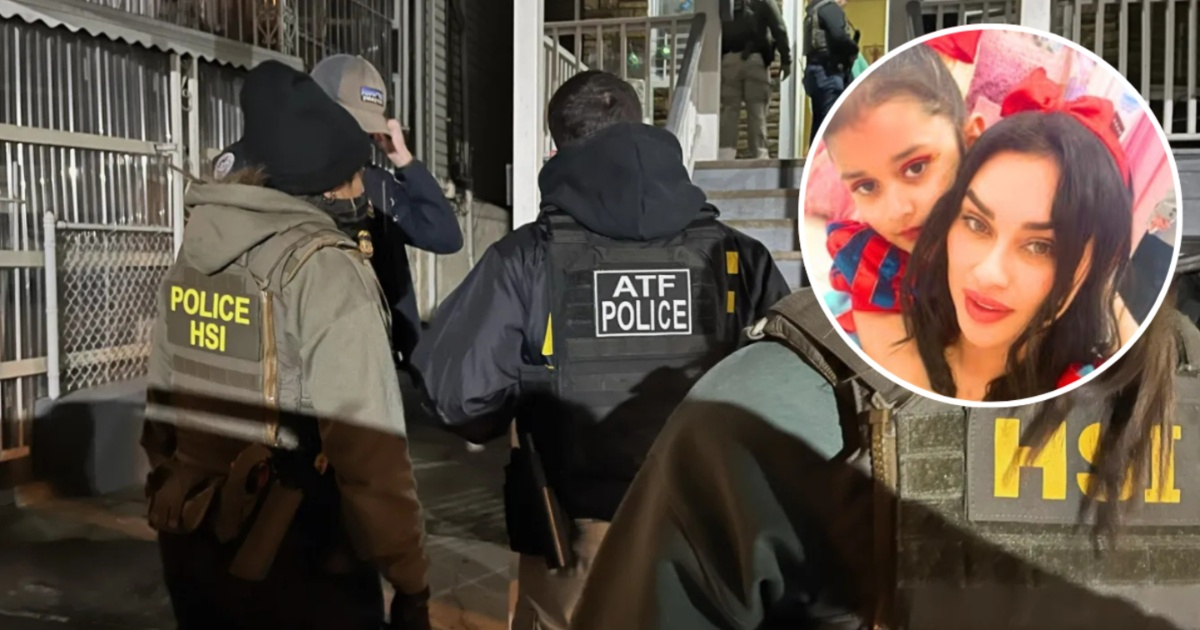
What was supposed to be a vacation trip to Disney World ended with a Colombian mother and her 9-year-old daughter detained for 128 days in ICE centers in the United States and, ultimately, deported to Colombia, following an ordeal that began with their arrest at Miami Airport.
According to the mother, María Alejandra Montoya, in an interview with Telemundo, both were detained on October 2, 2025, at Miami Airport: first, the girl was held inside the airport facilities, and approximately two hours later, mother and daughter were under custody in a cell within ICE facilities.
Subsequently, they were sent to the detention center in Dilley, Texas, where Montoya described spending more than four months in an environment that, according to her testimony, was characterized by confinement and the constant presence of minors.
"I came on vacation for ten days": the girl's letter
The detention first became publicly known through a handwritten letter from the girl, María Antonia Guerra Montoya, which was shared by the media after its publication, according to Infobae, on the ProPublica portal.
In that letter, the minor wrote that she had been detained for 113 days, that she missed her friends and feared being forgotten, and that she had come "on vacation for ten days" before being taken to an ICE office.
She also left a direct message about her situation: "I'm not happy in Dilley, please get me out of here, to Colombia."
Montoya described the place as "boxes with windows," of "dull color" and an atmosphere that "gets worse when you see that they're all children," referring to the confinement of minors.
In his testimony, he also mentioned practices that he deemed inhumane towards children, such as constant shouting and commands like "don't play," "don't run," as well as the use of a whistle to get their attention.
The girl also complained in writing that she was not receiving her vegetarian diet, that she "was not eating well," and that "there is no good education."
On that point, Montoya stated that upon admission they provided medical letters and medical history, and even so, the minor was subjected to an interview with a chaplain to explain why she was vegetarian and if she could justify her diet based on religious customs.
He added that during the first three months they were not provided with a diet and described the care as "very basic" and "mass-oriented," lacking comprehensive support for a minor in that situation.
Separation during hospitalization and obstacles to receiving help
Montoya recounted that there was a time when she was hospitalized urgently due to a kidney complication, and during that period, they were separated: she was taken to the hospital while the child remained under the full custody of officials.
The document also states that Montoya's husband —a U.S. citizen— tried to assist them at the airport, but was prevented from contacting his family or providing immediate legal advice.
Regarding his situation, Montoya explained that he was in a process with USCIS after a marriage, and that—according to what he said—this procedure allowed him to remain in the United States while his residency was being resolved; he added that the authorities' argument was that he should wait for the paperwork in his home country and that he could sign a voluntary departure.
In the case narrative, it is stated that Montoya was told her daughter was "inadmissible" and that she should self-deport with her, or they would be detained; the mother insisted that she was married to a U.S. citizen and in the process of changing her status due to marriage.
Finally, in the center of Dilley, Montoya signed the self-deportation form, despite claims that her residency process was pending due to marriage.
Return to Colombia: "emotional recovery" as a priority
The text notes that mother and daughter returned to Colombia on February 6, 2026, and that upon their return, Montoya stated that her priority was emotional and psychological recovery, especially for the child.
In parallel, it is reported that the minor —from Colombia, after her deportation— sent an encouraging message to other children remaining in Dilley: she expressed that she understood the sadness and the feeling of "not making it out," and that she felt that way too, but she managed to leave, so "you will also make it out."
The story, as recorded in the document, presents the case of Montoya and his daughter as an example of how immigration policies and the detention system affect the most vulnerable, emphasizing that both spent over four months in ICE detention centers.
Filed under: