
Related videos:
The Kremlin raised its tone this Tuesday against several countries, accusing them of promoting a "naval blockade" against Russia and acting as "Western privateers" on the high seas.
The warning was issued by Nikolái Patrushev, advisor to President Vladimir Putin and head of the Russian Maritime Board, who stated that Moscow is prepared to deploy its Navy along strategic routes to protect its foreign trade.
"If we do not respond firmly, the British, French, and even the Baltic countries will soon become so brazen that they will attempt to completely block our country's access to the seas, at least in the Atlantic basin," Patrushev said in an interview with the Russian media Argumenty i Fakty.
The official went further by stating that in "the main maritime directions, even in remote regions of Russia, there must be a permanent presence of impressive forces ready to cool the ardor of Western corsairs."
Accusations of "piracy" and threats of military response
Patrushev described the actions against vessels linked to Russia as “essentially pirate attacks” and asserted that the West aims to “paralyze” one of the key sectors of the Russian economy: foreign trade.
"According to the available information, these actions will intensify and attacks on our ships and cargo will become more frequent," he warned.
In that context, he emphasized that the Navy is "the best guarantee of navigation security" and advocated for the need to increase Russian naval presence in strategic routes, even far from its bases.
The Kremlin adviser alleged that NATO is creating a multinational force with an offensive focus in the Baltics and mentioned supposed plans to "block the Kaliningrad region, confiscate merchant ships, and sabotage submarine communications."
“Any attempt at a naval blockade of our country is completely illegal from the perspective of international law, and the concept of a ‘shadow fleet’, which EU representatives constantly invoke, is a legal fiction,” he stated.
In a direct message to Europe, he added: “If a peaceful solution to this situation fails, the Navy will break and eliminate the blockade.”
And he issued a veiled warning: “Let us not forget that many ships sail under the European flag. We might also be interested in what they are carrying and where they are headed.”
The only Russian ship seized was by the U.S
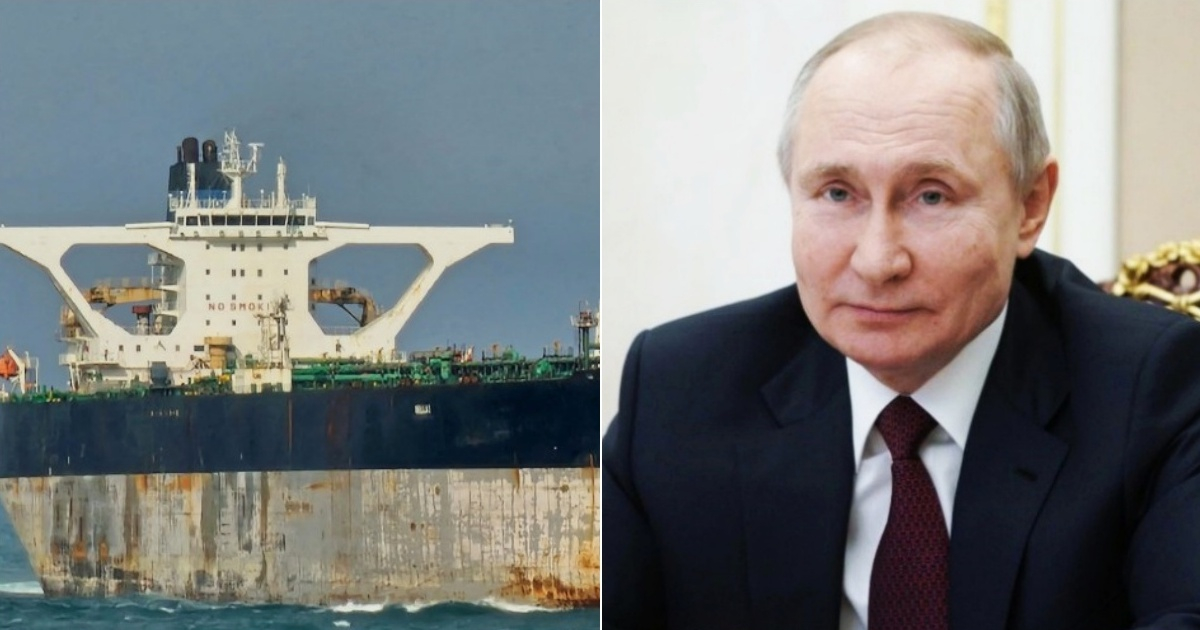
The aggressiveness of the rhetoric contrasts with the facts known so far, and indeed, the only publicly confiscated Russian-flagged vessel in recent months has been the tanker Marinera, seized by the United States after several days of pursuit in the Atlantic.
In early January, U.S. forces began tracking the Bella-1, a vessel used for the transportation of hydrocarbons linked to Russia, Iran, and Venezuela.
Two weeks later, he was detained, despite Moscow sending a security detail and even positioning a submarine for his protection.
The ship was captured empty, and part of its crew was detained. Subsequently, an agreement between Washington and Moscow facilitated the release of two Russian workers.
As of today, there have been no reports of the confiscation of a Russian-flagged vessel by European countries, although the European Union has intensified sanctions against what it calls the Russian "shadow fleet," used to circumvent oil export restrictions.
BRICS and global deployment
In his interview, Patrushev defended the strengthening of the Russian Navy until 2050 and confirmed that an updated shipbuilding program is being finalized, which will be presented to the president.
"Russia needs a balanced navy, capable of facing all pressing challenges and meeting the demands of the times, especially technological ones," he stated, emphasizing the incorporation of unmanned vessels and cutting-edge technologies.
It also aimed to provide a strategic maritime dimension to the BRICS group.
He recalled that in January, the naval exercise "Voluntad de Paz 2026" took place in the South Atlantic, with participation from Russia, China, Iran, the United Arab Emirates, and South Africa, as well as maneuvers in the Strait of Hormuz.
"It is time to give them a comprehensive strategic maritime dimension," he stated, while emphasizing that the fleets of these countries are working to protect trade routes that, as he mentioned, have become vulnerable "even to Western piracy."
A message in geopolitical code
Patrushev's statements come at a time of increasing tension between Russia and the European Union over energy sanctions and crude oil export controls.
Moscow has repeatedly accused Brussels of using the concept of "shadow fleet" as a political tool to justify inspections and restrictions.
At the same time, the Kremlin aims to project an image of naval power capable of challenging any attempt at maritime isolation.
"With the hope of peace, we must not falter in military matters," Patrushev quoted, evoking Peter the Great, on the eve of Defender of the Fatherland Day.
The message is clear: if Europe moves towards an effective blockade, Russia will respond with military presence.
However, for now, the only effective confiscation of a Russian vessel has been carried out by the United States, not by the European countries that Moscow points to as "Western pirates."
Filed under: