
Related videos:
On January 9, 2026, the oil tanker Ocean Mariner docked in Havana with 85,000 barrels of crude oil from Mexico. No one knew it then, but this would be the last shipment of oil that Cuba would receive. Five weeks later, the island falls dark: airports without jet fuel, cities with more than 18 hours of blackout per day, and a Bloomberg analysis based on satellite imagery revealing a 50% decline in nighttime lights in Santiago de Cuba and Holguín compared to the historical average.
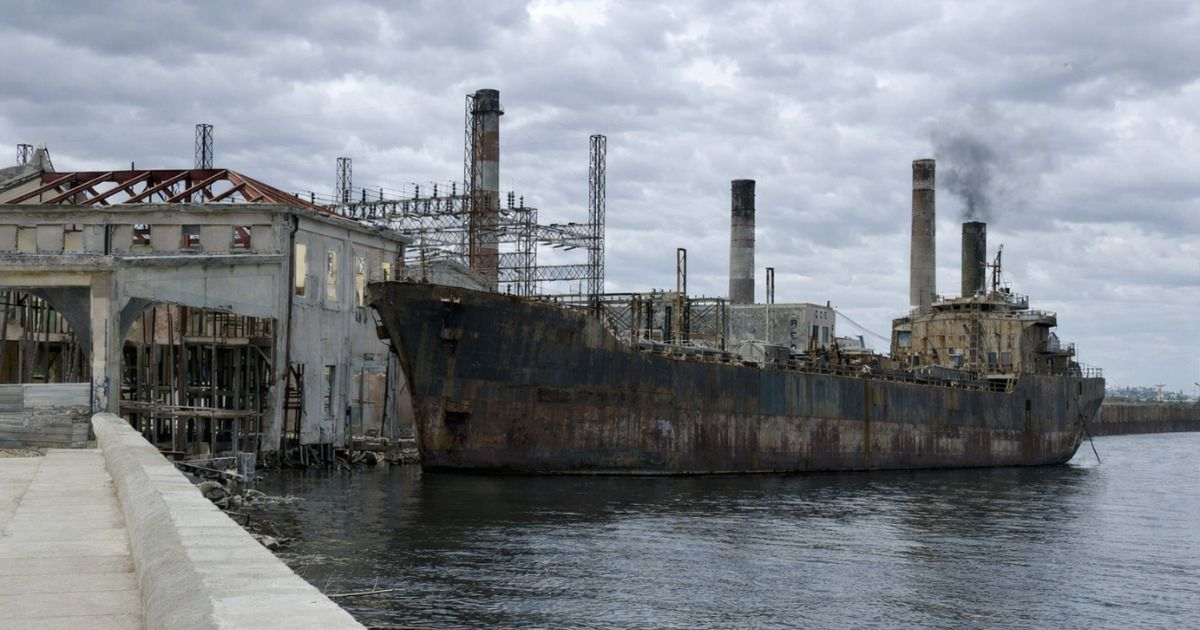
Behind this catastrophe lies a story that has been unfolding for years: that of a fleet of aging oil tankers, controlled by the military conglomerate GAESA, which for over a decade served as the lifeblood sustaining the Cuban dictatorship with Venezuelan, Mexican, and Russian crude oil. A fleet that now lies anchored in Matanzas Bay, empty, transformed into a floating storage facility for the regime's dwindling reserves.
I. GAESA: the military conglomerate behind oil
The Business Administration Group S.A. (GAESA) is the conglomerate of the Revolutionary Armed Forces that dominates the strategic sectors of the Cuban economy: tourism (Gaviota S.A., 121 hotels), transportation, logistics, and, crucially, the import of fuels through Cubametales.
A Miami Herald investigation revealed that between January and March 2024, Gaviota achieved a net margin of 42%—nearly four times the global hotel industry average—with profits of 554 million dollars, while paying its workers 11 dollars a month. This is the same conglomerate that built and operates the oil fleet, registering ships under shell companies in Cyprus, Panama, and Liberia.
II. The regime's vessels
At least nine tankers operated by GAESA or affiliated companies have been identified, with a total deadweight tonnage (DWT) of 423,584 tons and an average age of 22.6 years.
| Ship | IMO | Type | Flag | Year | DWT | OFAC |
| Lourdes | 9259692 | Aframax | Cuba | 2002 | 84.999 | No conf. |
| Sandino | 9441178 | Panamax | Cuba | 2009 | 73.719 | Sí (2019) |
| Petion | 9295098 | Oil Products | Cuba | 2006 | 72.714 | Sí (2019) |
| Hope | 9289166 | Panamax | Cuba | 2005 | 61.328 | Sí |
| Alicia | 9284817 | Crude Oil | Cuba | 2005 | 50.379 | No conf. |
| Pastorita | 9034729 | LPG/Chemical | Cuba | 1994 | 23.276 | No conf. |
| Primula | 9038593 | Chemical/Oil | Belice | 1992 | 23.433 | No |
| María Cristina | 9502453 | Chemical/Oil | Cuba | 2010 | 16.906 | Sí |
| Ocean Integrity | 9463358 | Chemical/Oil | Panamá | 2008 | 16.830 | No |
The three largest —Lourdes, Sandino, and Petion— covered the Venezuela-Cuba route loading at the ports of José, Bajo Grande, and El Palito, and unloading in Matanzas, Havana, Cienfuegos, and Bahía de Nipe. The Sandino, sanctioned by OFAC since 2019 and operated by Caroil Transport Marine Ltd. (Cyprus), continued sailing between Venezuela, Mexico, and Cuba throughout the entire period of sanctions. The smaller vessels —María Cristina, Ocean Integrity, Primula— are used for coastal cabotage and as floating storage in ship-to-ship transfers.
III. Shell companies to evade sanctions
The fleet operates under a network of shell companies: Caroil Transport Marine Ltd. (Cyprus), sanctioned in 2019, operated the Sandino, Petion, and Carlota C (now María Cristina). Trocana World Inc. and Tovase Development Corp. (both from Panama) are listed as the owners of the Petion and the Sandino respectively. Bluelane Overseas (Panama) operated the Giralt on the Cuba-Venezuela route.
Other companies sanctioned include Jennifer Navigation, Lima Shipping, and Large Range (Liberia), as well as the Italian PB Tankers S.P.A. Cuba employs the same corporate cascade model as Iran and Russia, but lacks the financial muscle to replace sanctioned companies at the pace they are identified.
IV. The three arteries of Cuban crude
According to S&P Global, in 2025 Cuba imported 13.7 million barrels: Venezuela (61%), Mexico (25%), Russia (10%), and Algeria (4%). Cuba needs about 100,000 barrels daily for its basic services; it produces only 40,000. The chronic deficit of 60,000 barrels was already unsustainable.
Venezuela supplied between 27,000 and 35,000 barrels daily in exchange for doctors, intelligence, and military advisors. Since 2019, the shipments became opaque: in June 2024, the Neptune 6 was detected conducting ship-to-ship transfers with the Esperanza in Bahía de Nipe while its AIS transmitted a false position north of Curaçao. PDVSA also implemented "co-loading": mixed shipments that unload a portion in Cuba and continue to Asia.
Mexico, since the government of López Obrador, was sending 17,200 barrels daily (a figure acknowledged by Pemex to the SEC). Expert Jorge Piñón revealed that Mexico was not sending its heavy Maya crude but rather its more valuable varieties —Olmeca and Istmo— because Cuban refineries, outdated, do not process heavy crudes.
Russia sent Urals crude from Ust-Luga using vessels like the Akademik Gubkin (sanctioned by OFAC), but the volumes decreased from 600,000 tons in 2022 to 100,000 in 2024.
V. Evasion Tactics of the Dark Fleet
The Cuban fleet employed the same techniques as the global phantom fleet: AIS spoofing (false positions), signal blackouts (the M/T Sophia had gone five months without a transponder when it was captured), ship-to-ship transfers at sea, name and flag changes (the María Cristina was the Carlota C; vessels from the dark fleet rotate among flags from Panama, Cameroon, Guyana, and Timor-Leste), and co-loading of mixed Cuba-Asia cargoes.
VI. Operation Southern Spear: the end of the dark fleet in the Caribbean
Everything changed on January 3, 2026, with the capture of Maduro in Caracas. However, the offensive against oil tankers had begun earlier: on December 10, 2025, the U.S. captured the Skipper, a VLCC carrying 1.8 million barrels bound for Cuba, flying a false flag of Guyana.
What followed was an unprecedented escalation. On December 20, while attempting to board the Bella 1, the crew fled towards the North Atlantic, initiating an 18-day chase. During their escape, they painted a Russian flag on the hull and renamed the ship "Marinera." Moscow registered it in its maritime registry and sent a submarine and a warship as escort. The U.S. was undeterred: on January 7, Navy SEALs captured the Marinera in the North Atlantic while, simultaneously, Southern Command seized the M/T Sophia in the Caribbean.
| Date | Vessel | Location | Details |
| 10 dic. 2025 | Skipper | Caribe | VLCC, 1,85M barriles. Bandera falsa de Guyana. |
| 20 dic. 2025 | Centuries | Costa Venezuela | VLCC, 1,83M barriles. |
| 7 ene. 2026 | Marinera (ex-Bella 1) | Atlántico Norte | 18 días de persecución. Pintó bandera rusa. |
| 7 ene. 2026 | M/T Sophia | Caribe | 5 meses sin transpondedor. Devuelto a Venezuela. |
| 9 ene. 2026 | MV Olina | Caribe | Bandera falsa de Timor-Leste. |
| 15 ene. 2026 | Verónica | Caribe | Registrado previamente en Rusia. |
| 21 ene. 2026 | Sagitta | Caribe | Séptimo petrolero capturado. |
| 9 feb. 2026 | Aquila II | Océano Índico | Suezmax, 700.000 barriles rumbo a China. |
The Southern Command confirmed that it maintains an active deployment of aircraft carriers and assault ships in the Caribbean under direct orders from the White House. An investigation by the Washington Post revealed that 11 sanctioned tankers managed to escape from Venezuela with 9.4 million barrels —the "quarantine" has cracks— but none were headed to Cuba.
VII. Mexico capitulates: the last artery closes
With Venezuela neutralized, Mexico was the last hope. But on January 29, following an executive order from Trump threatening tariffs, Sheinbaum confirmed that the shipments were "paused". On February 12, two ships of the Mexican Navy docked in Havana with 800 tons of food supplies. Food, not oil. The difference says it all.
VIII. The GAESA fleet: from transporting crude to storing the last drops
In early January, maritime trackers documented how six GAESA ships concentrated in Matanzas —Sandino, Ocean Integrity, Alicia, Marlin Ammolite, Pastorita, and María Cristina— with Primula en route as the seventh. They no longer transported crude oil; they had transformed into floating storage for the remnants.
The economist Emilio Morales from Havana Consulting Group summed it up: the Cuban economy is exhausted, without credit and without allies; the crisis is structural and the collapse seems to be a matter of weeks.
By February 10th, Cuba awoke without any oil movement. Only the Esperanza was sailing towards Cienfuegos, redistributing the last loads internally.
IX. Failed attempts: they can't even buy gas
Desperation is measured in ships returning empty. At the beginning of February, the tanker Emilia traveled to Kingston (Jamaica) to load propane at the Petrojam refinery, which has historically sold gas to Cuba for cash. It returned empty. On February 14, the Eugenia Gas returned empty to Santiago de Cuba after another failed attempt in Jamaica — the second failure in two weeks. According to Jorge Piñón, the maneuver cost the ship the little fuel it had left to operate.
The Gas Exelero set sail from Cienfuegos on February 10th headed for the Caribbean, possibly towards Curacao. The Ocean Mariner itself was intercepted south of Haiti by the USCG STONE 758, but continued its journey after verifying its manifest.
X. Cuba is fading away
Massive blackouts. On February 4, Guantánamo, Santiago de Cuba, Holguín, and Granma experienced a total blackout. The Electric Union reported 1,389 MW available against a demand of 3,100 MW — a deficit of 1,700 MW — plus 1,000 MW of distributed generation halted due to a lack of diesel. Six out of 16 thermoelectric plants are out of service. On February 3, Cuba recorded the lowest temperature in its history (0°C in Matanzas), exacerbating the emergency caused by the blackouts.
Airports without kerosene. On February 9, a NOTAM alert confirmed by the FAA certified the complete absence of Jet A-1 at all nine international airports, a situation expected to last until March 11. Air Canada canceled all its flights and repatriated 3,000 tourists.
Emergency measures. Four-day workweek, closed resorts, gasoline available only in dollars, reduced public transport, restricted schools, hospitals with reduced staff. Nicaragua canceled visa-free entry for Cubans, closing off one of the main migration routes.
Fire at Ñico López. On February 13 a warehouse caught fire at the Ñico López refinery, the largest in the country. The columns of black smoke over Havana became a symbolic image of the crisis.
The UN warns. On February 5, the spokesperson for the UN Secretary-General if Cuba's energy needs are not met.
XI. The Global Dark Fleet: Perspective
Windward estimated in August 2025 that there were about 1,942 tankers in the global dark fleet (884 sanctioned). Kpler estimates 3,300 vessels that transported 3.6 billion barrels in 2025 —between 6% and 7% of global flows—. S&P Global calculates that one in five tankers worldwide is smuggling sanctioned crude oil.
But for Cuba, this ecosystem no longer works. The collapse of Venezuela, Operation Southern Spear, pressure on Mexico, and the seizures of key ships have created a blockade that the island cannot break. With its aging fleet, no Western insurance, no credit, and under constant surveillance from Southern Command, the regime's ability to import oil through a shadow fleet is virtually erased.
XII. "The Zero Hour"
Jorge Piñón, a researcher at the Energy Institute of the University of Texas, born in Cárdenas (Cuba) in 1946, with three decades of experience at Shell, Amoco, and BP, monitors every oil tanker that approaches the island. His diagnosis: if no tanker appears on the horizon by mid-March, Cuba will have reached "zero hour." The island has never had strategic reserves and has always lived day by day.
60% of the thermoelectric plants are not operational due to a lack of maintenance. The solar parks promoted by the government only function when the sun is shining and lack the capital to expand. The crisis, Piñón concludes, is the result of a structural dependence on ideological allies with oil: first the USSR, then Venezuela. Cuba has never abandoned its centralized model.
Secretary of State Marco Rubio, speaking from the Munich Security Conference, was straightforward: the dictatorship must grant political and economic freedom if it wants the U.S. to ease the pressure. Cuba is in a desperate situation because it has no subsidies from any country.
Today, February 16, 2026, we are one month away from that "zero hour." The dark fleet of GAESA remains anchored, empty. There are no oil tankers on the horizon. The question is no longer whether the dark fleet can rescue Cuba. It cannot. The question now is what comes next.
Filed under: