
Related videos:
The United States intensified its pressure policy against the regime of Daniel Ortega and Rosario Murillo on Wednesday by sanctioning the director of the maximum security prison La Modelo, Roberto Clemente Guevara Gómez, where most of the Nicaraguan political prisoners are held.
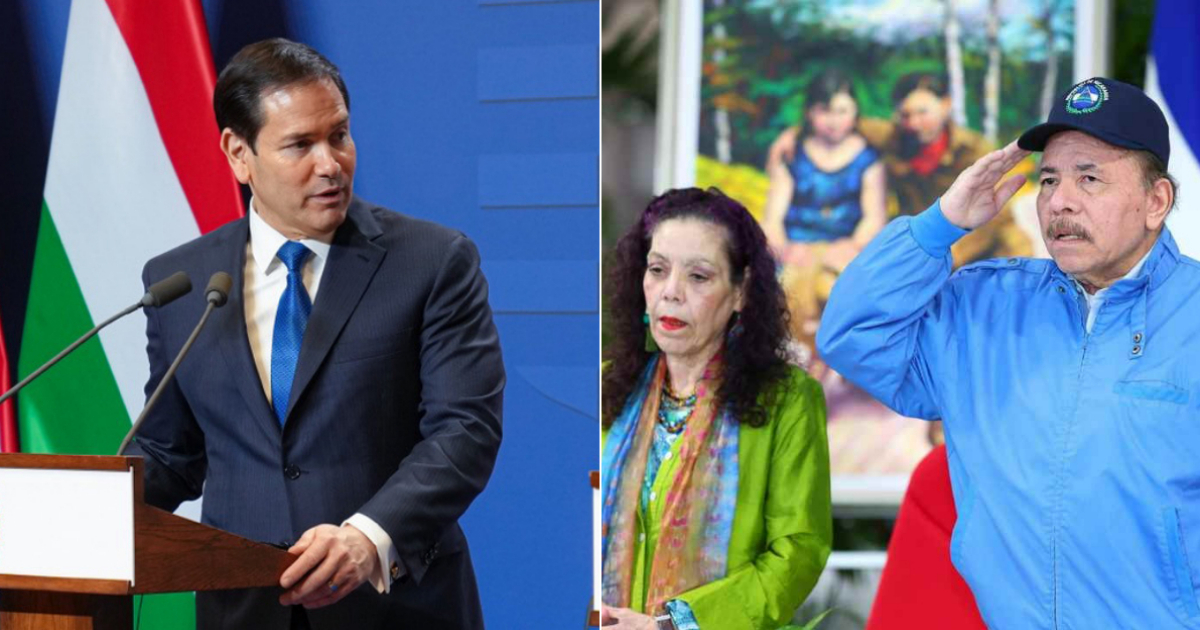
The Secretary of State, Marco Rubio, announced the designation of Guevara Gómez under Section 7031(c) of the budget law that regulates the operations of the Department of State, which entails a prohibition on entry into U.S. territory due to his alleged involvement in "serious human rights violations."
"Today I am designating Nicaraguan prison director Roberto Clemente Guevara Gómez for his involvement in serious human rights violations. We continue to demand accountability for the crimes committed by the Murillo-Ortega dictatorship and call for the immediate and unconditional release of all political prisoners unjustly detained in Nicaragua," Rubio wrote on his official account on X.
La Modelo prison, located in Tipitapa, has been repeatedly highlighted by international organizations and human rights groups as one of the primary detention centers for opponents, activists, and critics of the Sandinista government. Released prisoners and relatives of detainees have reported inhumane conditions, prolonged isolation, and degrading treatment.
Section 7031(c) allows Washington to revoke visas and prohibit entry into the United States for foreign officials involved in significant corruption or serious human rights violations. In recent years, this tool has been used against judges, prosecutors, police commanders, and high-ranking officials of the Nicaraguan state apparatus.
The measure is part of a broader strategy by the current U.S. administration to pressure Managua, which includes economic sanctions, immigration restrictions, and coordinated actions with Congress to hold regime officials accountable for the political repression that began after the protests of 2018.
Since then, Washington has repeatedly condemned the deterioration of public freedoms in Nicaragua, the cancellation of political parties, the closure of independent media, and the expulsion of international organizations.
The Organization of American States (OAS) recently expressed being "alarmed" by the situation in the Central American country and urged Nicaragua to return to compliance with the principles of the Inter-American Democratic Charter.
For its part, the Inter-American Commission on Human Rights has documented in several reports systematic patterns of persecution against the opposition.
With this new sanction, the United States reinforces the message that it will continue to use legal and diplomatic mechanisms to demand accountability and advocate for the release of political prisoners in Nicaragua, amid a growing international isolation of the Ortega and Murillo regime and the dictatorships in the region.
Filed under: