
Related videos:
“Until when will this municipality's situation with the transfer issue last?”; “For God's sake, the government or whoever should finally take the necessary measures... this is just adding insult to injury,” exploded in the FB group Desde MOA para el mundo by the Internet user Yaimi Llorente Peña, who was quickly supported by dozens of comments.
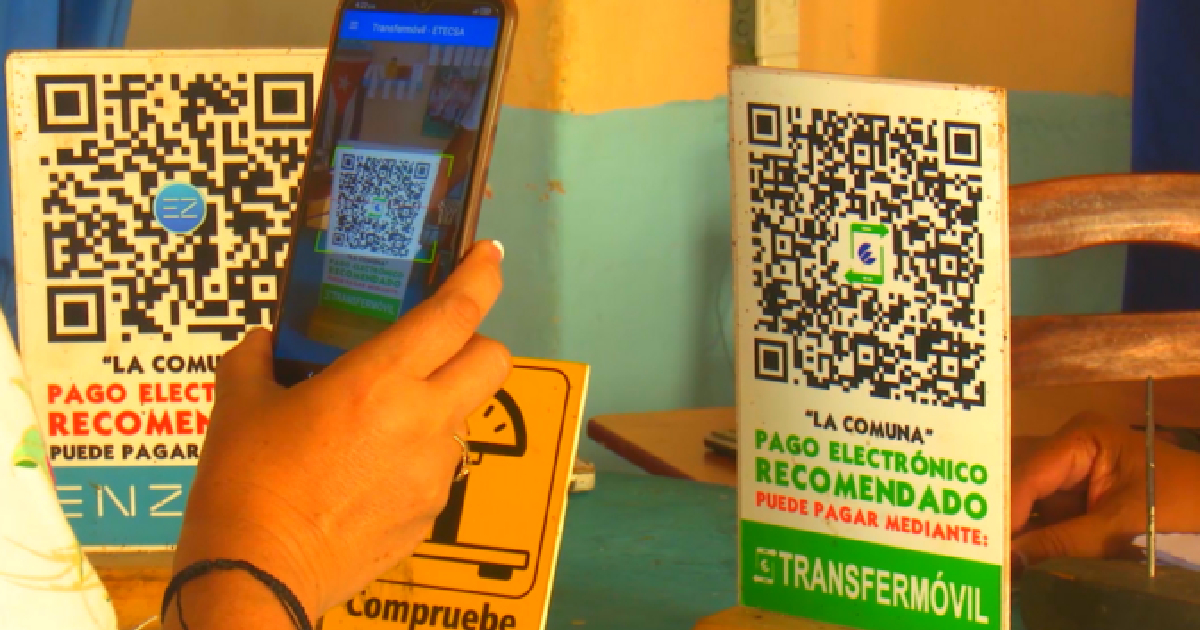
The local resident wondered why, if workers receive their salaries in electronic accounts, businesses refuse to accept purchases through that means. This has been a constant question in the country since "bankarization" was established as a measure to promote virtual commerce in a context where many factors conspire against it.
On top of the increasingly exorbitant product prices, some entities do not accept transfers or charge commissions that can reach significant percentages (15% or more) of the purchase value, several forum members indicated.
"The government and management are to blame," pointed out a netizen identified as Bussiness Sa, and he reminded that private micro, small, and medium enterprises need to secure cash for their purchases and imports. "What are they going to do with all those transfers?" he wondered, referring to the impossibility of later converting digital money into physical cash due to the limited availability and operational limits at Cuban banks.
The problem has been a frequent topic in both state-run and independent media, as well as on social networks, due to the obstacles it presents to daily life on the Island.
Users have reported entities that claim to trade using QR codes to maintain a facade in front of inspectors while receiving transfers only when it suits them or if they are paid an additional fee.
Other difficulties undermining the proper functioning of banking are the lack of telephone coverage and the failure of digital platforms in certain areas of the country, which, compounded by the intensifying energy crisis we are currently experiencing, has worsened significantly. Under these circumstances, trading in cash is the only option; but where is it? At what cost can it be found?
Riots outside the banks, like the one reported last November by a resident of Marianao; endless lines from early morning to withdraw a limited amount of one's own money; protests and frustration over malfunctioning or simply empty ATMs have become daily scenes that add bitterness to the already very harsh Cuban reality.
In Guantánamo, branch 8572 of the Banco de Crédito y Comercio (Bandec) began operating a digital waiting room for cash withdrawals last December, in response to a critical situation marked by long lines, illegal reselling of appointments at prices of up to 400 pesos, and health risks posed by overcrowding.
The method barely managed to meet the demands of a few dozen people each day, while hundreds more waited on the electronic list. Without tickets to distribute, no matter how well a waiting system is organized, the underlying problem remains, observers noted.
Cuban banks —the regime has assured— are even prepared to operate without electricity due to the fuel and power generation shortages faced by the Island. However, the daily anxieties of their customers render such statements mere empty propaganda.
For many analysts, economic absurdities like this one about a more "virtual" commerce that is nonexistent rather than electronic cannot be viewed as separate from the polycrisis affecting the country. "They are still looking in the wrong place. The only solution is a change of system, the end of the dictatorship," concluded in the Moa FB group by the netizen Radimir Galán Rodríguez.
Filed under: