
Related videos:
The participation of the United States in the Venezuelan oil sector opens a potential opportunity for international banks, including U.S. banks, that could compete for trade financing and investment financing in oil infrastructure, according to information from Reuters.
According to these sources, JPMorgan Chase and other banks find themselves in a favorable position due to their track record in the country and their previous experience with financing structures related to reconstruction contexts.
Reuters notes that JPMorgan has had a presence in Venezuela for 60 years and that, although it reduced banking and stock trading operations in 2002, it maintained an inactive office in Caracas for years that could be reactivated if necessary.
The potential return of the banking sector comes after years of strict restrictions.
The document notes that Venezuela has been under U.S. sanctions since 2006, which were tightened in 2017, prohibiting U.S. financial institutions from providing new funds to the government or to PDVSA; and that in 2019, Washington imposed broad sanctions on the oil sector.
Now, the U.S. plans to selectively lift sanctions as it begins to trade Venezuelan oil, and the Department of Energy indicated that the revenue would be deposited into accounts controlled by the U.S. in global banks.
Reuters describes several potential avenues for JPMorgan's involvement: from the internally discussed possibility of creating a commercial bank to finance oil exports, to the use of resources from its Security and Resilience initiative (a 10-year plan of $1.5 trillion) to finance areas such as critical minerals, where Venezuela has abundant resources, according to cited sources.
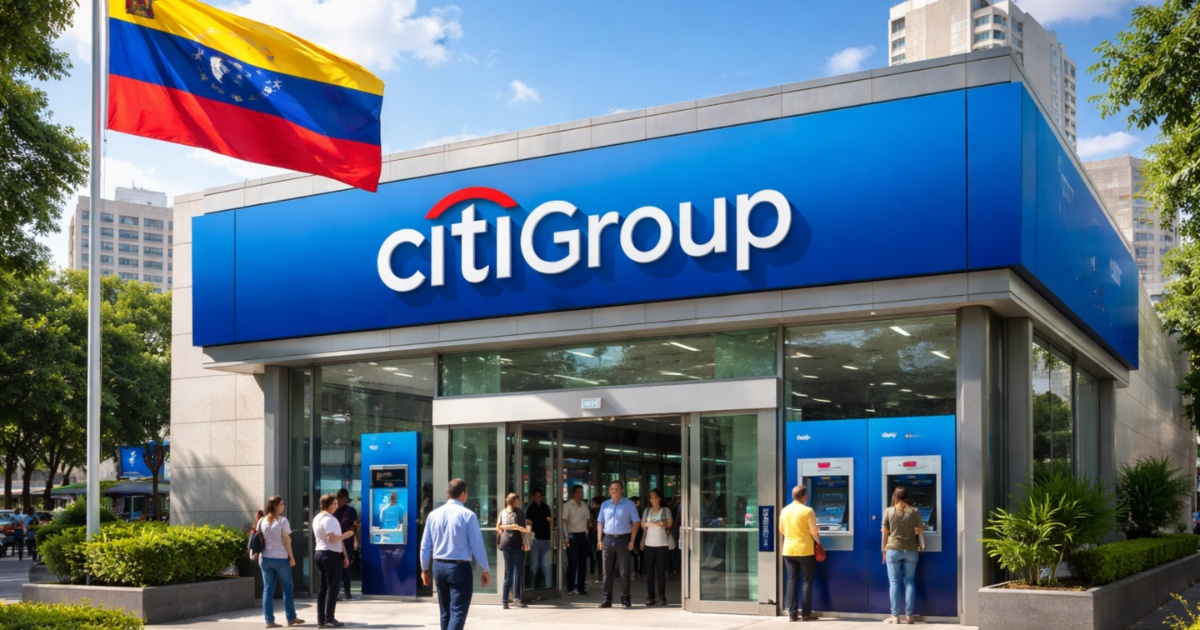
Other actors are also mentioned. Citigroup historically operated in Venezuela but sold its operations to the Banco Nacional de Crédito and left the country in 2021.
Even so, analysts cited by Reuters suggest that his regional experience could become relevant again if conditions change.
For its part, BBVA is described as the only major foreign bank with a significant presence in Venezuela, although a spokesperson noted that “it is too early” to comment due to the high level of uncertainty.
The document highlights that, even if sanctions are eased, there would still be obstacles: the Venezuelan banking system is “heavily regulated”, operates under financial isolation and economic instability, and relies on banks outside of U.S. jurisdiction and extraterritorial intermediaries to make payments.
Even after the lifting of sanctions on Iran in 2016, many global banks were hesitant to resume business activities.
A White House official cited by Reuters stated that the Trump administration is carefully evaluating its options and that any announcement will come directly from the government, warning that "anything else is pure speculation."
At the White House, during a meeting with major U.S. oil companies such as Exxon, Chevron, and ConocoPhillips, as well as some foreign companies like the Italian ENI and the Spanish Repsol, Trump stated that his administration is coordinating with "the largest oil companies in the world" to control and reconstruct the Venezuelan energy sector, with goals that include stabilizing the country and reducing oil prices.
The president indicated that the business interest was so high that "the ballroom is not big enough" and that more than a dozen companies were seeking to participate; he also stated that the companies that could not be accommodated would meet in the coming days with the Secretary of Energy, Chris Wright, and the Secretary of the Interior, Doug Burgum.
The plan includes that the United States supervise the production and marketing of crude oil, and that the revenues be managed under U.S. oversight "for the benefit of the Venezuelan people."
During the meeting, regional security, the fight against drug trafficking, and the reduction of oil prices for American consumers were also discussed.
Filed under: