
Related videos:
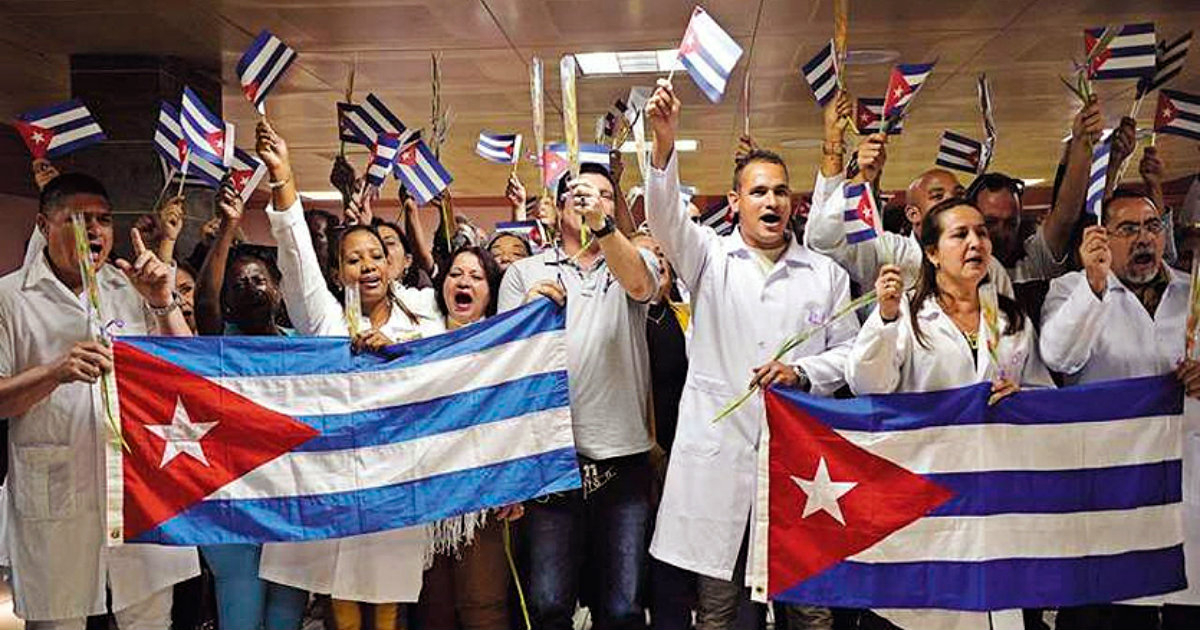
Cuban medical missions, promoted by the Government as an example of international cooperation, face strong criticism based on testimonies from professionals who report labor exploitation, withholding of earnings, and limitations on their fundamental rights.
A report by Deutsche Welle (DW) features statements from Javier Larrondo, president of the organization Prisoners Defenders (PD), based in Madrid, who claims that the Cuban state retains around 85% of the salary paid by recipient countries for each doctor or nurse.
"Cuba generates around five to six billion dollars annually from medical missions," Larrondo stated.
According to their analysis of agreements and contracts, in many cases, foreign governments pay thousands of dollars per professional, while the worker receives a minimal fraction.
As an example, he noted that during the pandemic, Mexico was paying $3,750 monthly per doctor, while Cubans received about $200.
In Qatar, he stated, the Cuban state charges around 13,000 dollars per specialist and pays a maximum of 1,200.
In Italy, he noted, the doctor earned 1,200 euros, although the European country paid 4,700 for each professional.
PD claims to have gathered more than 1,400 testimonies from participants in missions across different countries, which is why eliminating this source of enrichment for the regime has become one of the objectives of the current United States administration.
According to Larrondo, the accounts describe exhausting days, political pressure, constant surveillance, and restrictions on interacting freely.
They also report the confiscation of passports and the prohibition of carrying academic certificates, which makes it difficult to leave the program.
“The laws are designed to suffocate and intimidate doctors, who risk losing their families,” warned Larrondo.
The organization claims that those who desert may face up to eight years without being able to return to Cuba, which implies a prolonged separation from their children and family members.
The report by DW includes the testimony of Arisleydi López, a licensed nurse with over 30 years of experience, who participated in a mission in Mexico and later in Venezuela.
"I thought I was going to earn a decent salary and be able to improve the lives of my daughters," he recounted.
López reported that the contracts did not clearly specify the actual salary they would receive and described the process as “a total fraud.”
He also pointed out working conditions that he described as exhausting and assured that some professionals sent did not have the proper training.
"They are exploiting and enslaving healthcare staff," she stated.
According to his testimony, leaving the mission meant losing the chance to return to Cuba for years.
She currently resides in the United States, separated from one of her daughters who remains on the island: “I lost everything I had to lose. If I don't agree with being enslaved, it's been eight years of separation from my family,” she declared.
The reports have transcended into the international arena. United Nations rapporteurs have expressed concern over possible labor violations, while the European Parliament has issued critical resolutions regarding the system.
Despite this, the Cuban government defends the missions as a legitimate source of income that helps sustain the national healthcare system and the economy of the country.
Amid the serious healthcare crisis facing the island, the debate over medical brigades is intensifying.
While the authorities present them as a symbol of solidarity and health diplomacy, the testimonies collected by Prisoners Defenders describe a model that, according to its critics, prioritizes the collection of foreign currency over the rights and stability of the professionals themselves.
Filed under: