
Related videos:
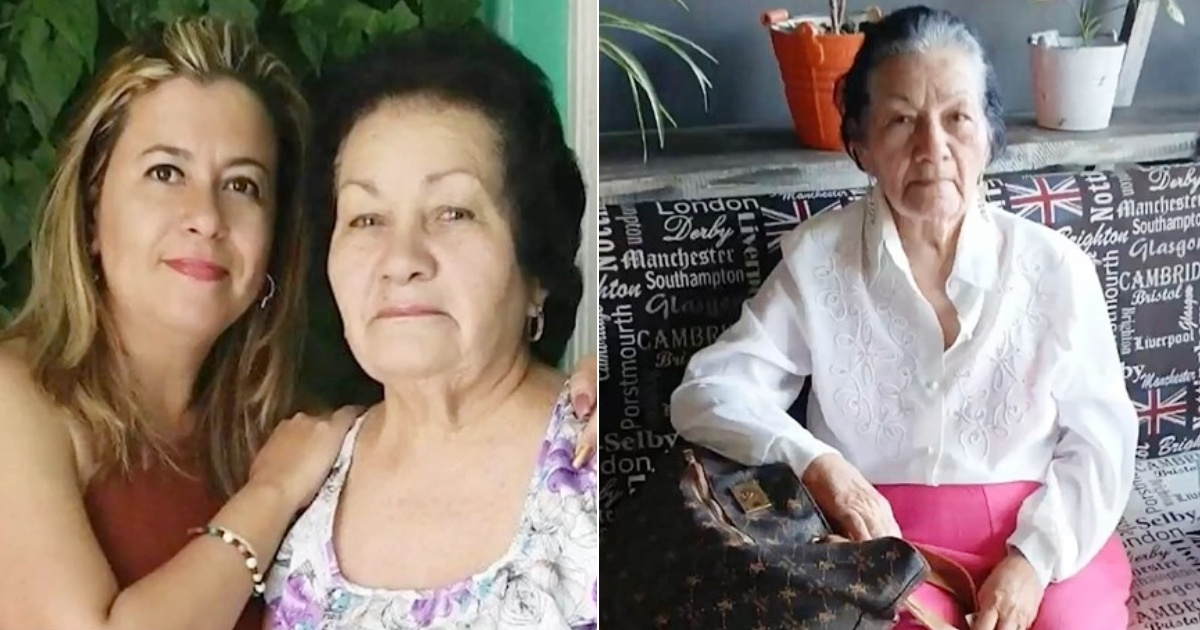
From southern Florida, Dayana Cosme Benítez tries to stay strong every time she talks to her mother.
On the other end of the line is Julia Benítez Pérez, a 79-year-old Cuban who has been detained for nine months in an immigration center in Arizona and who, according to her family, shows signs of senile dementia.
“As long as I have strength, I will continue to give her hope. I can't let her feel sad. She can't feel her daughter sad because if she does, I will collapse”, Dayana said to Telemundo 51, in an interview filled with anguish and helplessness.
Julia left Cuba with the intention of seeking political asylum in the United States, after years—according to her family—of persecution. However, her arrival in the country ended in detention, and since then, her health, both physical and mental, has deteriorated.
"We thought they were going to have flexibility."
Dayana explained that her mother traveled with the intention of seeking to undergo a formal process to request protection.
However, after the cancellation of the CBP One program application in May 2025, Julia entered the country through the Lukeville Port of Entry in Arizona.
“They accompanied her across the border. She didn’t know, of course, the way,” her daughter reported to the mentioned media outlet.
The family believed that, due to her being an elderly woman with health issues, she could go through her immigration process in freedom, alongside her daughter in Florida.
“We thought they would be flexible, that it could even be possible to carry out a process while being with me,” Dayana lamented.
However, an immigration judge denied him the opportunity for a bail hearing, considering that he is subject to mandatory detention after having entered without formal authorization.
That interpretation, as has come to light, changed during the administration of Donald Trump, limiting discretion in granting parole in certain cases.
"Sometimes he speaks as if he were still in Cuba."
One of the most painful aspects for the family is Julia's cognitive state. According to her daughter, there are medical reports issued in Cuba that show signs of senile dementia.
During phone calls, the elderly woman sometimes expresses herself as if she were still on the island. At times, she seems unaware of where she is.
The family has also raised concerns about other health issues she is facing while in detention. Dayana has tried, unsuccessfully, to secure bail for her mother so she can defend her case from outside, emphasizing her age and medical condition.
Meanwhile, Julia is known among the other detainees as "the grandmother."
The political reaction and the stance of ICE
The case caught the attention of Representative Adelita Grijalva, who recently visited the detention center and met with the elderly woman.
"It was heartbreaking because, when we were leaving, she thought we were there to take her home. For me, I can't imagine what her family is going through, not being able to come and see her here," the legislator expressed.
For its part, the Immigration and Customs Enforcement (ICE) confirmed that Julia was arrested on May 8, 2025, near Lukeville, Arizona, after it was determined that she had crossed the border "illegally," and she entered custody on May 10.
In statements sent to Telemundo, the agency stated:
"It is an established practice to provide comprehensive medical care from the moment an undocumented immigrant is taken into custody by ICE. This includes medical, dental, and mental health assessments within the first 12 hours of arrival at each detention center, a complete health evaluation within 14 days of entry into custody or arrival at a facility, as well as access to medical appointments and emergency care 24 hours a day."
ICE added that Julia "is not the exception" regarding the medical care received by detainees.
Case Background
Before the statements made to Telemundo 51, the case had already been revealed by the Arizona Daily Star, which detailed that Julia is at the Eloy Detention Center.
In that report, her daughter explained that when she surrendered to the authorities, she was only experiencing occasional memory lapses, but after months in custody, she no longer clearly remembers where she is.
"Most of the time, she simply asks when she will be released," Dayana told the American media.
The newspaper also reported that the elderly woman spends a large part of her time in a wheelchair that she did not need before her arrest, and that other detainees help her move around and connect via video calls with her family.
Julia's story also dates back to 1991, when her husband, Daniel Cosme Ramos, was murdered by Cuban border guards while attempting to escape from the island by sea, a case documented as enforced disappearance.
After publicly reporting the incident, the family claims to have suffered surveillance, harassment, and discrimination in Cuba, factors that are part of their asylum request.
Today, as the migration process continues, Dayana tries to maintain her composure in front of her mother.
Every call ends with the same silent battle: not letting sadness seep into her voice. Because, as she repeats from South Florida, if she breaks, her mother will too.
Filed under: