
Related videos:
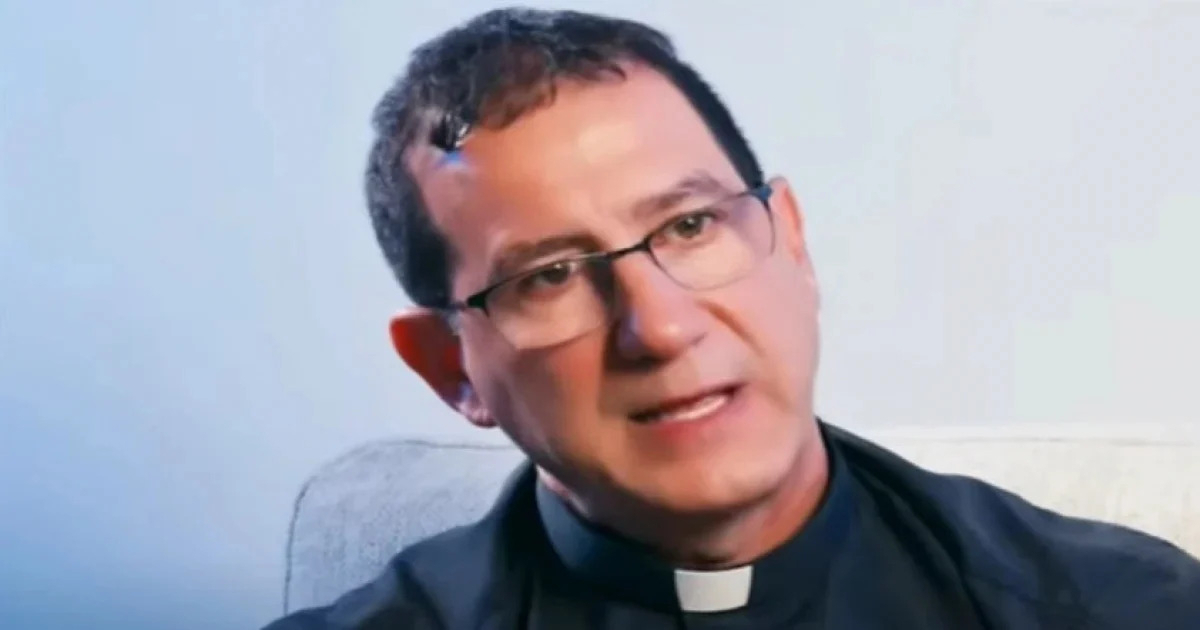
The Camagüey priest Alberto Reyes, who is currently in Miami, continues with his clear message of support for the Cuban people and a strong denunciation of a system that has brought the country to a critical situation.
In his latest post shared on Facebook, he explained how a dictatorship destroys the very foundations of the individual and the community.
"There are three needs around which personality is structured: affection, security for survival, and the experience of control over our life," he wrote.
And he added: "Feeling loved, safe, and having a healthy control over our lives allows fear not to conquer us or govern us." That, he warns, is precisely what an authoritarian system denies.
Father Reyes does not mince his words when describing the nature of power in Cuba: "A dictatorship does not love its children. It controls them, manipulates them, uses them for its own ends, but it does not love them. Their lives, their dreams, their desires… do not matter."
He emphasized that a dictatorship is incapable of providing security; on the contrary, "everyone lives in constant fear." This applies not only to those who dissent, as they can be punished at any moment, but even to those who serve the system, because they know that one mistake is enough to fall from grace.
The parish priest recalled that under that model, individuals also lose control over their own lives, as the government controls everything: education, the mechanisms to meet basic needs...
In that context, he explains, people learn to live from simulation: obeying, repeating slogans, attacking those whom the power orders to attack, even if they feel the opposite inside.
"We feel that this is not our true selves... and when we give ourselves a few moments of honesty, we realize that we have built our lives through falsehood, fear, and pretense," Reyes wrote.
It is there that he proposes an alternative: to awaken. "Everything changes when we decide to wake up from the amnesia created by dictatorships, and we realize that we have rights," he stated.
Rights to a system that respects our needs, to laws that protect against injustices, and above all, "the right to decide the direction we want to give to our lives."
And he concluded with a phrase that summarizes his message: "Because we have the right to live without fear overcoming or ruling us."
That speech is not abstract. In a country where the material crisis is intertwined with political persecution, Reyes's voice has become an ethical reference.
This is why the regime sees it as a problem: because it does not invoke hatred or violence, but rather calls for awareness, truth, and dignity. Its pastoral work has transcended the temple: it accompanies a people weary of misery and imposed silence.
This Sunday, the priest will celebrate two masses in Hialeah: at 8:00 am at St. Michael and at 12:00 noon at Santa Bárbara.
This is not just another visit. Reyes arrives with a clear message of support for the Cuban people and a strong condemnation of a system that has brought the country to a critical situation: a collapsed economy, endless blackouts, food shortages, and constant repression against any voice demanding change, even from the Church.
For years, Father Alberto has become one of the strongest moral voices against power in Cuba. Through his homilies and, particularly, his posts on Facebook, he has created a space where he reflects, supports, and denounces.
His texts are not slogans; they are profound analyses of human dignity, fear, and freedom, which have disturbed the regime because they resonate with what millions of Cubans feel but cannot express without facing consequences.
Now, from Miami, Father Alberto continues that mission. The two Sunday masses in Hialeah will not only be religious celebrations; they will also be spaces for meeting with an exiled community that shares the pain for Cuba and the hope for a different country.
Filed under: