
Related videos:
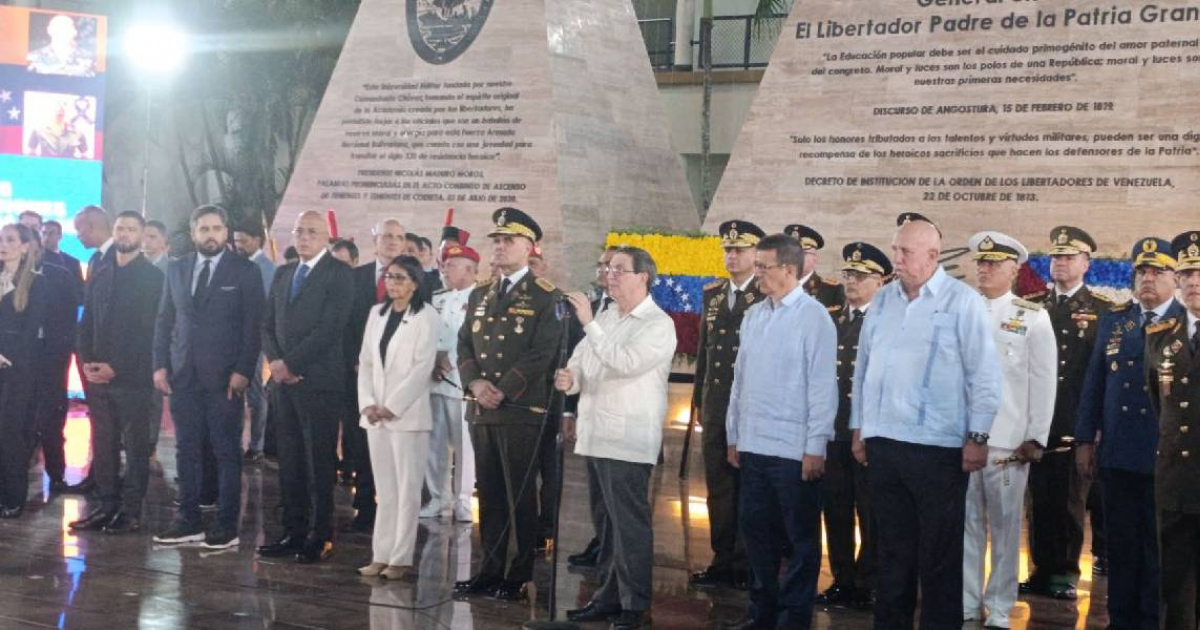
Security advisors and Cuban medical staff have begun to leave Venezuela amid intense pressure from the United States for the government led by Delcy Rodríguez to distance itself from the Castro regime.
The movement, confirmed to the agency Reuters by 11 close sources, represents a strategic shift in a relationship that was crucial for the political survival of chavismo.
For years, Cuba not only received Venezuelan oil—crucial for sustaining its economy—but also integrated its intelligence agents into key structures of the Venezuelan security apparatus, including the General Directorate of Military Counterintelligence (DGCIM), noted for its role in the persecution of dissent.
Now that machinery is beginning to dismantle. According to Reuters, Delcy Rodríguez has reportedly entrusted her protection to Venezuelan bodyguards, unlike Nicolás Maduro and Hugo Chávez, who assigned their personal security to elite Cuban forces.
Within the DGCIM, some Cuban advisors have been removed from their positions. Meanwhile, doctors and security advisors have returned to Cuba on flights that were resumed following the suspension of Venezuelan airspace.
The decision to withdraw Cubans from the presidential guard and sensitive counterintelligence areas had not been reported before.
It is unclear whether the departure is a direct order from Rodríguez, a decision from Havana, or external pressures, but the flow of returns has accelerated in recent days.
The trigger was the U.S. military operation on January 3 that resulted in Maduro's capture, during which 32 Cuban soldiers were killed.
Everyone was part of the deep security cooperation agreement that, since the late 2000s, allowed Havana to consolidate a decisive influence over Venezuela's armed institutions, a fact that Cuba denied for years.
U.S. President Donald Trump made it clear that he intends to sever the strategic relationship.
On Truth Social he wrote: "Cuba lived for many years on large amounts of OIL and MONEY from Venezuela. In exchange, Cuba provided 'Security Services' for the last two Venezuelan dictators, BUT NO MORE!"
According to the Reuters report, there has been a tangible reduction of the Cuban presence in crucial areas.
Although some military advisors and professors associated with the security university UNES remain in the country, U.S. sources claim that Havana's influence is waning, even though there may still be undercover agents observing the political developments.
The episode reveals the fragility of an alliance that for years supported two regimes marked by their authoritarianism.
The potential reduction of Cuban support in intelligence and security apparatuses marks a turning point in Venezuelan politics and in Cuba's regional projection, as Washington strengthens its strategy to weaken the influence of the Caracas-Havana axis in Latin America.
Filed under: