
Related videos:
The Axios revelation that Marco Rubio is having secret conversations with Raúl Guillermo Rodríguez Castro, grandson and bodyguard of Raúl Castro, known as "El Cangrejo," marks a turning point in the relationship between the United States and the Cuban dictatorship. For the first time in more than six decades, Washington is speaking directly with the inner circle of real power in Cuba, bypassing the official channels of a crumbling regime.
The situation is clear: Cuba is on the brink of humanitarian collapse. Without fuel, lacking stable electricity, with hospitals unable to operate, and a food shortage that has prompted Mexico to send military ships with beans and rice as if providing aid to a disaster zone. Venezuela can no longer send oil following the fall of Maduro. Donald Trump summed it up bluntly: Cuba is a failed state that doesn't even have fuel for planes to take off.
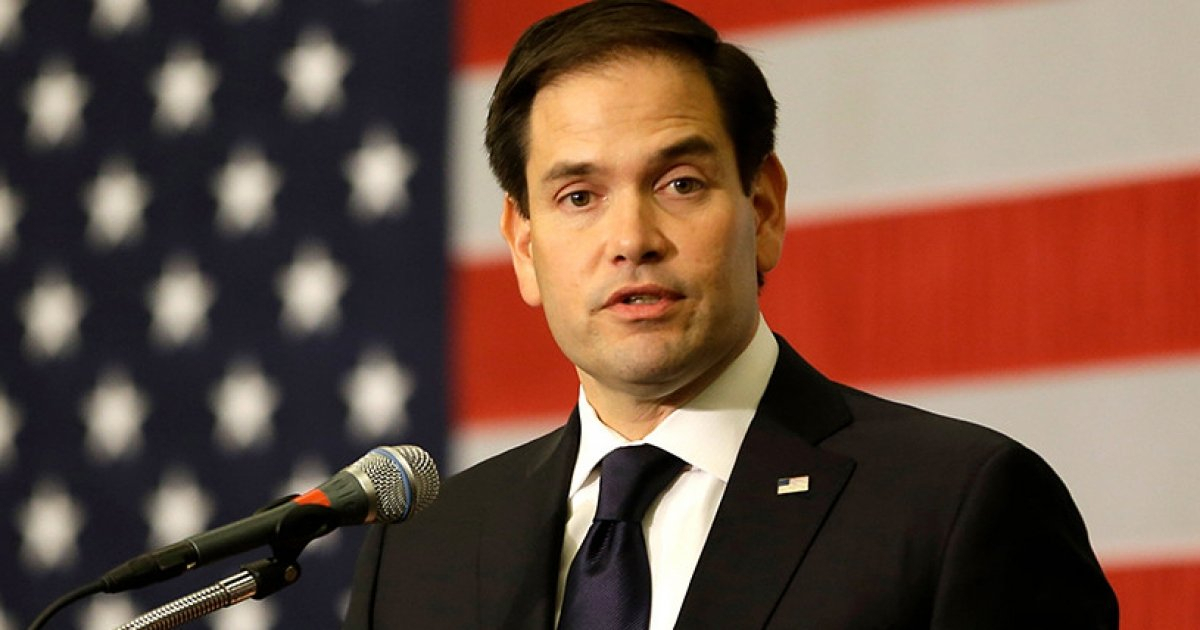
In this context, Rubio has a historic opportunity. As a Cuban American, someone who is intimately aware of the reality faced by the Cuban people, he has the credibility and the position to achieve what no Secretary of State has accomplished: real change in Cuba. Obama's outreach in 2014 generated genuine hope among Cubans, but the dictatorship managed to hijack that process and turn it into fuel for its own survival without giving anything in return. Rubio has the chance to learn from that experience and do things differently. Here are the keys to making it happen.
1. Require verifiable counter-requirements before each grant
The clearest lesson of 2014 is that each concession requires a verifiable and irreversible counterpart. Release of political prisoners with names and dates. Opening to independent media with verifiable licenses. Ending the persecution of dissidents and activists. When Obama removed Cuba from the list of state sponsors of terrorism, restored diplomatic relations, and relaxed travel and remittance policies, millions of Cubans believed that change was on the way. However, the dictatorship seized every concession without lifting a finger towards openness. As noted by the Council on Foreign Relations, those "policies provided legitimacy to the regime without bringing benefits to the Cubans who are fighting for freedom." The blame was not on the one who reached out but on the one who used it to cling to power.
The most effective approach would be a mechanism of graduated and conditional concessions, with independent international verification.
2. Condition every public gesture on tangible results
Public gestures carry significant weight in diplomacy with the Cuban dictatorship. The experience of 2016 demonstrates this: while Obama attended a baseball game in Havana as a gesture of rapprochement that many Cubans celebrated, the Rapid Response Brigades were beating dissidents in the streets. The regime turned that image into a propaganda victory without conceding anything.
The opportunity lies in reversing that logic: that each public image should be a testament to an achievement, not a premature gift. Let the photos tell the story of progress, not of promises.
3. Evaluate interlocutors by their actions, not their rhetoric
According to Axios sources, Rubio and his team view "El Cangrejo" as part of a generation of Cubans who are "younger and entrepreneurial, for whom revolutionary communism has failed." It is worth looking beyond that narrative and examining the facts.
Raúl Guillermo Rodríguez Castro was the personal bodyguard of the dictator and maintains direct ties with GAESA, the military-business conglomerate that controls approximately 70% of the Cuban economy. What is presented as "entrepreneurial mindset" could actually be the elite's ability to seize businesses while the majority of Cubans do not have access to the same opportunities. The Cuban regime has refined over decades the art of presenting façade reformists whenever it needs to ease external pressure.
Rubio has an advantage that few Secretaries of State have had: he knows those tactics intimately. This allows him to differentiate between promises and concrete actions.
4. Turn economic opening into the ultimate weapon of liberation
Rubio suggested at the Munich Security Conference that economic freedom could be a precursor to political freedom in Cuba. He is right, and therein lies the key to all negotiations.
Cuban micro, small, and medium-sized enterprises (mipymes), despite all the obstacles imposed by the dictatorship, have shown something that the regime never wanted to be seen: that Cubans are perfectly capable of creating, starting businesses, and thriving when given a minimum of space. These small businesses today represent the greatest threat to totalitarian control because they signify economic independence, and economic independence is the first step toward political independence. The dictatorship knows this, which is why it suffocates them with regulations, arbitrary taxes, and restrictions on foreign trade.
The expansion of the Cuban private sector could be the most transformative condition of any agreement. Allowing Cubans to have their own bank accounts, access to international trade without state intermediaries, the right to genuine private property, and the freedom to import and export. Ideally, every dollar that enters Cuba should have a verifiable path to the entrepreneurial citizen, not to the structures of GAESA. When remittances and tourism were relaxed during the 2014 rapprochement, the dictatorship captured most of those flows through state-run hard currency stores and military hotels. An intelligent negotiation would design mechanisms to prevent this from happening again.
5. Demand real democracy, not a rearrangement of elites
A source familiar with the conversations told Axios: "They are looking for the next Delcy in Cuba." If that means finding a pragmatic interlocutor within the power structure who can facilitate a transition, it could be a valid first step. But only if the ultimate goal is clear: full democracy.
The journey may be gradual; the destination is not.
The Venezuelan process is in its early stages, and it is too soon to judge its outcome. Trump captured Maduro and is now negotiating with the remnants of Chavismo. María Corina Machado, the opposition leader who won the elections that Maduro stole in 2024, has currently taken a back seat. If the ultimate goal remains free elections and a complete democratic transition, the path may justify patience. However, if the process stagnates in a permanent arrangement where figures from the old regime are recycled without the people regaining their voice, it will have been a failure.
Cuba must learn from that experience in real time. Rubio can talk to "El Cangrejo," he can seek pragmatic interlocutors within the power structure, but the essential thing is that the ultimate goal must be non-negotiable: a full democracy where Cubans choose their own destiny. Not a change of faces in power, but a change of system.
6. Use your position of strength without fear
The current crisis gives the United States the strongest leverage over the Cuban dictatorship in decades. The most strategic approach would be to use it firmly, easing pressure gradually only as specific conditions are met.
Where will the dictatorship go if the United States remains steadfast?
China will not get involved in a problem 90 miles from the U.S. coast to save an unproductive regime. Russia is bogged down in Ukraine. Venezuela has already fallen. Iran has its own issues. Cuba is more isolated than ever. It is the regime that is in a hurry, not Washington.
At the same time, it is important to communicate clearly, both to the Cuban people and the international community, that pressure is a tool to force change, not a punishment against Cubans. The dictatorship has survived for decades by portraying itself as a victim of the U.S. embargo. Rubio can break that narrative by being transparent about what he demands and why.
7. Give a voice to Cuban civil society and the exile in the conversations
Rubio has a natural advantage here: his direct connection to a diaspora that has been organized, informed, and committed to Cuba's future for decades. Few Secretaries of State in history have had that bridge.
Including the voices of the Cuban opposition, the prisoners from July 11, 2021, independent media, and civil society organizations in the roadmap is not only a moral imperative but also a smart strategy. In 2014, negotiations were held exclusively with the dictatorship, without involving dissidents, activists, or the diaspora.
Rubio can do something different. If the transition includes Cubans who have risked their freedom and lives for a different country, it will be legitimate and enduring. Moreover, it will reflect what Rubio has advocated throughout his career.
8. Establish a concrete roadmap with defined deadlines
The Cuban dictatorship has 66 years of experience in stretching timelines, offering breadcrumbs, and buying time while it reorganizes its control over power. The best way to counteract this tactic is with clear, measurable objectives and specific deadlines.
Release of political prisoners. Opening to independent media. Call for free elections with international oversight. Each of these steps requires a realistic yet firm timeline, where failures to comply have clear consequences. Without a concrete roadmap, "discussions about the future" with "El Cangrejo" risk turning into exactly what the dictatorship needs: time to survive the crisis without conceding anything substantial.
The moment is now
Marco Rubio has a unique combination: cultural closeness to the Cuban people, a position of power to demand change, and an unprecedented historical moment. Cubans already know the bitter taste of hope betrayed by the dictatorship. Rubio now has the responsibility to restore their confidence that this time will be different.
And it has something more: the support of the Cuban people. Cubans inside and outside the island are watching him. They are asking him, from the endless lines for food, from the blackouts that are no longer an exception but the norm, from the exile that bleeds from the separation of their families, not to let them down. Not to negotiate their future for crumbs. To be brave.
The Cuban people have shown their bravery. They took to the streets on July 11, 2021, to shout "Freedom," knowing that the price could be imprisonment. They have endured decades of repression without giving up. They have risked their lives on rafts, in jungles, and by crossing borders to seek the dignity that the dictatorship denies them. That people deserve representatives who negotiate their future with the same courage they displayed on that July 11.
If Rubio negotiates with the firmness that the situation demands and achieves real changes for the Cuban people, he will go down in history as the Cuban-American who helped end the longest dictatorship in the Western Hemisphere.
The force is on the right side this time.
The Cuban people support him.
You just need to use it.
Fearlessly.
Filed under:
Opinion article: Las declaraciones y opiniones expresadas en este artículo son de exclusiva responsabilidad de su autor y no representan necesariamente el punto de vista de CiberCuba.