
Related videos:
The massive attacks launched by Israel and the United States against Iran have resulted in what could be the most significant blow to the power structure of the Islamic Republic since its establishment in 1979. As explosions continue to shake Tehran and other Iranian cities, initial intelligence assessments reveal a devastating impact on the regime's leadership.
Iranian leaders confirmed dead
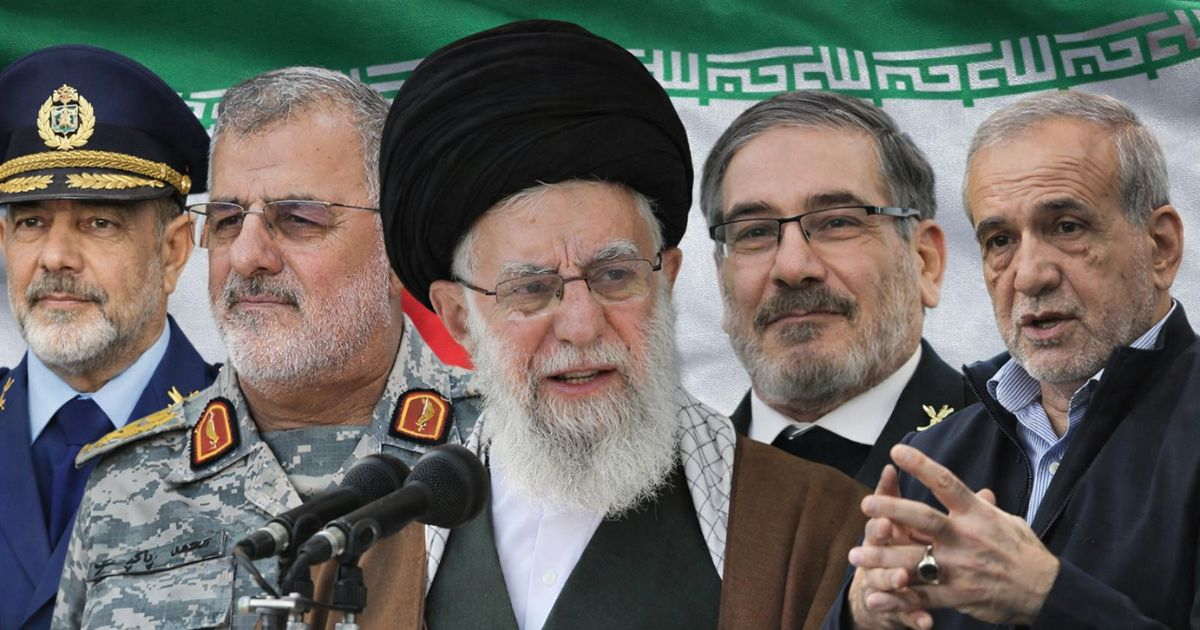
According to Reuters, citing three independent sources —two familiar with Israeli military operations and one regional source— Iranian Defense Minister Amir Nasirzadeh and Islamic Revolutionary Guard Corps (IRGC) commander General Mohammad Pakpour have been killed. This information has been corroborated by Axios, Times of Israel, and Asharq Al-Awsat.
Nasirzadeh, former deputy chief of staff of the Armed Forces and a career combat pilot, was a key figure in the Iranian military apparatus. Pakpour had taken command of the IRGC in 2025, following the death of his predecessor Hossein Salami during the Israeli attacks in the Twelve-Day War last June. His removal represents a second consecutive blow to the chain of command of the Revolutionary Guard.
The death of Ali Shamkhani, Khamenei's security advisor and former Minister of Defense, is also reported, according to Israeli sources collected by various international media and mentioned by Wikipedia as confirmed.
Khamenei: isolated and with an uncertain fate
The great unknown of this day is the fate of the supreme leader, Ayatollah Alí Khamenei, who is 86 years old. Satellite images show his residential and office complex in Tehran reduced to smoking rubble after the impact of at least seven missiles.
According to Israeli officials cited by Channel 12 and Jerusalem Post, Khamenei is out of communication and there are "growing indications" that he may have been hit or even killed in the initial bombings. The preliminary Israeli intelligence assessment suggests that he was at least injured, although there is no official confirmation from either side.
Iranian Foreign Minister Abbas Araghchi stated to NBC News that Khamenei is still alive "as far as I know," and that "almost all high-ranking officials are safe." He acknowledged, however, the loss of "one or two commanders." Iranian officials promised to release a recording of Khamenei, although Israeli analysts warn that it is likely to be a pre-recorded message as a contingency measure.
A significant piece of information revealed by CNN is that Israel chose to attack during the day because its intelligence services assessed that Khamenei felt less vulnerable during daylight hours, making him more likely to be in known locations.
Other objectives of the "decapitation" operation
A military official from Israel confirmed that the Israel Defense Forces simultaneously attacked three locations where high-ranking regime officials were holding meetings. According to Axios, the list of targets also included President Masoud Pezeshkian, former President Mahmoud Ahmadinejad, and Khamenei's sons, although Israeli intelligence assesses that the latter survived.
CNN adds that the Chief of Staff of the Iranian Armed Forces, Sayyid Abdolrahim Mousavi, was also among the direct targets of the attack.
According to Iranian state media, reported by Middle East Eye, President Pezeshkian, Parliament Speaker Mohammad Bagher Ghalibaf, Foreign Minister Araghchi, Chief of Army Staff Amir Hatami, and Head of the Judiciary Gholam-Hossein Mohseni-Ejei have survived and are safe.
Iranian retaliation and regional escalation
Iran responded by launching dozens of ballistic missiles against Israel and against U.S. military bases in Qatar (Al Udeid), Kuwait (Al-Salem), the United Arab Emirates (Al-Dhafra), Bahrain (home of the Fifth Fleet), Jordan, Syria, Saudi Arabia, and Iraq, according to a report by Al Jazeera. A Shahed-type drone destroyed a radar dome at the naval base in Bahrain, according to video verified by The Washington Post. The Revolutionary Guard issued a radio warning prohibiting vessels from passing through the Strait of Hormuz, the world's most important oil export route.
The Houthis of Yemen announced that they will resume their attacks in the Red Sea, while Hezbollah condemned the operation but refrained from committing to direct reprisals against Israel.
Iran from Within: Between Chaos and Celebration
While the internet was practically cut off throughout the country, videos that managed to emerge from Iran show unimaginable scenes from just weeks ago: citizens celebrating the bombings of Khamenei's palace, women shouting slogans against the regime, and students chanting "Death to Velayat" (the clerical government system). Authorities turned the main highway connecting Tehran to the north into a one-way route to facilitate the massive evacuation of the capital.
These reactions are framed within the protests that erupted in December 2025, the largest since the revolution of 1979, spreading to over 100 cities and violently suppressed by the regime, resulting in thousands of deaths.
Reza Pahlavi, son of the last Shah of Iran, urged Iranians to stay prepared for "the final action" and called on the armed and security forces to side with the people, according to Fox News.
Impact on Cuba
Iran is one of the closest geopolitical allies of the Cuban dictatorship. A collapse or severe weakening of the Iranian regime would have direct repercussions for Havana, which has maintained diplomatic, commercial, and intelligence ties with Tehran for decades. The escalation also directly impacts Cuba on the geopolitical stage, as it weakens the alliance network that includes Russia, China, Venezuela, and Iran.
Moreover, a prolonged conflict in the Middle East could drive up oil prices—already affected by Iran's attempt to close the Strait of Hormuz—further exacerbating the energy crisis the island is experiencing.
This is a developing story. The information will be updated as new data is confirmed.
Filed under: