
Related videos:
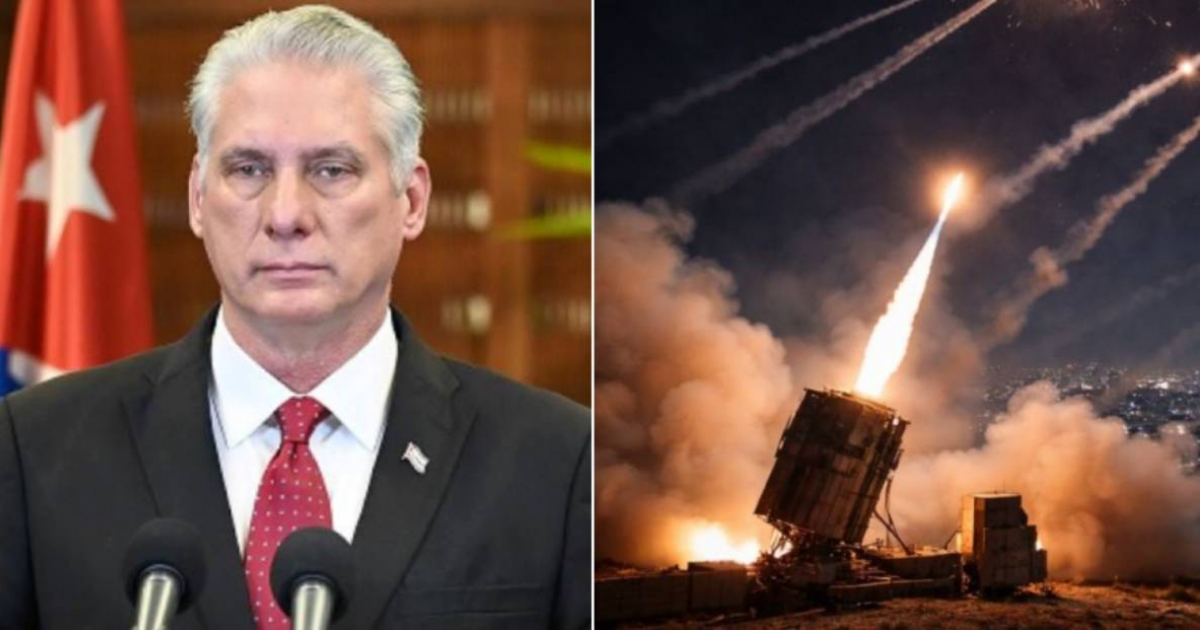
Cuban leader Miguel Díaz-Canel reacted on February 28 to the joint bombing by Israel and the United States against Iran with a strong condemnation of the military operation.
Through the X social network, he described the events as a “blatant violation of International Law and the UN Charter.”
"The attacks carried out on February 28 by Israel and the United States, violating the sovereignty and territorial integrity of Iran, constitute a blatant violation of International Law and the UN Charter," he wrote in an initial message.
In a second post, he stated that military actions "once again undermine diplomatic efforts concerning the nuclear issue, and jeopardize regional and international peace and security. The effects already being observed in that tumultuous region clearly demonstrate this."
Finally, he called for a global response: “The international community must act immediately to stop this aggression and escalation, due to its unpredictable consequences.”
Operation "Shield of Judah": the attack and the Iranian response
Díaz-Canel's statement comes several hours after the military operation launched on the morning of February 28 was revealed. The first to denounce the aggression on behalf of the Cuban government was Foreign Minister Bruno Rodríguez Parrilla.
Israel designated its offensive as "Roaring Lion," while the joint action with the United States was presented as "Shield of Judah."
President Donald Trump confirmed that "the United States military has begun major combat operations in Iran" and stated that Iran's main nuclear enrichment facilities were "completely and totally destroyed."
The operation included air and maritime incursions against infrastructure in Isfahan, Natanz, and Fordow, as well as military and intelligence targets in Tehran.
Israeli Prime Minister Benjamin Netanyahu thanked Washington for its support and described the action as a decisive step against what he sees as an existential threat.
Iran responded with the launch of missiles and drones against Israeli territory. The Islamic Revolutionary Guard Corps announced the beginning of a "broad wave of attacks," while air raid sirens sounded in Tel Aviv and other cities.
Regional tensions have rekindled fears of a larger escalation, particularly due to Iran's threat to disrupt traffic in the Strait of Hormuz, through which nearly 20% of the world's oil passes.
Cuba at the center of the crisis
Beyond Havana's rhetorical condemnation, the conflict is striking Cuba at an extremely vulnerable moment. The island is experiencing its worst energy crisis, with prolonged blackouts, industrial paralysis, and severe impacts on healthcare facilities.
Since January 3, after the fall of Nicolás Maduro in Venezuela, shipments of Venezuelan oil that had sustained the Cuban energy system for 25 years ceased.
This was compounded by the executive order of January 29, which imposed tariffs on countries selling crude oil to the island, leading Mexico to suspend supplies.
With minimal reserves and no international credit, any increase in the price of the barrel—already over 73 dollars before the attack—worsens the outlook for Cuba, despite Trump claiming that he has removed tariffs on those who trade oil with the island.
Analysts warn that a potential closure of the Strait of Hormuz could drive oil prices above 100 dollars, a scenario that would be untenable for the Cuban economy.
The bombing against Iran is also part of a strategic sequence that the White House has linked to Venezuela and Cuba. Following the capture of Maduro on January 3 and the oil embargo against Havana on January 29, the offensive on February 28 against Iran completes a triptych that Washington presents as part of a single doctrine toward regimes deemed hostile.
This Friday, Trump announced a possible "friendly and controlled takeover" of Cuba and confirmed that Marco Rubio is having talks "at a very high level" with the regime in Havana.
In this context, Díaz-Canel's statements contrast with an internal reality marked by fuel shortages, inflation, and an electrical system on the brink of collapse. The conflict in the Middle East is not distant for the island: it could accelerate a crisis that is already running against the clock.
Filed under: