
Related videos:
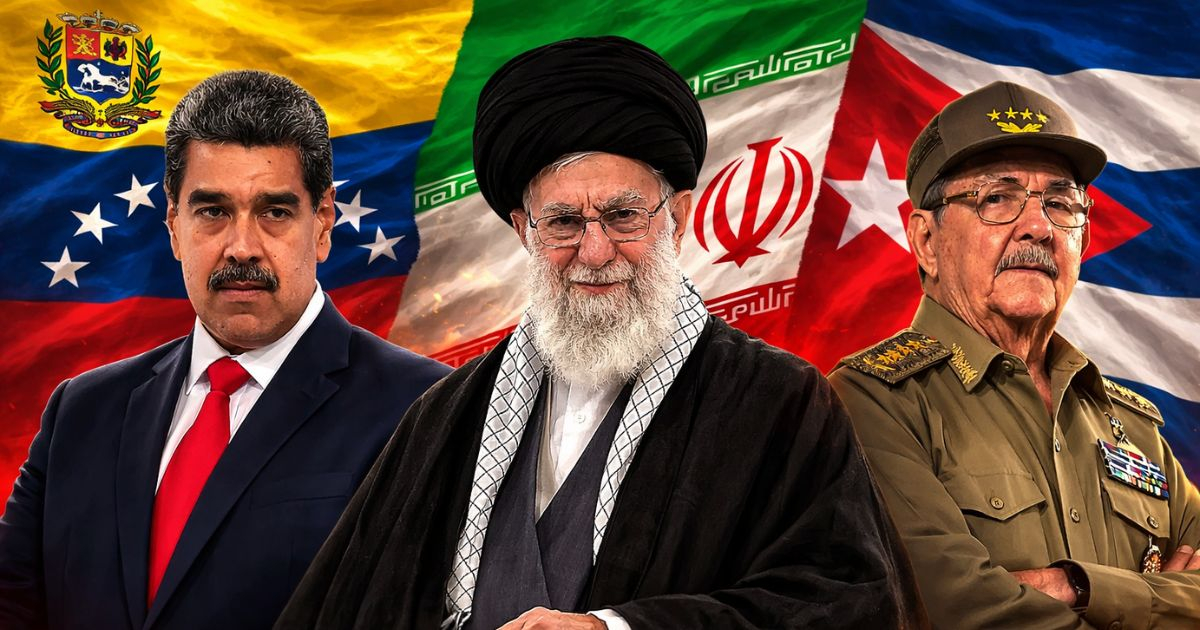
The joint bombing of Israel and the United States against Iran on February 28, 2026, is not an isolated event: it is the third component of a unified doctrine from the White House that explicitly connects actions against Venezuela, Cuba, and Iran into a single strategic framework. Three official fact sheets from the White House reference each other, each citing actions against the other two countries as part of a coherent pattern. Venezuela has already fallen. Iran is under fire. Cuba is next.
For the Cuban dictatorship, which is already facing its worst energy crisis since the Missile Crisis of 1962, the attack on Iran worsens a catastrophic situation: it drives up oil prices at a time when the island has gone three months without receiving fuel from abroad, and threatens to close the Strait of Hormuz—through which 20% of the world's oil flows—making the imports that Cuba desperately needs even more expensive.
Trump himself made it clear just hours before ordering the bombings. On Friday, February 27, while departing the White House for Texas, he stated that the United States could initiate a "friendly and controlled takeover" of Cuba and confirmed that Secretary of State Marco Rubio "is holding talks with the Cuban regime at a very high level". The timeline speaks for itself: Venezuela (January 3) → oil embargo on Cuba (January 29) → bombing of Iran (February 28) → Cuba?
Operation Shield of Judah: what is known about the attack
Israel baptized the operation as "Roaring Lion"; the joint operation is named "Shield of Judah". The attacks began at approximately 8:15 AM Israel time. Israeli Defense Minister Israel Katz described it as a "preventive strike to eliminate threats against the State of Israel" and declared a 48-hour state of emergency, closing civilian airspace, schools, workplaces, and public gatherings.
Trump confirmed the operation in an 8-minute video on Truth Social: "Recently, the United States military began major combat operations in Iran." In a nighttime speech, he added: "The attacks have been a spectacular military success. Iran's main nuclear enrichment facilities have been completely and utterly destroyed." And then, addressing the Iranian people: "The hour of your freedom is near."
Two Pentagon officials described the attacks as "not a small attack", executed by air and sea with dozens of incursions from bases in the Middle East and the aircraft carrier groups USS Abraham Lincoln and USS Gerald R. Ford —the latter deployed to the Middle East after completing operations in the Caribbean—. The initial phase was planned for four days, although U.S. officials had informed Reuters that Washington was preparing for "sustained operations over weeks, not a limited strike".
The objectives included nuclear infrastructure in Isfahan, Natanz, and Fordow, missile facilities in Shahrud, the IRGC intelligence headquarters, the ministries of Defense and Intelligence in Tehran, and the residence area of Supreme Leader Jamenei —where at least seven missiles struck—, according to Wikipedia citing multiple agencies. Jamenei had been relocated to a safe location. Iranian President Masoud Pezeshkian was reported to be "in perfect health," according to the Tasnim agency cited by Times of Israel. There were also explosions in Qom, Karaj, and Kermanshah. Simultaneous cyberattacks disrupted communication services in several areas of Tehran.
Iran strikes back: missiles aimed at Israel and a threat of "devastating war"
The Iranian response was swift. The Islamic Revolutionary Guard Corps (IRGC) officially announced the counterattack through a statement published by the Tasnim agency on Telegram, according to NBC News: "In response to the criminal and hostile assault by the enemy against the Islamic Republic of Iran, the first large-scale wave of missile and drone strikes against the occupied territory has begun."
At least two waves of ballistic missiles were detected against Israel throughout Saturday, according to a report by Times of Israel. Sirens sounded in Tel Aviv and across central Israel. At least one missile struck an unpopulated area in northern Israel; the Israeli Defense Forces reported at least 80 people injured, most with minor injuries. Israeli air defenses worked to intercept the projectiles, but the threat remained active as this edition went to press.
Iran had previously warned that if attacked, the U.S. military bases throughout the region would be targets of retaliation, cautioning of a "devastating war." The U.S. embassy in Bahrain instructed all its personnel to take shelter and advised American citizens to seek safe locations. Trump acknowledged the seriousness in his video message: "The lives of brave American heroes could be lost. That often happens in war."
The Iranian ambassador to the UN, Amir Saeid Iravani, declared during an emergency session of the Security Council that the United States "decided to destroy diplomacy" and that the Iranian armed forces will determine "the timing, nature, and scale" of their full response. Netanyahu, for his part, thanked Trump for his "historic leadership" and called on the Iranians —Persians, Kurds, Azerbaijanis, Baluchis, and Ahwazi— to "shake off the yoke of tyranny."
The background raises fears of a greater escalation. In June 2025, a similar episode —the "Twelve Days War" between Israel and Iran— resulted in hundreds of deaths and triggered an escalation that the United States helped contain through Operation Midnight Hammer, destroying three Iranian nuclear sites. This time, the U.S. intervention is not supplementary: it is a leading role from the very first moment. Additionally, the internal context in Iran is different: since December 2025, mass protests against the regime —the largest since the 1979 revolution— have spread to over 100 cities, with thousands of deaths reported according to human rights organizations.
Oil as a Weapon: What Happens if Iran Closes the Strait of Hormuz?
For Cuba, the energy dimension of the conflict is the most lethal. Approximately 20% of the world's oil consumption —about 20 million barrels per day— transits through the Strait of Hormuz, which accounts for 27% of maritime oil commerce and an annual value close to 500 billion dollars.
Iran has already demonstrated its willingness to use the strait as a weapon. On February 16 and 17, the IRGC conducted live-fire naval exercises in the Strait of Hormuz, temporarily closing sections of the maritime passage —something not seen since the 1980s—. The naval commander of the IRGC, Tangsiri, stated that his forces are "ready to close the strait if ordered." Bypass options (Saudi and Emirati pipelines) can only transport 8 million barrels per day, less than half of the usual traffic. In February, six IRGC boats attempted to stop a U.S. tanker in the strait, and the U.S. Air Force shot down an approaching Iranian Shahed 139 drone near the USS Abraham Lincoln aircraft carrier.
Before the attack, Brent had already risen over 3% to $73 per barrel (a seven-month high). Goldman Sachs estimates that oil could exceed $100 per barrel if Iran closes or restricts the Strait of Hormuz, even temporarily.
For Cuba, any of these scenarios is devastating. The island has gone three months without receiving fuel from abroad, as Díaz-Canel himself acknowledged on February 5. The reserves were estimated to last only 15-20 days at the end of January. With an empty treasury, no international credit, and no allies willing to subsidize it, every dollar that the price of oil rises is another nail in the energy coffin of the Cuban dictatorship.
Venezuela: the key that unlocked the Cuban crisis
It all began on January 3, 2026, when Operation Absolute Resolution captured Nicolás Maduro at the Fort Tiuna complex in Caracas. The operation lasted 2 hours and 28 minutes. 32 Cuban military and intelligence agents died in the action — a presence that Havana had denied for years before declaring two days of national mourning.
The impact in Cuba was immediate and total. All shipments of Venezuelan oil to Cuba ceased on January 3. Venezuela had been the island's main supplier of crude for 25 years, providing approximately 35,000 barrels per day under barter agreements (Cuban doctors, teachers, and security advisors in exchange for subsidized oil). Cuban advisors began to leave Venezuela, and Trump announced that "there will be no more oil or money for Cuba".
Then came Mexico. Following the executive order on January 29 that threatened tariffs on any country that sold oil to Cuba, Mexico suspended the shipments from Pemex on January 27. Mexico had been Cuba's main supplier in 2025, providing approximately 12,000 barrels per day. The last tanker to dock in Cuba with cargo from Mexico was the Ocean Mariner on January 9, with about 85,000 barrels.
Cuba Without Oil: Anatomy of a Slow Collapse
The reality on the island is catastrophic. On February 4th, the eastern provinces (Guantánamo, Santiago de Cuba, Holguín, Granma) experienced a total blackout. Some provinces like Ciego de Ávila reported only about an hour of electricity per day. Cuba suspended aviation fuel supplies for a month, leading to the cancellation of flights from Air Canada, Rossiya, and Nordwind.
As of February 7, the sale of fuel in Cuban pesos and diesel in USD has been suspended. Gasoline is only sold in dollars, limited to 20 liters per turn, through a digital platform. On the black market, the price of diesel exceeds 8 dollars, compared to 1.10 at the official rate. Families are cooking with firewood and charcoal.
The health crisis is alarming: hospitals are only functioning for emergencies. About 16,000 cancer patients undergoing radiotherapy and 12,400 receiving chemotherapy are facing interrupted treatments. The UN Resident Coordinator in Cuba, Francisco Pichón, called for a "humanitarian exception" to allow for the shipment of oil, warning that blackouts create "acute humanitarian risks" and that nearly one million people rely on tanker trucks for access to drinking water. Secretary-General António Guterres expressed being "extremely concerned about the humanitarian situation in Cuba."
An analysis by the consultancy Auge revealed that 96.4% of Cuban small and medium-sized enterprises (8,904 out of 9,236) are facing severe or critical impacts due to energy shortages. The regime authorized the importation of fuel by small and medium-sized enterprises late, but the bureaucratic process and costs make this measure practically unworkable.
The supply alternatives have been closed off one by one. A Russian tanker, the Sea Horse, carrying 200,000 barrels of diesel, was diverted and left adrift in the North Atlantic this week, in what would have been the first Russian delivery since February 2025. The U.S. has seized at least 10 vessels accused of transporting sanctioned oil destined for Cuba. The only tanker that managed to dock in weeks —the Nicos I.V. in Matanzas on February 16— arrived with an unknown origin and cargo volume.
Cuba is the following: the doctrine of Trump's triptych
What makes the attack on Iran a directly relevant event for Cuba is not just the impact on oil: it is what it reveals about the strategic architecture of Washington. These are not three separate policies. It is a doctrine with three fronts of execution.
The connection is documented in official documents from the White House. The fact sheet on Cuba (January 29) states: "This is not the first time President Trump has taken a strong stance against hostile regimes: in recent months, he ordered attacks on Iran's nuclear infrastructure and authorized operations to remove Nicolás Maduro from power." The fact sheet on Iran uses almost identical language, citing Venezuela and Cuba. The document on Venezuelan oil revenues warns that losing control of these resources "would empower malign actors such as Iran and Hezbollah."
Trump shared and went viral with a message that stated: "If this were to happen: two decades of Venezuelan communism. Five decades of Iranian mullahs. Almost seven decades of Castro's Cuba. All of this would be reversed by 2026." Senator Lindsey Graham was the most explicit: "If Trump can do this — topple Cuba, Venezuela, and Iran in 2026 — it will be bigger than Reagan."
The operational sequence confirms the doctrine:
- January 3: Capture of Maduro. Total cut of Venezuelan oil to Cuba.
- January 29: Executive order declaring a national emergency regarding Cuba. Tariffs on countries that sell oil to the island.
- February 28: Bombing in Iran. Third pillar of the Venezuela-Cuba-Iran axis under direct fire.
Cuba is "the next."
The evidence that Cuba is the next target in Trump's agenda does not require interpretation—the U.S. officials themselves openly state it.
February 27 (one day before the attack on Iran): Trump declared at the White House: “We might have a friendly takeover of Cuba. We could very well end up having a friendly takeover of Cuba.” He described Cuba as “a nation that is sinking” and confirmed that “Marco Rubio is handling this at a very high level... they have no money, no oil, no food. They want our help.”
February 25-26: Close associates of Rubio met secretly with Raúl Guillermo Rodríguez Castro, "El Cangrejo", grandson of Raúl Castro, on the sidelines of the CARICOM summit in the Caribbean. A Caribbean diplomat stated that Rubio hinted that the negotiations are "well advanced."
February 23: The Chargé d'Affaires of the U.S. Embassy in Havana, Mike Hammer, confirmed that Washington is maintaining "communications with certain individuals" within the regime and added: "For some members of the regime to say that there is nothing; maybe they are not informed, maybe it's not with them..." Hammer stated that 2026 will mark a "historic change" in Cuba and that there are individuals within the system who know that "the project is already coming to an end."
February 16: On board Air Force One, Trump commented on a possible operation in Cuba similar to that in Venezuela: "It wouldn't be very difficult, but I don't think it's necessary." This statement confirms that the military option is on the table, although Washington prefers economic suffocation.
Rubio was more calculated but equally explicit. Before the Senate Foreign Relations Committee, when asked if he would rule out a change of regime in Cuba, he replied, "Oh, no. We would like to see that change of regime." His team, according to sources, is looking for "the next Delcy in Cuba" —referring to the Venezuelan model where a transition was promoted without completely dismantling the power structure—.
The Christian Science Monitor revealed that the deeper strategic goal could be to expel China and Russia from Cuba as a "forward operating base for intelligence and military activities," in line with the 2025 National Security Strategy aimed at "removing extra-hemispheric competitors from threatening positions in our hemisphere." A CSIS expert summarized it: "There is no more strategic location than 90 miles from Florida."
The Invoicing Axis: the supply chains that Washington cut off
The concept of the "Eje de las Facturas" (Axis of Invoices), coined by Newsweek, explains why Venezuela was the first target and how its fall triggered a domino effect on Cuba and Iran.
The so-called "Axis of Resistance" actually operated as an interconnected supply network: Russia sold gasoline to Venezuela (in November 2025 alone, Venezuela imported 419,000 barrels of Russian gasoline to dilute its extra-heavy crude from the Orinoco). Iran sold drones and military technology to Venezuela. Venezuela sent 80% of its oil exports to China as payment for tens of billions in loans and shipped subsidized oil to Cuba.
By capturing Maduro and controlling Venezuelan exports, Washington cut the node where the three supply lines intersected. Without Russian naphtha, Venezuelan production could drop from 800,000 to 200,000 barrels per day by the second quarter of 2026. Cuba, reliant on Venezuela, was left without a supplier. And now with the attack on Iran, the third vertex of the triangle is under direct fire.
Cuba trapped in the vortex of three simultaneous crises
The attack on Iran does not open a new crisis for Cuba —it exponentially amplifies the existing ones. The Cuban dictatorship faces an unprecedented scenario where the three pillars of external support collapse simultaneously:
Venezuela (oil supplier for 25 years) is under U.S. control. The revenues from its exports are deposited in accounts controlled by Washington.
Iran (an ideological ally, a source of alternative funding) is being bombarded. Its nuclear capabilities have been destroyed. If the conflict escalates and the Strait of Hormuz is closed, even temporarily, oil prices will soar well above what Cuba can afford.
Russia (geopolitical partner) has its attention divided between Ukraine, potential support for Iran, and the limitations of its own budget. A Cuban economist summarized it: "Messing with Cuba could jeopardize your negotiations with the U.S. over Ukraine. Why would you do it?" Even the Russian tanker that tried to arrive this week was diverted and left adrift in the Atlantic.
China has provided humanitarian aid (60,000 tons of rice) and is leading an ambitious solar program on the island, but it is not an oil exporter and cannot fill the gap in fossil fuels. Moreover, it has stopped extending credit to Cuba due to accumulated defaults.
The most significant aspect for Cuba is not the attack itself, but what it reveals about the strategic architecture of Washington. These are not three separate policies, but a doctrine with three fronts of execution, designed to simultaneously cut off the supply of oil, financial networks, and military alliances that sustain the regimes deemed hostile.
With restricted remittances, canceled flights, closed migratory routes (Nicaragua eliminated visa-free entry for Cubans on February 8), the largest energy crisis since 1962, and the Trump administration openly betting that the combined pressure will force a regime change before the end of 2026, the clock is ticking. And for the Cuban dictatorship, it is ticking against them.
Trump made it clear on Friday: "The Cuban government is speaking with us. They have no money, they have nothing. We may have a friendly takeover of Cuba." Twenty-four hours later, missiles were falling on Tehran.
Filed under:
Opinion article: Las declaraciones y opiniones expresadas en este artículo son de exclusiva responsabilidad de su autor y no representan necesariamente el punto de vista de CiberCuba.