
Related videos:
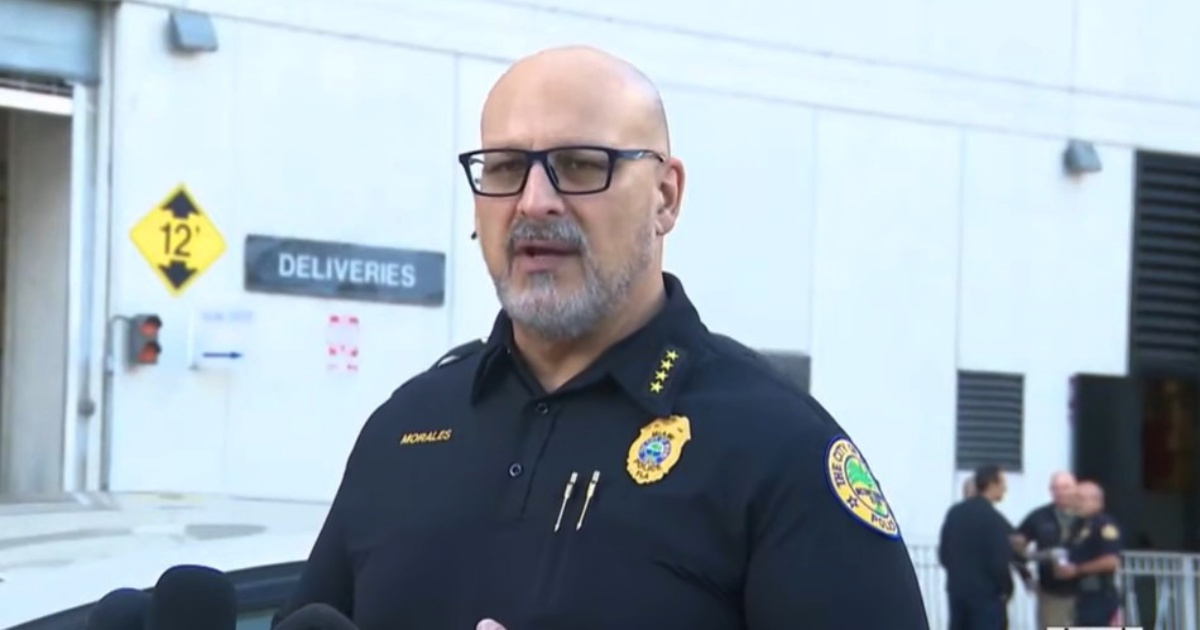
The head of the Miami Police Department, Manuel “Manny” Morales, stated that he would be willing to lead a profound transformation of the security forces in Cuba if a political transition occurred on the island, and even expressed his interest in heading the police chief position in Havana in that scenario.
“My greatest desire is to be part of the transition team and lead the comprehensive reform of the Cuban police; my willingness to assume leadership in Havana or at the national level is absolute”, declared the police chief in statements made to Diario Las Américas.
Morales stated that his proposal stems from the need to replace the current system of political control and repression with a model of civil oversight based on respect for human rights, inspired by the institutional structure of the Miami Police.
According to his explanation, his goal would be to promote an institutional transformation that allows for the rebuilding of citizens' trust in the authorities and to dismantle the political role that the security agencies currently play on the island.
“I possess the knowledge and the necessary will to transform the current arm of authoritarianism into a democratic police institution that serves the people and not an ideology,” emphasized Morales.
Proposal to Demilitarize Public Security
Morales argues that one of the key aspects of that eventual reform would be the demilitarization of public order, with the aim of establishing a professional and decentralized police force.
The police chief stated that his proposal is based on applying standards similar to those in Miami, where, according to him, the relationship between the police and the community is grounded in citizen cooperation and institutional accountability.
"It is time to replicate in our homeland the success and prosperity that Cubans have achieved in this great nation; what this group of immigrants has accomplished in the United States is unprecedented, and now we must bring that excellence back to the island," he stated.
According to what was explained, their proposal aims for any eventual transition to not only involve political changes but also include an institutional transformation that prevents power vacuums and ensures the safety of the population during the reestablishment of a democratic system.
To defend his ability to lead such a transition, Morales recalled his experience as a military police officer in the United States Army during Operation Just Cause in Panama in 1989, when he participated in training the new Panamanian Public Force following the overthrow of dictator Manuel Noriega.
That background, he asserted, would allow him to contribute to the reorganization of Cuban security forces in a scenario of political change.
Announcement of Withdrawal by the Miami Police
The police chief's statements come at a pivotal moment in his career. Morales recently announced that he will retire from the Miami Police Department in October 2026, after more than three decades of service.
The official has led the institution since 2021, when he took office following the dismissal of Art Acevedo.
During his tenure, various sectors have acknowledged his role in stabilizing the police force and strengthening the relationship with the community.
Under his leadership, advances were also recorded in reducing crime in the city, which helped solidify his profile as an influential figure within the institutional framework of Miami.
However, his career has also been surrounded by political controversy.
Municipal Commissioner Ralph Rosado has accused him of using his position to promote his public image in anticipation of a potential candidacy for the commissioner position of District 4 in the 2027 elections, a possibility that Morales has not confirmed.
The police chief, for his part, has insisted that he is not engaged in any political campaign while holding his position.
His departure from the Police Department will initiate an institutional transition process. The city manager, James Reyes, announced that the search for his successor will begin in July 2026, and the final selection must be approved by the Miami City Commission.
With over 30 years of experience in law enforcement, Morales is regarded as an experienced leader within the U.S. police system, a background he is now bringing to the forefront as part of his proposal to participate in a potential reorganization of security institutions in a post-Castro Cuba.
International pressure and support from the exile community
Morales' initiative comes in a context of intense diplomatic and economic pressure from the U.S. administration led by President Donald Trump and Secretary of State Marco Rubio, aimed—according to various official statements—at promoting political change in Cuba.
The proposal from the police chief is also part of a set of initiatives promoted by sectors of the Cuban exile community.
Among them is the so-called "Liberation Agreement," signed this week by exile organizations, as well as resolution 11-A7 from the Miami-Dade Board of Commissioners, which demands that the Cuban-American community have a say in Washington's decisions regarding the future of Cuba.
Filed under: