
Related videos:
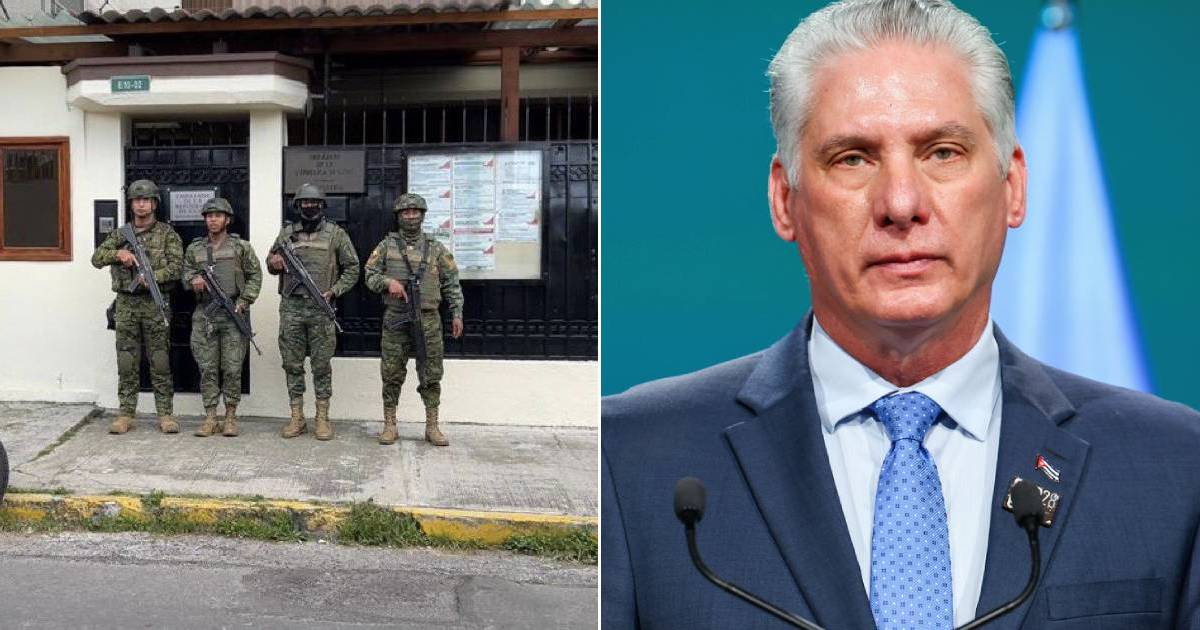
The ruler Miguel Díaz-Canel criticized the government of Ecuador on Thursday following the expulsion of Cuban diplomats accredited in that country, a decision he described as "unjustified, hostile, and unfriendly."
In a series of messages posted on the social network X, Díaz-Canel stated that the Ecuadorian measure "damages the historic relationships of friendship and cooperation between our peoples."
“We reject the unjustified, hostile, and unfriendly actions of the Ecuadorian government towards our diplomatic mission accredited in that nation. This unprecedented action damages the historic relations of friendship and cooperation between our peoples,” wrote the president in the first of two messages dedicated to the issue.
The Cuban ruler also stated that Quito's decision responds to external pressures, accusing Ecuador of acting with "clear submission to imperial interests".
"In a turbulent international context, Cuba reaffirms its commitment to advocating for the preservation of Latin American unity in the face of this clear subordination of Ecuador to imperial interests," he added.
Díaz-Canel also assured that the Ecuadorian people “will always be able to count on the affection and support of Cuba,” referencing historical figures from that country such as Eloy Alfaro and the painter Oswaldo Guayasamín.
The statements from the Cuban leader come after the Ecuadorian government ordered on Wednesday the departure of Cuban diplomats, a decision that marks a new episode of tension between Havana and several governments in the region amid questions regarding the presence of official Cuban missions abroad.
In other messages published this Wednesday, Díaz-Canel also commemorated the anniversary of the attack on the French ship La Coubre in 1960, reiterating the official slogan of "Homeland or Death" and condemning what he described as acts of terrorism against Cuba.
He also paid tribute to the late Venezuelan president Hugo Chávez, whom he described as "the best friend of Cuba and Fidel."
Diplomatic tensions between Cuba and some Latin American countries have intensified in recent months, especially following the capture of Venezuelan President Nicolás Maduro, a long-standing ally of Havana, and the pressures from the U.S. amidst negotiations aimed at promoting political and economic changes on the island.
Filed under: