
Related videos:
The death of Ali Jamenei has opened one of the deepest crises of the Iranian regime since the 1979 revolution.
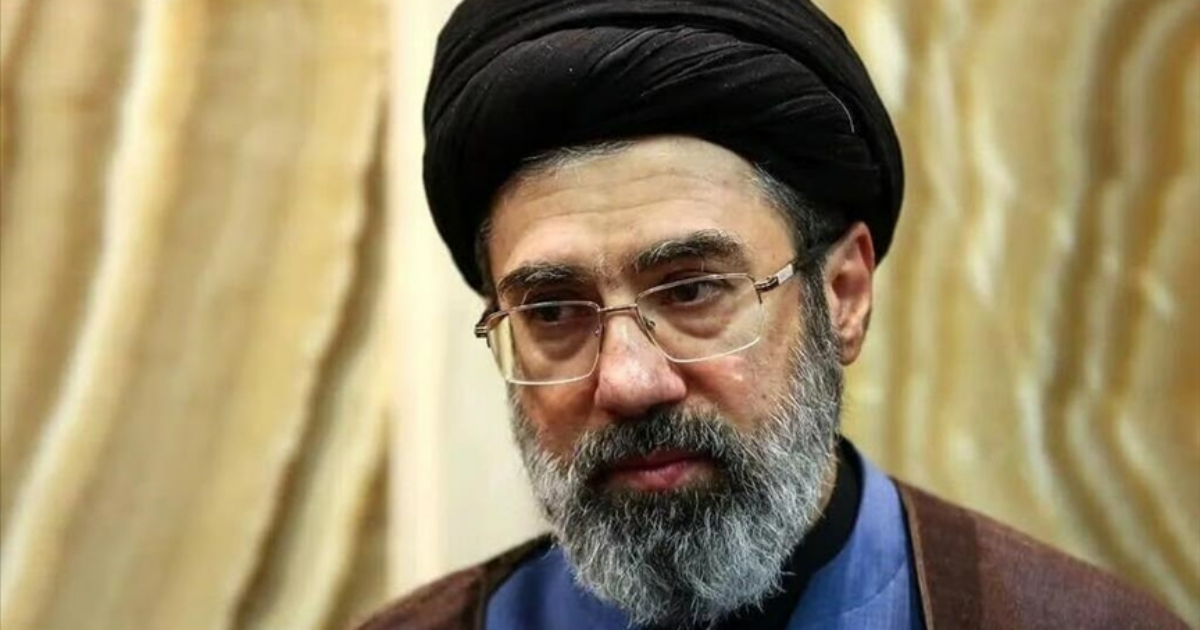
In that context, several international media outlets have reported that the Assembly of Experts —the clerical body constitutionally responsible for electing the supreme leader— has appointed his son, the cleric Sayyed Mojtaba Jamenei, as his successor.
However, the process remains surrounded by doubts and tensions within the system. Analysts and research centers indicate that his appointment may have been marked by resistances within the clergy, primarily due to Mojtaba's limited religious authority and the potentially dynastic nature of the succession.
His potential consolidation at the helm of the regime comes at a time of immense external pressure on Iran, amidst a regional landscape of war and military attacks that have hit key infrastructures of the country's political and religious apparatus.
For years, Mojtaba Jamenei has been described by diplomats and analysts as a central figure within the regime's power circle, despite his extremely low-profile public persona.
A power built in the shadows
Unlike his father or the founder of the Iranian revolution, Ruhollah Jomeini, Mojtaba Jamenei has never held high-profile political positions or cultivated a significant public presence. Born in 1969, he is a cleric trained in the religious seminaries of Qom, the country's main Shiite theological center.
However, for years, diplomats and analysts cited by international agencies such as Reuters and Associated Press have described him as a key player within the supreme leader's circle.
Various sources have characterized him as a "gatekeeper" of power in Tehran: a figure who controlled access to the leader and acted as an intermediary between his office and various power centers within the system.
The journalist Graeme Wood, in an analysis published in The Atlantic, argues that Mojtaba has wielded a kind of informal power for years, comparable to that of a “vice-leader,” participating in key decisions without holding a visible institutional position.
That type of opaque power is characteristic of the Iranian political system, where many decisions are made within informal networks of influence rather than through the official structures of the state.
The relationship with the Revolutionary Guard
One of the most frequently mentioned traits in profiles about Mojtaba Jamenei is his close relationship with the Islamic Revolutionary Guard Corps (IRGC), the powerful military body that has become one of the political and economic pillars of the regime.
Analysts cited by Reuters, Israeli media, and Western think tanks agree that Mojtaba has cultivated close ties for years with commanders of the IRGC and with the Basij militia, two key structures in Iran's internal security and regional projection.
For many observers, this network of relationships explains why their name frequently appears among the possible successors of the supreme leader, even though the outcome of the process remains uncertain at a time when the regime is facing unprecedented internal and external pressures.
His eventual leadership could strengthen the military's influence within the Iranian political system, although several analysts caution that the current scenario of regional crisis and external military pressure could profoundly alter the internal balance of the regime.
A figure associated with the repressive apparatus
The name Mojtaba is also associated with some of the most controversial episodes in recent Iranian politics.
Various reports place him within the political circle that supported the controversial re-election of President Mahmud Ahmadinejad in 2009, a crisis that triggered the largest wave of protests since the revolution.
Those demonstrations of the so-called Green Movement were harshly repressed by security forces and militias linked to the regime. Although there is no public evidence that Mojtaba personally directed repressive operations, his figure became associated with the hardline faction of the system.
In 2019, the U.S. Department of the Treasury included him on its sanctions list for his alleged role in supporting the repressive objectives of the Iranian regime.
The hidden wealth of the power environment
Journalistic investigations have also highlighted the financial aspects surrounding Mojtaba Khamenei.
A report by Bloomberg indicated that the cleric has allegedly built an international network of assets valued at hundreds of millions of dollars over the years. According to this investigation, the network would include luxury properties in London —among them residences on the exclusive Bishops Avenue, known as “Billionaires’ Row”— as well as villas in Dubai and other real estate assets in Europe.
The properties would not be registered in their name, but would be managed through shell companies and intermediaries, a scheme used to conceal the real beneficiary.
The report placed this case within a broader phenomenon: members of the Iranian political elite have managed to preserve and expand their wealth abroad through opaque financial networks, even while the country faces international sanctions and a deep economic crisis.
A succession surrounded by uncertainty
Following the death of Ali Jamenei, the succession process was formally to fall to the Assembly of Experts, the body of 88 clerics constitutionally tasked with electing the Supreme Leader.
Tension escalated when, amid the crisis, an Israeli airstrike hit a building associated with this organization in the holy city of Qom. Some initial reports suggested that the clerics might have been gathered at the time of the attack, but later reports indicated that they likely were not inside the building.
Security and international policy analysts interpreted the attack as an attempt to symbolically strike at the heart of the Iranian clerical system and to disrupt the succession process at a particularly delicate moment for the regime.
Ideological Continuity and the Regime's Dilemma
The potential rise of Mojtaba Jamenei is seen by many analysts as a sign of ideological continuity.
According to the analysis published by The Atlantic, their political views reflect a strong adherence to the revolutionary ideals of the regime: structural hostility towards the United States, direct opposition to Israel, and defense of the theocratic model established after the 1979 revolution.
But his candidacy also raises a central problem within the system itself: its religious legitimacy. Unlike many high-ranking clerics, Mojtaba does not have the theological prestige that has traditionally been deemed necessary to hold the position of supreme leader.
This deficit fuels resistance within sectors of the Iranian clergy and reinforces a recurring criticism among opponents and analysts: the possibility that Iran is evolving towards a form of almost dynastic succession.
The Islamic Republic was born denouncing the hereditary monarchy of the Shah. However, the eventual election of the supreme leader's son could project a very different image: the consolidation of a closed elite where power is transferred within the same political and familial circle.
In this context, the figure of Mojtaba Jamenei symbolizes the most uncertain moment the Iranian regime has faced in decades.
Its eventual rise would reflect the determination of the core group to preserve the system, but external military pressure, internal divisions, and the regime's crisis of legitimacy leave an unanswered question: whether the Islamic Republic can survive the transition that has begun following the death of its most powerful leader.
Filed under: