
Related videos:
Recent reflections from intellectuals and communicators connected to the cultural ecosystem of the Cuban regime are revealing an increasingly visible debate within the official discourse: how to address the structural crisis in the country and what future the model established after 1959 might have.
Two texts circulated on social media in recent weeks —one from historian Fabio Fernández Batista and another from journalist Milena Recio— reflect this moment of introspection in sectors traditionally associated with the institutional discourse.
Without directly questioning the political system, both raise questions that point to an increasingly evident dilemma: reform the model to preserve it or acknowledge that the country needs something deeper to overcome the current crisis.
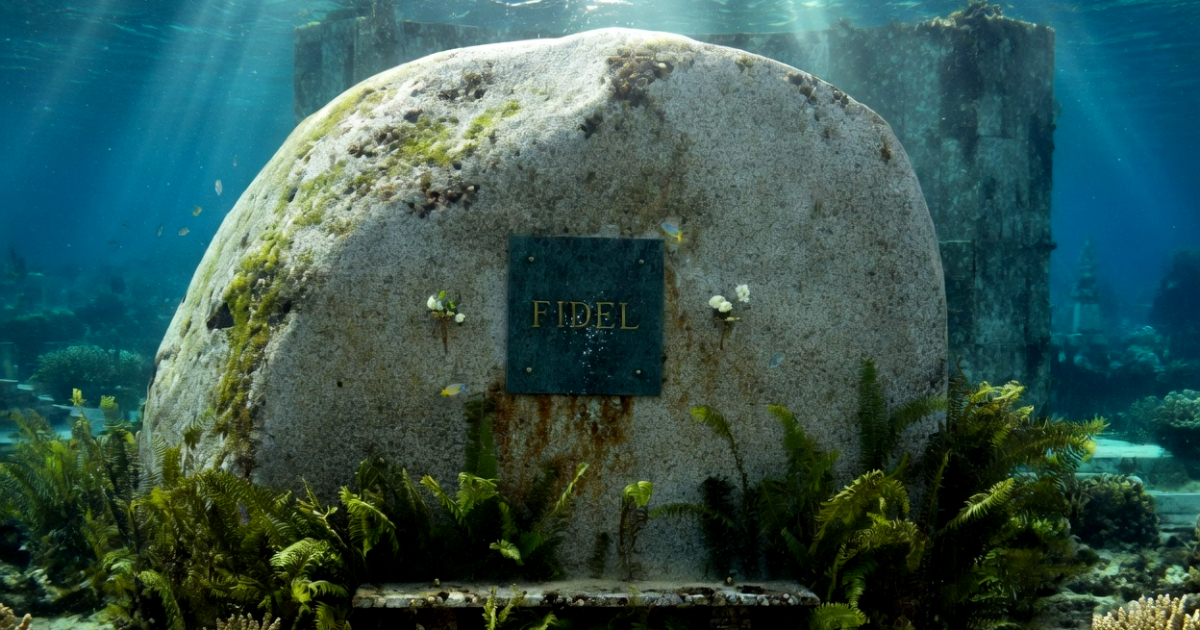
The first of these was published by journalist and State Security agent, Manuel David Orrio, and includes introductory remarks by Fernández Batista for a special issue of the magazine Temas, dedicated to the centenary of the birth of Fidel Castro.
It openly acknowledges that Cuba is facing "very complex circumstances," resulting from both internal factors and external pressures.
Beyond the usual reference to U.S. politics, the text introduces elements that are uncommon in the official discourse.
Fernández Batista explicitly mentions the “accumulated fatigue” of large sectors of the population, the negative perception of government management, bureaucratic inefficiency, the lack of exemplary leadership, and the limitations on dissent within Cuban society. He even goes so far as to mention Castro’s responsibility for some of the mistakes made.
It also recognizes something that until a few years ago would have been difficult to read in circles close to the government: that a portion of the population even looks forward to the arrival of Donald Trump as a sort of external solution to the country's crisis.
"A significant number of compatriots are betting on the arrival of Saint Donald," writes the historian, referring to the sympathy that some Cubans express towards the U.S. president amid the economic deterioration.
The diagnosis reflects a social and political wear that has become increasingly evident on the island. However, the response proposed in the text is rooted in a well-known tradition of Cuban revolutionary thought: to seek in Castro's legacy methods to save the political project.
Fernández Batista speaks of "strategic coherence" and "tactical flexibility" as elements that could guide political action in the current context. The reference suggests a possible reinterpretation of fidelism that could allow for adjustments without abandoning the fundamental principles of the system.
That idea—reforming to preserve—has been a constant in the internal debates of Cuban socialism for decades.
But the second that circulated recently offers a different tone.
In a personal post, journalist and academic Milena Recio describes a vision of Cuba that many citizens envision for the future: a country without blackouts, with salaries that regain their value, with international tourism, controlled inflation, functioning public services, and professionals returning to participate in the country's reconstruction.
"Can you imagine?", she repeatedly asks in her message, as she lists scenarios that include better economic conditions, freedom to start businesses, and a society where doctors, teachers, and scientists regain the lost social recognition.
The image described is not explicitly political, but it does allude to a country that is profoundly different from the current one.
The final phrase summarizes that longing: "that we have what we should have had: freedom to create the country we deserve".
Although Recio does not speak of political transition or system change, his text reflects a broader aspiration for transformation than just the mere "updating" of the economic model.
Both interventions illustrate a phenomenon that several analysts have begun to observe recently: the emergence of more open debates within sectors of the establishment about the country's future.
For decades, the dominant language in these spaces revolved around the idea of "perfecting socialism." Economic or administrative difficulties were primarily presented as consequences of the "blockade," or as management issues that could be resolved through adjustments within the system itself.
Díaz-Canel's "continuity" has appropriated that tactic, but he experimented with language, giving birth to concepts like "creative resistance" and "leaving no one behind". Today, however, a different vocabulary is beginning to emerge.
Expressions like "getting out of the hole," "rebuilding the country," or "rethinking the model" suggest a growing awareness that the Cuban crisis may require deeper transformations.
This change of tone coincides with a particularly complex context for the country.
The Cuban economy is facing a combination of energy crisis, inflation, massive emigration, and deterioration of public services. Additionally, there are external pressures and a less favorable international scenario than in previous decades.
In that context, the debate that arises among intellectuals and communicators close to the government reflects an increasingly difficult question to avoid: whether the system born from the so-called "revolution" can be reformed to survive or if the country needs a deeper transformation to emerge from the current impasse.
For now, the answers remain open.
But the very fact that these questions are beginning to be raised from within the revolutionary movement itself suggests that the debate about Cuba's future is entering a new phase.
Filed under: