
Related videos:
The crisis facing Cuba is not only measured in blackouts or economic figures. For many Cubans, the decline of the country is experienced through personal stories marked by helplessness, illness, and distance.
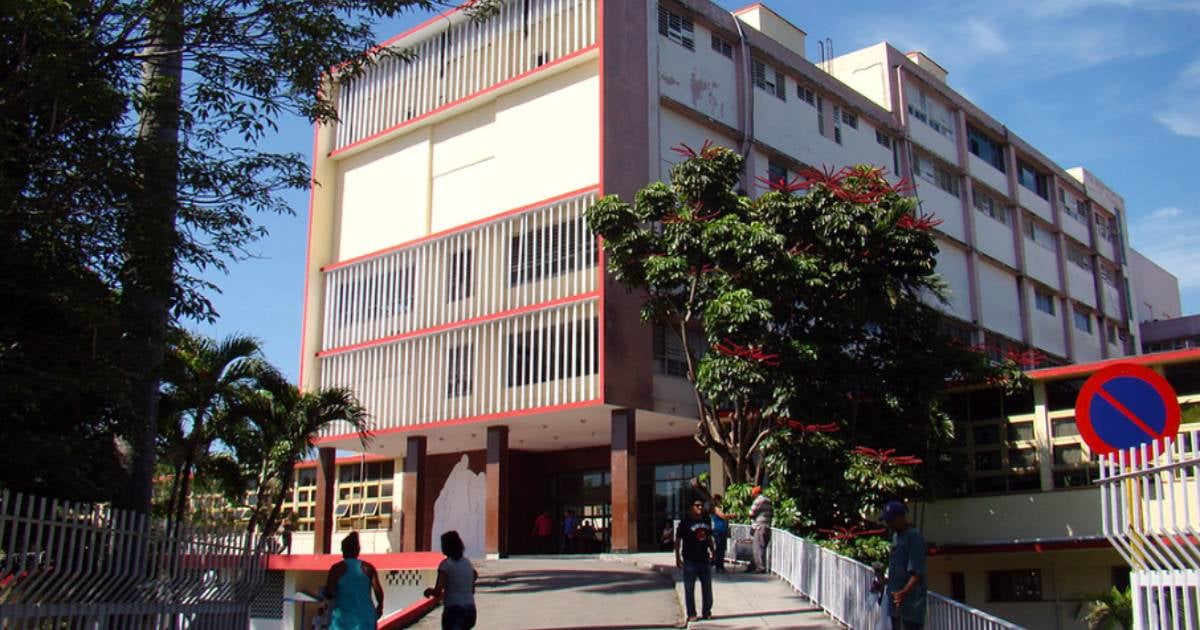
That was the case for Yaima Viñals, a Cuban resident in Spain who returned to the island to care for her father after he suffered a hip fracture, only to find a healthcare system unable to attend to him.
"I couldn't have the surgery because there were no resources in the hospitals," recounted the woman, who lives in Burgos, in a testimony recorded by the Spanish media Burgos Conecta.
Viñals traveled to Cuba between April and September to be with her father, but what she found left a profound mark on her. Before traveling, she gathered everything she could in Spain, from medical supplies and instruments to medications. Even so, it was not enough to guarantee the intervention her father needed.
According to his account, the Cuban healthcare system is undergoing severe deterioration. "Hospitals are no longer hospitals; they are more like sewers. There are no medicines," he lamented.
In addition to the health crisis, there is also an energy crisis. During his stay on the island, he experienced prolonged blackouts that disrupt daily life. “There are power outages lasting more than two consecutive days, and there is no schedule for when the electricity will go out,” he explained.
The lack of electricity affects everything from medical services to commercial activities and electronic payment systems, in a context where the Cuban economy is moving towards a partial dollarization that many consider unviable.
Economic hardship also affects families. According to Viñals, his parents' monthly pension ranges between 2,500 and 3,000 Cuban pesos, an amount that in the informal market is barely equivalent to a few euros. "That's enough for them to buy a bottle of oil, nothing more," he said.
Faced with this reality, remittances sent by relatives abroad have become a lifeline for thousands of households. Viñals herself sends money and buys food from Spain so her parents can survive.
"The economy of Cuba relies heavily on remittances from family members living abroad," she stated, pointing out that many emigrants support both their lives overseas and the basic needs of their relatives on the island.
He also tried to bring his parents to Spain, taking advantage of his Spanish nationality, but the process turned out to be frustrating. As he explained, his mother's visa was denied after a long bureaucratic process that requires complex procedures and trips to Havana.
Despite having rebuilt her life in Burgos, the Cuban acknowledges that she continues to look towards the island. Every month, she sends money to help her parents buy food and medication.
"There isn't a day or a month that I don't send something to Cuba," she assured.
The testimony of Viñals, recorded by Burgos Conecta, summarizes this daily struggle with a phrase that carries more weight than any statistic: many Cubans left to support their families and prevent them from going hungry. But doing so, he acknowledges, "is not easy."
Filed under: