
Related videos:
A report sent to the editorial office of CiberCuba reveals the situation experienced by a preschool teacher from the town of El Caney, in Santiago de Cuba, who claims to have spent four consecutive days waiting in line at the Banco Popular de Ahorro (BPA) in that locality to be able to collect her salary.
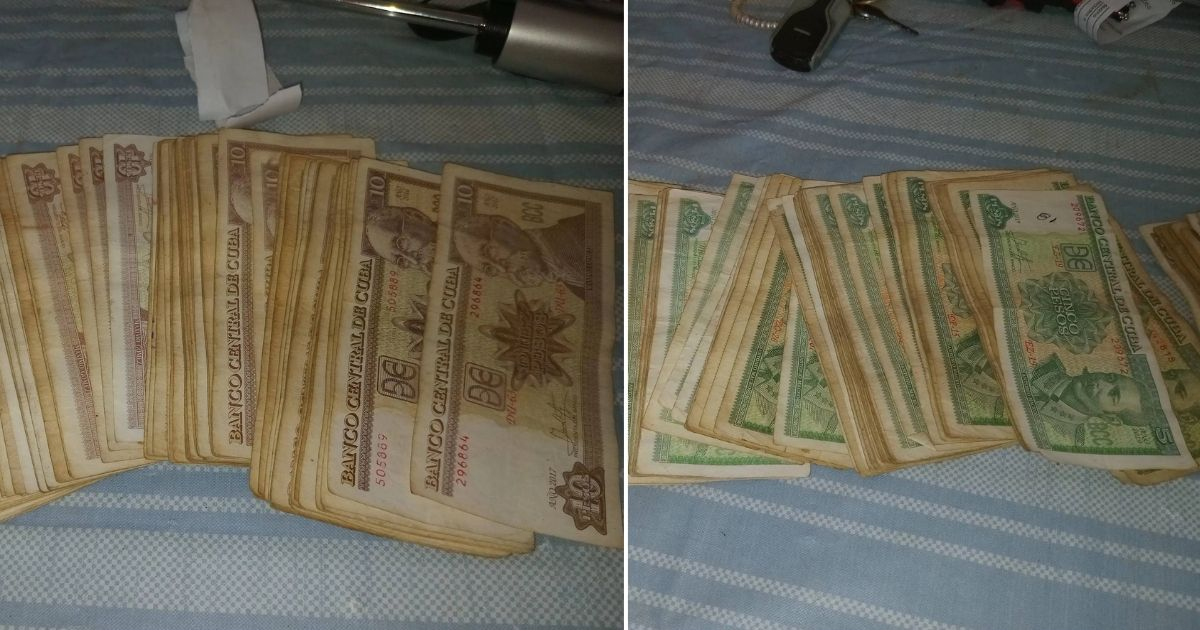
According to the educational sector worker, after several days of waiting, she finally received 2,000 Cuban pesos, but in very low denomination bills: 1,000 pesos in 5 CUP bills and another 1,000 pesos in 10 CUP bills.
"It is outrageous that a worker in the Education sector spends 4 days in line to collect a humble earned salary, and on the fourth day this is what they come to give you: one thousand pesos in five-peso bills and one thousand pesos in ten-peso bills, totaling two thousand pesos," denounced the affected individual in a message sent to this outlet.
The educator asserts that the situation not only involves the loss of several days spent in queues, but also that many establishments refuse to accept bills of these denominations, further complicating the use of the received money.
The problem does not appear to be isolated. For months, numerous citizens have reported that Cuban banks issue payments in small denomination bills, a practice that adds further difficulties amid the economic crisis. Meanwhile, Cuban businesses are rejecting small bills, leaving many workers trapped in an absurd cycle: the bank pays them with money that the shops then refuse to accept.
The situation of teachers and educators on the island also reflects the deterioration of the purchasing power of state salaries. A recent example showed what a Cuban teacher can buy with her salary, highlighting that the income barely covers basic needs.
This is compounded by new restrictions within the banking system itself. In another recent complaint, a citizen pointed out bank fees of 10% and withdrawal limits that further hinder citizens' access to their money.
Meanwhile, the economic deterioration continues to deepen. According to recent surveys, 80% of Cubans believe that the current crisis is worse than the Special Period, as reflected in this analysis of why the current economic situation is more serious than that of the 1990s.
Social unrest is also evident on the streets. In recent months, protests have increased in various regions of the country, while the government itself has acknowledged that it lacks sufficient resources to support vulnerable individuals.
Amidst this situation, discouragement is growing even among workers in the education sector. Various reports point to the lack of enthusiasm regarding salary increases, as inflation and difficulties in accessing money swiftly diminish any raise.
If you wish to share a complaint, story, or similar situation anonymously, you can contact the CiberCuba editorial team through our official news channels on Facebook, Instagram, or WhatsApp.
Filed under: