
Related videos:
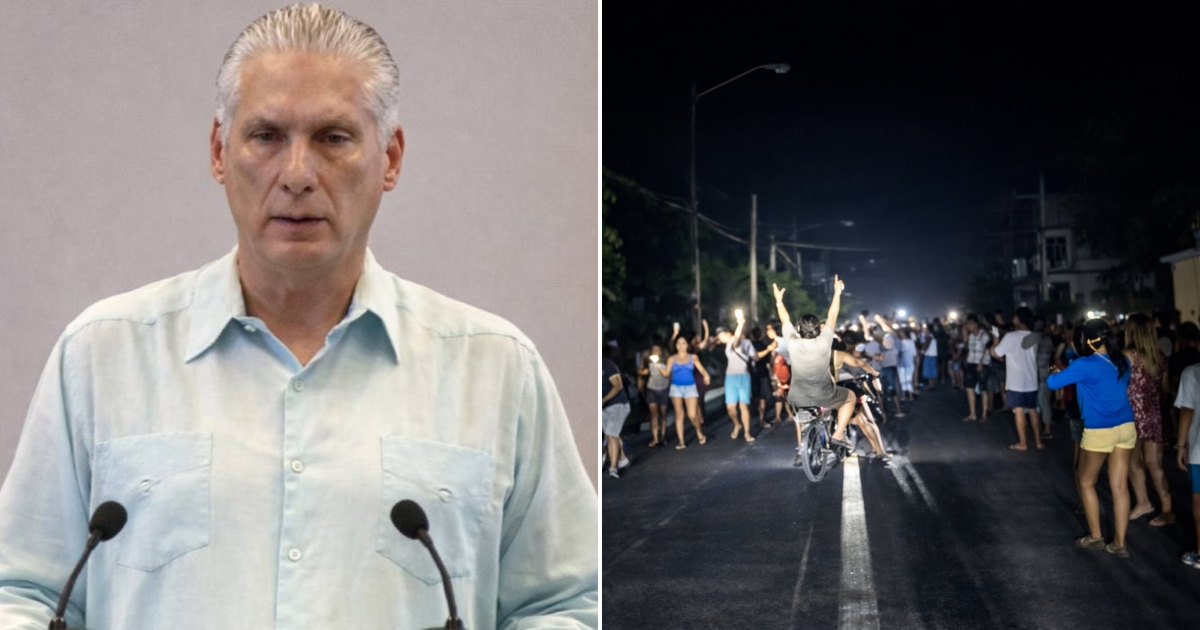
This Saturday, while Morón was still feeling the aftermath of the protests that culminated the night before with the assault and arson of the Communist Party headquarters, Miguel Díaz-Canel posted on his X account a message congratulating the Cuban state press on Cuban Press Day, without mentioning the crisis or the protests shaking the country at any point.
Early in the morning, the leader referred to state journalists as "worthy companions in all the battles of the Revolution" and likened them to soldiers in combat. "I embrace the Cuban Press, a worthy companion in all the battles of the Revolution, both inside and outside the Homeland, who has always told the story from the trenches, in both the harsh everyday life and in internationalist missions. Alongside fighters, doctors, teachers, and builders, they have been and are soldiers in the Martian manner that the battle demands when facing the enemy. Congratulations," wrote Díaz-Canel.
The message arrived hours after hundreds of Cubans took to the streets of Morón, in Ciego de Ávila, on the night of Friday, March 13. The protesters performed pot-banging, marched with flashlights, and chanted slogans such as "Liberty!", "Homeland and Life", and "It's over!". The protest escalated to an assault on the municipal headquarters of the PCC, where they removed furniture, documents, computers, and Castroist symbols which they burned in the streets. At least one young person was injured by police gunfire, according to independent reports without official confirmation.
The state press that Díaz-Canel celebrated responded to the events with a narrative that is radically different from what the videos shared on social media show. The provincial newspaper Invasor, an organ of the PCC in Ciego de Ávila, described what happened as "vandalistic acts" perpetrated by "a manipulated and guided group," reported only five arrests, and asserted that "everything is calm in Morón." The newspaper attributed the disturbances to "the same old enemies" from abroad.
The authorities cut off internet access in Morón to limit the dissemination of the events, according to independent sources. The organization Cubalex reported at least 14 arrests in the context of the wave of protests in March 2026.
The protests in Morón are part of a wave that began on March 8, triggered by the collapse of the Antonio Guiteras thermoelectric plant, the largest in the country. The failure left 10 out of the 16 thermoelectric units in Cuba out of service and affected 68% of the island with outages of up to 20 hours a day, worsening the scarcity of food, fuel, and basic goods.
The contrast between Díaz-Canel's celebratory tweet and the reality in Morón starkly illustrates the propagandistic role of state journalism in Cuba. Reporters Without Borders ranks Cuba 165th out of 180 countries in its 2025 press freedom index, with a score of 26.03 out of 100, making it the second worst country in Latin America, only behind Nicaragua. Díaz-Canel himself was included in the list of "press predators" by that organization in 2021, following the repression of the protests on July 11 of that year.
It is not the first time that the leader has resorted to this type of praise. In March 2025, also on the occasion of Cuban Press Day, he stated that "revolutionary press is truly independent" because it does not rely on foreign capital. In April of that same year, he referred to independent Cuban journalists as "mercenaries".
Filed under: