
Related videos:
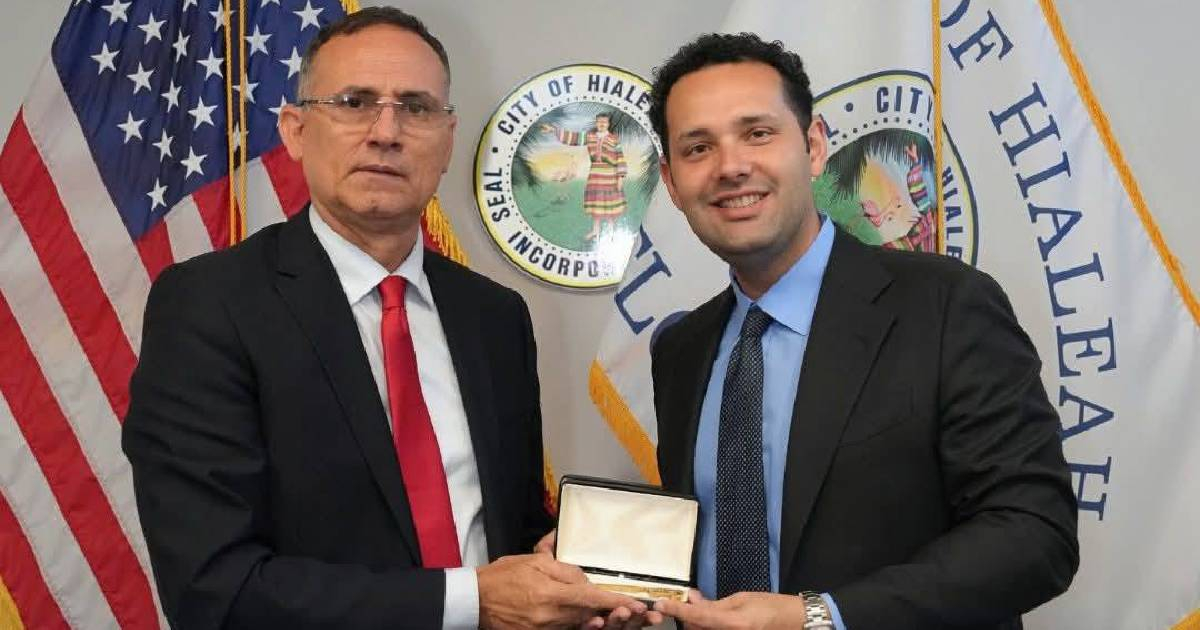
Cuban opposition leader José Daniel Ferrer, coordinator of the Patriotic Union of Cuba (UNPACU), received the Key to the City of Hialeah at an event led by Mayor Bryan Calvo, who highlighted the dissident's journey as a symbol of resistance against the Cuban regime.
The recognition was announced by the mayor himself on social media, where he explained that the distinction aims to honor Ferrer's years of work in defense of human rights and freedom in Cuba.
“We had the honor of presenting the Key to the City of Hialeah to the Cuban opposition leader, José Daniel Ferrer,” Calvo expressed.
"For years, Ferrer has defended freedom and human rights in Cuba, often at a great personal cost. His bravery and voice have become a symbol of resistance for many who continue to fight for liberty on the island," he noted.
The mayor also emphasized the special significance of the recognition in a city with a strong presence of Cuban exiles.
“In a city built by generations of Cuban exiles, acknowledging their leadership carries profound significance. Hialeah will always stand with those who refuse to remain silent in the face of oppression and who continue to fight for a free Cuba,” he stated.
Ferrer publicly thanked the mayor for his gesture and highlighted his commitment to the cause of freedom on the island.
“Thanks to Hialeah Mayor Bryan Calvo for the honor he bestowed upon me. I feel very honored and grateful to this promising politician committed to his city and the freedom of Cuba,” the opposition member wrote on social media. “This young and brilliant friend will go very far serving the people in this great nation.”
José Daniel Ferrer arrived in the United States in October 2025, after accepting the exile imposed by the Cuban regime as a condition for his release.
His release occurred amid allegations of abuse during his imprisonment at Mar Verde prison in Santiago de Cuba.
In a letter circulated by his family while he remained imprisoned, the opposition leader claimed to have suffered beatings, torture, humiliation, threats, and extreme conditions of confinement. He is also one of the few political prisoners from the black spring who chose to stay on the island following the amnesty.
Filed under: