
Related videos:
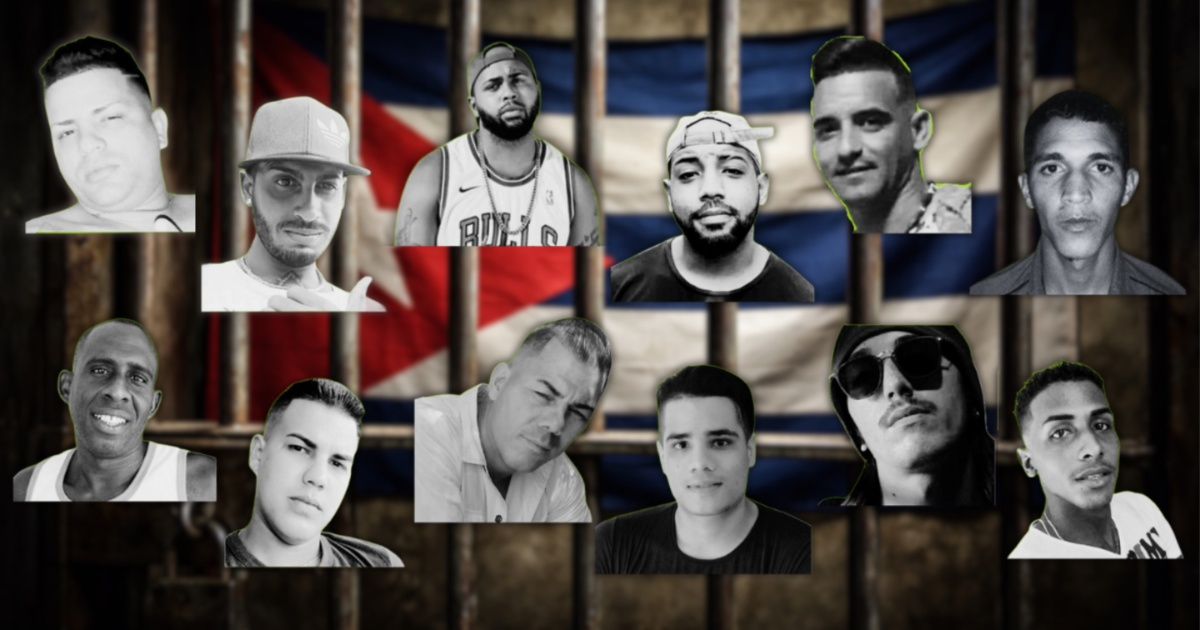
The release of political prisoners in Cuba continued through this Saturday, with at least 12 cases verified by the organization Justicia 11J, in the context of the process announced this Thursday by the Ministry of Foreign Affairs regarding the release of 51 people in custody.
According to that organization, most of the beneficiaries identified so far are protesters from July 11, 2021, although in several cases, the exact legal conditions under which they were released from prison are still unknown.
According to the report, one of the confirmed cases is that of Luis Esteffani Hernández Valdés, who was released this Saturday on probation. His prosecutor's request was for 8 years of imprisonment for the crimes of public disorder and contempt. He was sentenced to 6 years of imprisonment.
Another individual of note is Ariel Pérez Montesino, who was released on March 13, 2026. Justicia 11J stated that it has yet to determine the conditions under which his release occurred.
Pérez Montesino faced a prosecutor's request for 15 years of imprisonment and was sentenced to 10 years for alleged offenses of public disorder and contempt. The organization also specified that it does not have information on whether there was an appeal or the outcome of any such process.
The release under conditional liberty of Franklin Reymundo Fernández Rodríguez was also verified.
He was prosecuted for the alleged crime of sedition, with a prosecutor's request of 18 years; he was initially sentenced to 12 years and later benefited from a reduction to nine years through the appeals process.
On the same date, Justicia 11J confirmed the release of Miguel Enrique Girón Velázquez, this time under a non-custodial license. According to the document, he was also prosecuted for sedition, with a prosecutor's request of 25 years, an initial sentence of 14 years, and a subsequent reduction to 11 years in prison after the appeal.
Another one of the released individuals is Juan Pablo Martínez Monterrey, released under parole.
In his case, the prosecutor's request was for 13 years in prison, and he received a sentence of 11 years for the alleged crimes of public disorder and sabotage. The document states that the appeal did not change the sentence.
The list also includes the opposition figure Roberto Ferrer Gener, whose release was also confirmed this Friday, although Justicia 11J stated that it is still unaware of the conditions under which he was released from prison.
The text states that he was charged for allegedly offering money to another person to shout slogans, thereby serving a sentence for the protests of July 11 without having participated directly in them.
His prosecutor's request was for 20 years due to alleged acts against state security in connection with the crime of sedition, and he was sentenced to 15 years, a penalty that was upheld on appeal.
Among the confirmed names is also Yussuan Villalba Sierra, who has been released on parole.
He faced a 20-year prosecution request for sedition, was sentenced to 18 years, and later had his sentence reduced to 10 years during the appeal process.
Justice 11J also verified the release of Wilmer Moreno Suárez on that same day, although it could not yet specify the legal framework applied.
The prosecution requested 25 years of imprisonment for sedition. He was sentenced to 26 years, which was later reduced to 18 years upon appeal.
Another confirmed case is that of Oscar Bárbaro Bravo Cruzata, whose release occurred this Friday. The organization indicated that it is still unaware of the legal grounds under which he was released, but emphasized that he left prison in poor health due to a liver disease.
His sentencing request had been for 20 years for sedition; he was sanctioned to 18 years, and then the appeal reduced his sentence to 13 years.
The list also includes Eduardo Álvarez Rigal, whose release was confirmed this Friday, although the applicable legal framework was not specified. He was prosecuted for sedition, with a request for a 20-year sentence, and sentenced to 13 years in prison, a sentence that remained unchanged after the appeal.
These cases also include Ronald García Sánchez and Adael Jesús Leyva Díaz, both of whom were released on parole.
Ronald García Sánchez faced a prosecutor's request for 23 years for sedition, was sentenced to 20 years, and his sentence was later reduced to 14 years on appeal.
In the case of Adael Jesús Leyva Díaz, the prosecutor's request was for 21 years, the initial penalty was 19 years, and the final sentence was 13 years following the appeal.
The releases are part of the process of freeing 51 individuals deprived of liberty, as announced by the Cuban Ministry of Foreign Affairs on March 12.
However, Justicia 11J urged caution by recalling that a similar process carried out in the first quarter of 2025 involved the granting of conditional and revocable prison benefits, not amnesties or pardons that would completely extinguish the sanctions.
The organization itself placed these releases within a broader repressive context.
At the time of this announcement, Justicia 11J documented an underreporting of 760 individuals incarcerated for political reasons in Cuba, many of whom were imprisoned for participating in protests, engaging in civic activism, or expressing critical opinions.
Thus, the information verified so far indicates that the process of releases continues to progress, with 11 political prisoners identified by Justicia 11J, but there are still open questions regarding the legal conditions of several of these releases and about the true scope of a measure that, for the time being, does not necessarily equate to a full and definitive liberation.
Filed under: