
Related videos:
The Cuban regime announced a possible opening to allow Cubans living abroad to invest and conduct business on the island, amid the severe economic crisis the country is facing and the government's efforts to attract capital to sustain key sectors of the economy.
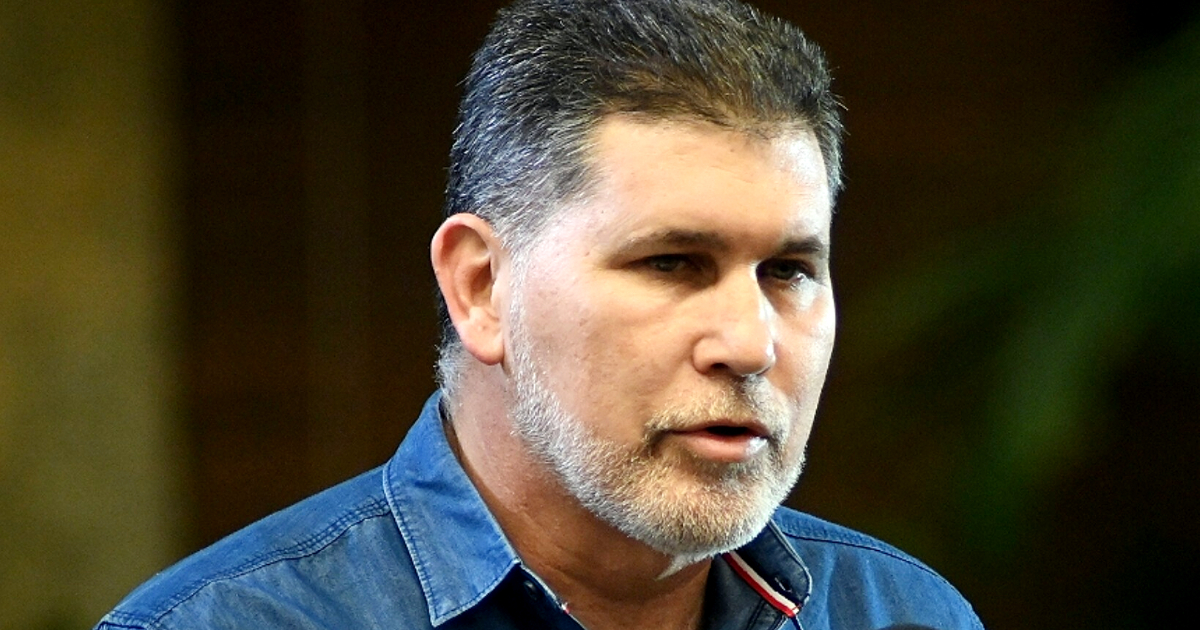
The statements were made by the Vice Prime Minister and Minister of Foreign Trade and Foreign Investment, Oscar Pérez-Oliva Fraga, who assured that Havana is willing to expand economic relations with both American companies and Cubans living abroad.
"Cuba is open to having a smooth commercial relationship with companies from the United States as well as with Cubans residing in the United States and their descendants," the official stated in remarks to NBC News.
According to the explanation, this opening would not be limited solely to trade, but would also include the possibility of making direct investments in the country.
"This goes beyond the commercial sphere. It also applies to investments, not just small investments, but also large investments, particularly in infrastructure," he added.
If realized, the announcement would signify a significant change in the regime's economic policy towards the Cuban diaspora, which has been virtually excluded from participating as investors in the national economy for decades.
For years, the Cuban regime allowed emigrants to send remittances or family assistance but has prevented them from participating directly as business owners within the country.
In recent days, the ruler Miguel Díaz-Canel also announced that the government is preparing new measures related to Cubans living abroad. He stated that the aim would be to facilitate their participation in the country's economic development.
The ruler appointed by Raúl Castro in 2018 assured that the authorities have held multiple meetings with members of the diaspora in different regions of the world to gather proposals, concerns, and suggestions on how they could contribute to the national economy.
According to their statements, these consultations have been organized by the Ministry of Foreign Affairs and by the Ministry of Foreign Trade itself, and the proposals collected were subsequently analyzed by the political leadership of the regime.
The change in tone of the regime towards the exile community has drawn attention because it contrasts with years of official hostile rhetoric towards emigrants. On several occasions, Cuban authorities accused certain sectors of the exile community of promoting campaigns against the political system of the island.
Díaz-Canel himself was at the center of a controversy in 2018 when he referred to Cubans who, in his view, acted against the country as "ill-born by mistake."
The potential shift in policy towards the diaspora comes at a particularly delicate moment for the Cuban economy. The island is experiencing one of the deepest crises of recent decades, characterized by food shortages, prolonged blackouts, the deterioration of energy infrastructure, and a significant wave of migration.
In this context, the government is trying to promote strategic sectors such as tourism, mining, and the modernization of the electrical system, areas that would require significant investments.
Cuban authorities have also promoted the establishment of micro, small, and medium enterprises (Mipymes) in recent years as part of a limited opening to the private sector. However, the State maintains control over the main economic sectors.
Referring to the economic difficulties of the country, Pérez-Oliva Fraga reiterated the official narrative of the regime and attributed the problems to U.S. sanctions, which, he said, restrict Cuba's access to financing, technology, markets, and fuel supplies.
Nonetheless, experts point out that any attempt to attract foreign investments will face significant obstacles, including the lack of legal guarantees for investors, existing legal restrictions, and the distrust that persists among large segments of the Cuban exile community.
If the new measures announced by the government are implemented, it would be one of the most recent attempts by the regime to leverage the capital of the diaspora in order to alleviate the severe economic crisis facing the island.
Filed under: