
Related videos:
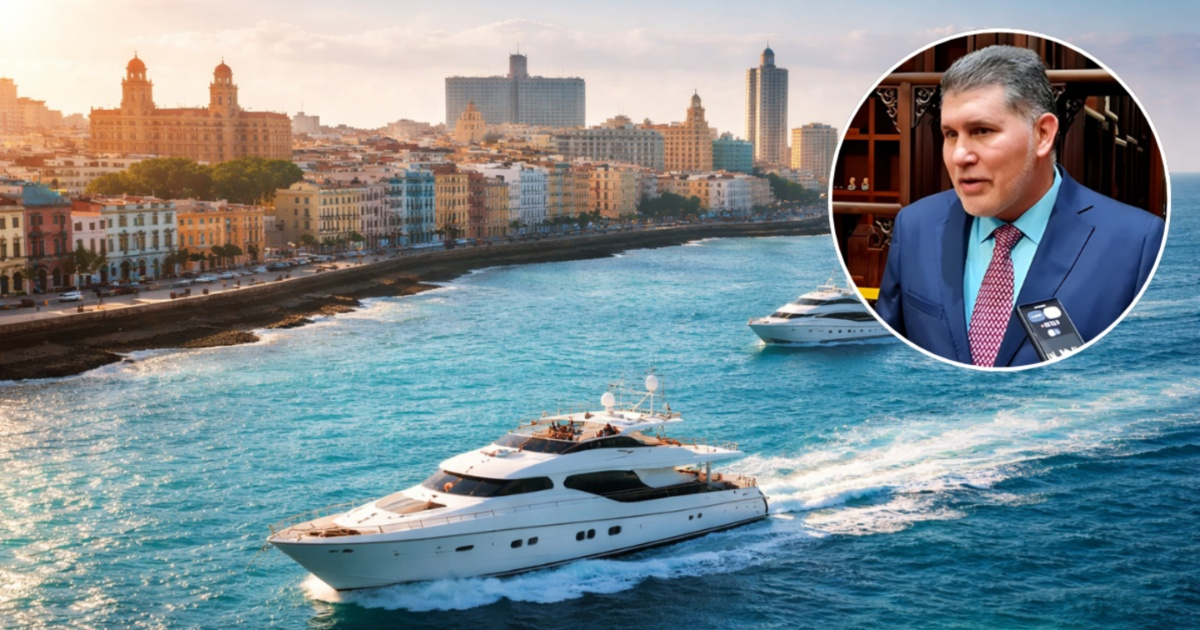
The Cuban regime hinted at a shift towards a more open economic model by announcing that it will allow Cuban citizens residing abroad to invest in the private sector and own businesses on the Island. This opening, as stated by Deputy Prime Minister Óscar Pérez-Oliva Fraga to NBC News, would also extend to Cubans living in the United States and their descendants.
The clearest signal of this possible shift came from Fidel and Raúl Castro's own great-nephew, Pérez-Oliva Fraga, who stated that “Cuba is open to having a smooth commercial relationship with American companies” and “also with Cubans residing in the United States and their descendants.”
According to the interview granted to journalist George Solis, the official made those statements in Havana before officially announcing the news in Cuba on Monday night.
The scope of the opening, according to his words, would not be limited to small businesses.
Pérez-Oliva Fraga stated that this new approach "goes beyond the commercial realm" and also encompasses investments, "not just in small ones, but also in large ones, particularly in infrastructure."
This precision suggests that Havana is considering external capital not only for smaller private businesses but also for strategic sectors and larger-scale projects.
Urgent measures
The interview takes place, according to NBC News, at a time when the Deputy Prime Minister is attempting to revitalize a severely impacted economy through a series of reforms aimed at creating what he called a “dynamic business environment.”
The aim of those transformations would be to revitalize sectors such as tourism, mining, and the repair and modernization of Cuba's aging electrical grid.
The official framed, however, that potential opening within the regime's traditional discourse on U.S. sanctions.
According to him, “the U.S. blockade, the policy of hostility towards Cuba, is undoubtedly an element that affects the development of these transformations.”
He added that this "blockade" deprives the country of access to financing, technology, markets, and, in recent years, also to fuel.
That argument is linked to the context of the energy crisis currently facing the Island.
Cuban authorities maintain that no shipments of oil have arrived in Cuba in the past three months.
Miguel Díaz-Canel stated on Friday that the lack of supplies has triggered a national energy crisis, with prolonged outages and postponed surgeries in hospitals.
The eventual economic opening occurs in the midst of a particularly delicate political situation.
Contacts with the U.S.
The report from NBC News emphasizes that on Friday, the Cuban government confirmed for the first time that it is holding talks with the administration of Donald Trump.
That admission coincided with an increase in public pressure from Washington and statements from Trump himself, who has warned that Cuba could face a fate similar to that of Nicolás Maduro if it does not reach an agreement with his administration.
Trump has previously claimed that Cuba will "fall very soon" if it doesn’t reach an understanding with him, and even suggested the possibility of a "friendly takeover" of the Island.
He also said he would focus more of his attention on Cuba after the war in Iran.
Cuba's energy deterioration comes at a time when crucial oil shipments from Venezuela were interrupted following the capture of Nicolás Maduro and Cilia Flores in a U.S. operation in Caracas in early January.
That operation affected the fuel flow between Venezuela and Cuba, while Havana accuses Washington of preventing tankers from reaching Cuban shores.
The crisis stemming from that situation has already had visible consequences within the country, such as the recent protests in Morón.
Thus, the opening announced by Pérez-Oliva Fraga is framed within a dual pressure: the urgent need to revitalize a crisis-stricken economy and the attempt to maneuver politically at a time of negotiations with Washington, fuel shortages, blackouts, protests, and rising social tension.
Filed under: