
Related videos:
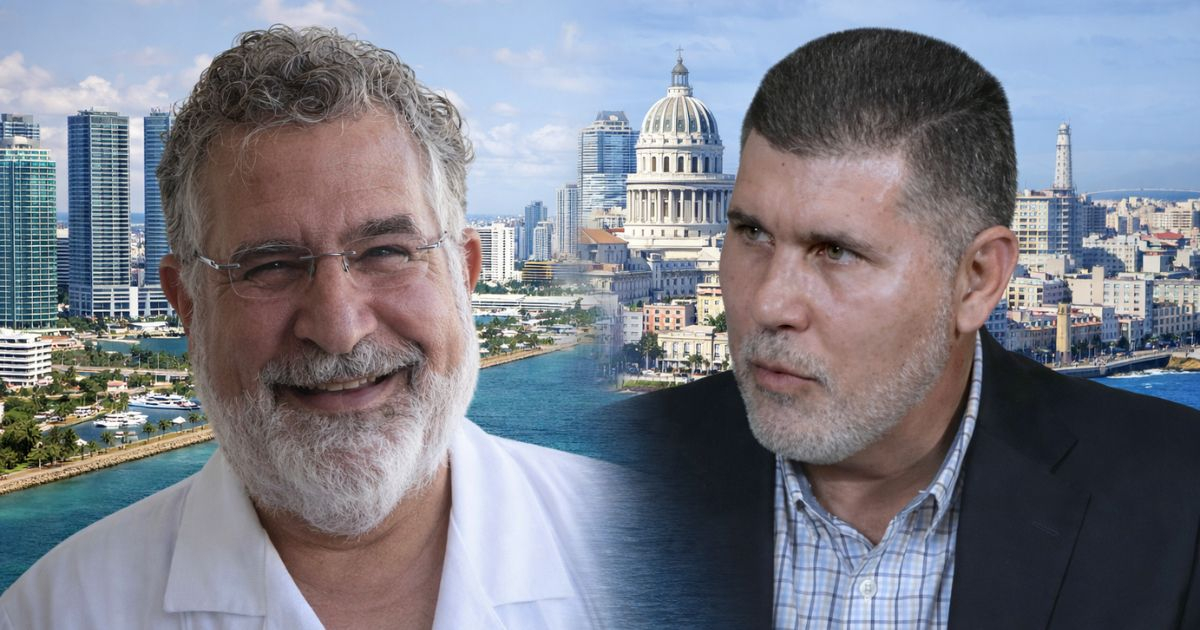
Cuban-American former Congressman Joe García harshly criticized the Cuban government's rhetoric regarding the U.S. embargo on Monday, calling it "ridiculous" in response to a post on X (Twitter) that reacted to an exclusive interview given by Deputy Prime Minister Oscar Pérez-Oliva Fraga to NBC News, in which the official attributed the island's economic woes to Washington's policies.
García was straightforward in his message: "The rhetoric in this interview, it must be acknowledged, has only broadcast a small part; it is ridiculous. The representative of Cuba here merely reiterates his endless rhetoric of being victims of the embargo. The problems of Cuba are not the embargo; the embargo is a factor, but it is a small one compared to all the challenges faced by the Cuban people, investors, and everyone trying to do business with Cuba."
The trigger was the interview of Fraga with NBC News —who also serves as the Minister of Foreign Trade and Investment— in which he announced that Cuba will allow its nationals abroad to invest and own private businesses on the island. "Cuba is open to having a smooth commercial relationship with American companies and also with Cubans residing in the United States and their descendants," the official stated.
At the same time, Fraga emphasized the official narrative: "The United States' blockade, the policy of hostility against Cuba, is undoubtedly an element that affects the development of these transformations. The blockade deprives us of access to financing, access to technology, access to markets, and in recent years, it has specifically aimed to deny our country access to fuel."
García, who has advocated for dialogue with Cuba while calling for real political changes, rejected that narrative of victimization and added that "old habits are hard to break for the Cuban government." The former congressman has publicly proposed that Cuba release political prisoners as a first step, and that the U.S. respond by lifting embargo restrictions on the Cuban private sector. Along the same lines, Carlos Giménez has warned that there will be no U.S. investment in Cuba without real political changes.
The announcement from Fraga comes at a moment of extreme crisis: President Díaz-Canel confirmed on Friday, March 13, that no shipments of oil have arrived in Cuba in the past three months. On Saturday, the Electric Union reported a generation deficit of over 2,000 megawatts, with outages exceeding 20 hours a day in several provinces.
On that same day, protesters in Morón (Ciego de Ávila) threw stones at the Communist Party headquarters, set furniture on fire, and shouted "Freedom!" and "Homeland and Life," with at least five people arrested. The protests in Morón garnered significant attention and reached international media.
The diplomatic context is also unprecedented: Díaz-Canel confirmed talks with the Trump administration at the highest level on Friday, and this Sunday the U.S. President announced aboard Air Force One: "I believe we will make a deal very soon, or do what we have to do". Meanwhile, analysts point out that Díaz-Canel returns to anti-imperialist rhetoric even while negotiating with Washington.
For García, any real progress hinges on the Cuban diaspora, but not through rhetorical maneuvers: "Anything Cuba does to advance will require Cubans abroad," the former congressman has pointed out. This view is shared by the Cuban-American businessman Saladrigas, who argues that the diaspora will need to finance the Cuban transition.
Filed under: