
Related videos:
We strive to replicate everything from that Cuba. From its malecón to the barbershops, the coconut pastries, and even the Ladas that now drive through Hialeah. With Cuba in our memories, we transplant the pride and island traditions to the mainland. However, imitation comes with its risks. Exile also brought along vices such as gossip, ingratitude, and the long lines for driver's licenses. And some are frankly repulsive, like snitching.
Throughout its history, the Cuban regime has been prolific in creating records of public enemies: opponents, intellectuals, and uncomfortable figures of all kinds.
In 2023, more specifically, Havana updated a list of 61 "terrorists" who are prohibited from returning to the country under the most serious accusations. This group included opposition figures, influencers without followers, a deceased individual, and even the historical leader of the Cuban American National Foundation, my mentor and friend Pepe Hernández.
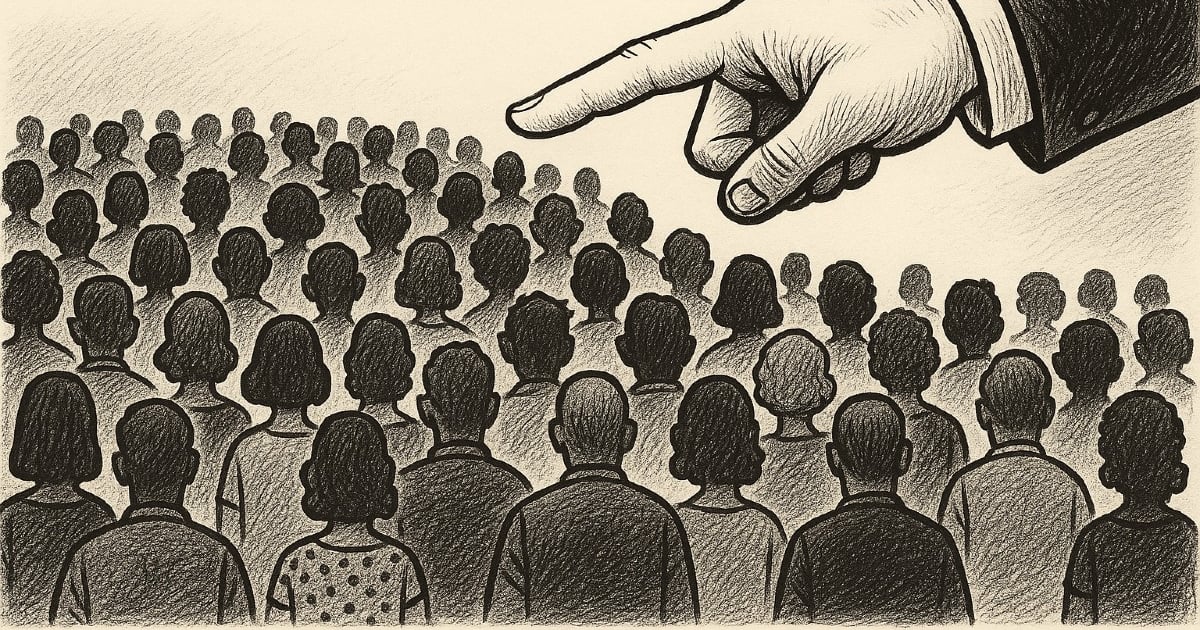
But now, a certain sector of Miami responds with its own list of "repressors," "henchmen," and "members of the Communist Party" who are allegedly infiltrated in exile to commit all kinds of wrongdoing. TikTok is saturated with accusatory videos, the vast majority lacking evidence, which seem to fit into a covert yet well-designed campaign. A photo, an anonymous accusation, ominous music, and a call for settling scores, all packaged in 15 seconds.
Unfortunately, throughout its history, Cuba has been fertile ground for such revanchist behaviors. There were volunteer informers during the wars against the Spanish crown and throughout the Republic. Under Batista, they were called 33.33, because they received a stipend of 33 pesos and 33 centavos for the professionalization of snitching. Fidel Castro took it even further; he institutionalized informing within the Committees for the Defense of the Revolution and the Rapid Response Brigades, while State Security mirrored the methods of the Stasi, and some Cuban husbands began to inform on their wives, brothers, and, we can only imagine, any potential lover of their wives.
And what to do when the poison of anonymous accusations lands in Miami?
A deficient tool of origin
Let's take it step by step. Blacklists do not represent an expression of justice, but rather solely an accusatory act. In most cases, the individual subjected to reputational execution has no way to defend themselves. Being presumed guilty from the start, evading the media firing squad becomes an insurmountable challenge, even if they were to be exonerated of the charges. In the age of social media, the digital stain often remains for posterity.
It is known, for example, that the register of repressors created by a group of lawyers and activists from Miami has had to be corrected several times due to the inclusion of names based on insufficiently supported accusations, and even false ones. That is precisely why we have courts: to guarantee due process, where everyone is presumed innocent until proven guilty.
The other "little problem" relates to the credibility of the creators of the list. It is said that one of the founders of the project was a prominent official of the Communist Party and a member of the America Department of the Central Committee, the parallel arm of Cuban intelligence that stained the hemispheric geography with armed guerrillas, sabotage, and kidnappings. Even at the beginning of the nineties, the man was an active member of the Rapid Response Brigades that repressed the neighbors of his own building in Havana.
A distracting maneuver
The timing of this campaign has proven too suspicious. As soon as the list was made public, the three Miami congressmen, led by Carlos Giménez, seized upon the narrative of the “infiltrated henchmen” as if they were clinging to the last helicopter in Saigon.
Giménez, Mario Díaz Balart, and María Elvira Salazar have engaged in a regrettable act of political cowardice over the past hundred days.
The story of the undercover repressors has served as a lifeline amidst a tsunami of disappointment for them. The anti-immigrant rhetoric from the White House had deprived them of oxygen. While Trump bulldozed through with threats of deportation against hundreds of thousands of Cubans, Venezuelans, and Nicaraguans, dismantled support programs for the internal opposition in Cuba, and left Radio and TV Martí in a coma, they responded with silence or empty excuses. Giménez, Mario Díaz Balart, and María Elvira Salazar have engaged in a regrettable act of political cowardice over the past hundred days.
Using the distraction of The Blacklist, Miami's Troika has begun to invoke old ghosts – communists, spies, criminals – focusing on the fearsome external enemy, which is nothing more than that Cuba, now in its 66th year, suffocating on its own and directionless. To defend themselves, they have resorted to unconfessable extremes, playing with the idea of turning the myth of the Aragua Train into a sort of Havana Train, filled with abusers and Fidelist spies.
No one knows if the old tactic will work this time, but it is all they have for now to engage the electorate.
How to apply justice?
Stigmatizing nearly a million Cubans who recently arrived in the country because of a few dozen "repressors" or former members of the Communist Party who deceived immigration agents is, in addition to being infamous, an act of supreme hypocrisy. In Miami, there are few who can cast the first stone.
But what should be done about those who have committed proven abuses in Cuba or simply lied about their past?
There are two basic legal tools for these cases. One is the Global Magnitsky Human Rights Accountability Act, which restricts entry into the country for high officials who have committed 'serious' violations of basic freedoms. It applies to big fish and serious crimes, not to a report or a cookie on the corner. The other legal instrument is much broader and more effective: expulsion for lying to immigration authorities about membership in the Communist Party or the Communist Youth during the five years prior to applying for immigration benefits, or causing harm to others during the membership period in those totalitarian organizations. Most of the "repressors" deported to Cuba recently were punished under this last rule.
Frankly, it must be horrifying to run into the guard who beat you in prison or the prosecutor who accused you in a rigged trial at a gas station in Miami.
But witch hunts like the one led by Congressman Giménez raise endless questions:
Where is the exile that forgave the repentant?
Is a simple act of contrition, or the offer of certain confidential information, enough to purchase forgiveness?
Why should a different judicial standard be applied to a prosecutor in Holguín than to a combat pilot who left a trail of death behind him?
What differentiates a low-level informant from a high-ranking official close to the Castros?
How should we deal with former intelligence agents who participated in bloody plots in third countries?
Why a total pardon for some, including Batista supporters and Castro loyalists, and punishment for those who arrived in 2024?
Why are some "henchmen" more acceptable than others?
If we’re being honest, in Miami we could replicate right now the diabolical mechanisms that have functioned in Castro's Cuba (and before that in Batista's, and before that in Machado's, and so on...).
A small army could be created, an agency of former spies, and even media outlets entirely operated by old regime propagandists. It is claimed that a presenter who organized acts of repudiation in Alamar is currently wandering around a right-wing radio station. What is his name? Who is accusing him?
Exile is what it is, and defectors have always existed. However, instead of launching into a frenzy of denunciations, a responsible community should initiate a profound and honest debate on issues such as restitution, forgiveness, and reconciliation, which will be crucial for the future viability of the Cuban nation.
I suspect that some will say that no splinter is worse than from the same stick, while others will simply argue that the deported lied about their former affiliation with the Communist Party, which is why they deserve to be expelled from the country they fled.
In that case, I would suggest going a step further: let's expand the inquiry process. Let's investigate all those who went into exile from the seventies to the present—including citizens and legal residents—to determine who provided false information regarding their connection to the Party, the Communist Youth, the government, the military, or even the camilitos.
I have a slight suspicion that traffic in Miami could decrease and rental prices in Hialeah would decline.
Filed under:
Opinion article: Las declaraciones y opiniones expresadas en este artículo son de exclusiva responsabilidad de su autor y no representan necesariamente el punto de vista de CiberCuba.