
Related videos:
Criticism. There is no other way to describe the water supply situation in Matanzas when the authorities themselves acknowledge that "all municipalities" are affected and that, in some cases, technical breakdowns have lasted for months.
The crisis in the supply of this vital resource has worsened in the province in recent days due to persistent failures in the electrical system, as confirmed by the director of the Water Supply and Sewerage Company in the area, Guillermo Cué Lugo, to the official media Girón.
According to the official, the pumping systems have been operating intermittently, depending on brief periods of electrical availability. During a recent shift, the well fields that supply the city —including Bello, San Juan, Conde, and Canímar— were able to activate during the early morning hours.
This allowed for part of the service to be provided, although insufficiently, prioritizing facilities such as the thermoelectric plant and hospitals. Hours later, operations had to be halted again, the executive reported.
The situation of scarcity affects the entire province, he acknowledged. Municipalities like Matanzas, Unión de Reyes, and Pedro Betancourt are among the hardest hit, while in the capital, the greatest difficulties are concentrated in the high and low areas of the city, as well as in the neighborhoods of Versalles and La Playa, Cué Lugo specified.
The company reports that there are currently 49 units with photovoltaic panels in operation, although their performance, it said, has been limited by low solar radiation. Of the total systems adapted to this energy matrix, seven are broken—some with possible solutions—and another four are awaiting incorporation.
What the official did not specify is what percentage of the pumping can be sustained by the energy produced from this alternative energy matrix; but judging by the significant number of impacts, it does not seem to be very high.
The accumulated breakdowns represent another critical factor. There are equipment out of service for months in locations such as Colón and Jovellanos, while other areas, including San Antonio de Cabezas and Fumarito in Unión de Reyes, exhibit severe damage. In some cases, the pumps lack a viable technical solution, which will prolong the service interruption.
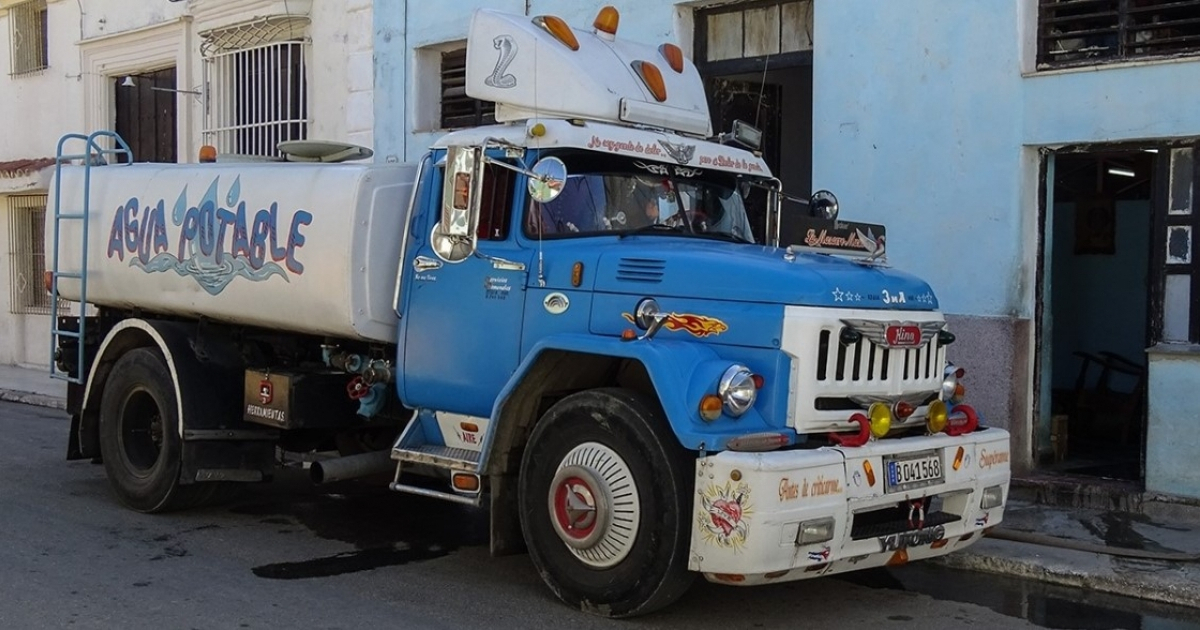
In this context, the alternative supply through tanker trucks remains the primary relief measure, although authorities admit that it is insufficient given the magnitude of the unmet demand, which increases in the absence of electricity.
Cué Lugo emphatically referred to the limitations in acquiring supplies caused by the U.S. embargo: “Let the population understand that we are indeed blocked, and we do feel its consequences. If there were no embargo, we would be able to purchase a number of resources that are currently impossible for us to acquire,” he stated.
This deterioration of service occurs in an environment of increasing social tension in the province. A few days ago, residents of Unión de Reyes protested after being without electricity for over 45 hours, a situation that worsened the lack of drinking water in that area.
Meanwhile, health authorities in Matanzas have recommended boiling and chlorinating water due to the detection of isolated cases of hepatitis, which means that the population is not only suffering from a shortage of this essential liquid, but also that some of the little water they receive may be contaminated.
The combination of energy crisis, deterioration of hydraulic infrastructure, and resource scarcity keeps the water supply under pressure in many regions of the country and further complicates the harsh daily life of Cuban households.
Filed under: