
Related videos:
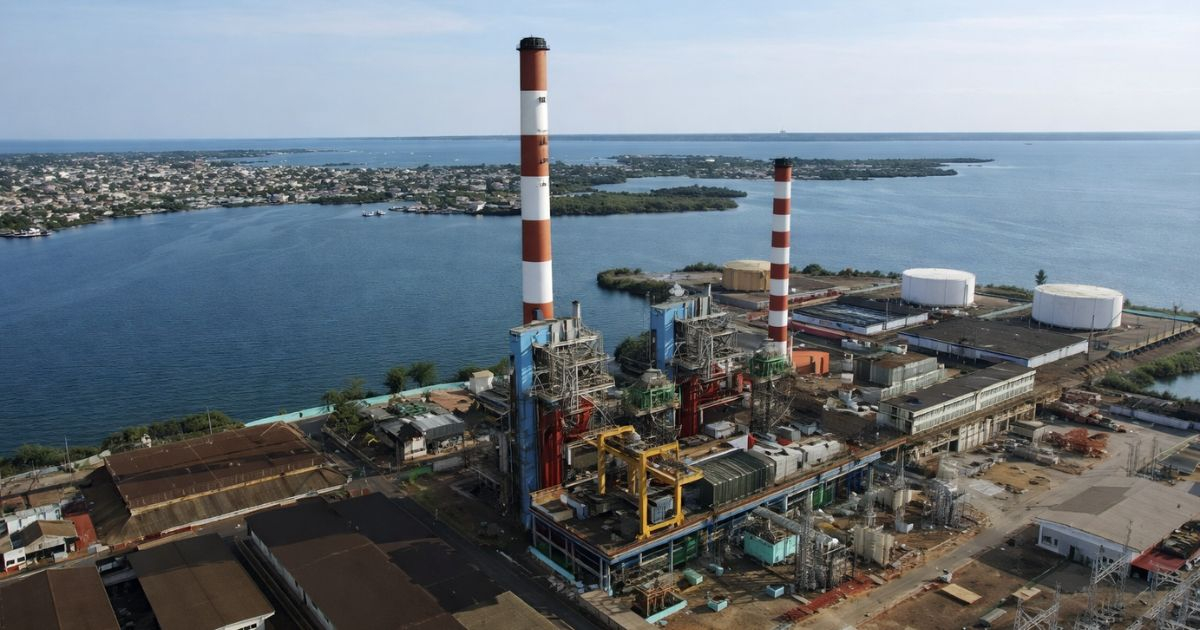
The Electric Union (UNE) reported concrete progress in the recovery of the National Electric System (SEN) this Sunday, a few hours after Cuba suffered its second total collapse in a week, which occurred this Saturday at 6:38 PM following the disconnection of Unit No. 6 from the 10 de Octubre thermoelectric plant in Nuevitas, Camagüey. The UNE communicated the initial steps of restoration through its social media posts.
The initial steps of the restoration included the commissioning of Energas Varadero and Energas Boca de Jaruco, two gas generation plants that are part of the Cuban-Canadian joint venture Energas S.A., which together can provide up to 506 megawatts to the SEN. "Energas Varadero and Energas Boca de Jaruco are now operational. And electricity has reached the CTE Ernesto Guevara of Santa Cruz del Norte," the entity reported.
The Unit 3 of the CTE Carlos Manuel de Céspedes in Cienfuegos has also gone online, connected to the microsystem of the central region of the country. This unit has a capacity of 158 megawatts and its integration is a key step towards the progressive reconnection of the national system.
The CTE Ernesto Guevara, located in Santa Cruz del Norte, Mayabeque, operates with national crude oil and has a capacity of up to 107 megawatts. Its restoration is a priority not only for its energy contribution but also because its operation with Cuban oil prevents imports valued at approximately 400,000 dollars daily.
The collapse this Saturday was caused by a cascading effect in the machines that were online, according to the official description, triggered by the outage of Unit 6 in Nuevitas. This was the seventh total collapse of the SEN in the last 18 months and the second of the week, following the general blackout on Monday, March 16, which left the country without electricity for 29 hours and 29 minutes.
The recovery of the SEN after a total collapse is, according to Lázaro Guerra, the General Director of Electricity at the Ministry, an "extremely complex" process that can take days. The procedure begins with simple startup sources, regional microsystems are formed, and then they are progressively interconnected until the complete system is restored, prioritizing hospitals without generators and sources of drinking water.
The backdrop is an unprecedented structural energy crisis. The Deputy Minister of Energy and Mines, Argelio Jesús Abad Vigoa, acknowledged that Cuba has gone three months without receiving fuel, which has completely paralyzed distributed generation. Shipments of Venezuelan crude were interrupted in early January 2026 following political changes in that country, and on January 29, the Trump administration signed an executive order prohibiting the sale of oil to Cuba.
The generation deficit exceeded 1,847 megawatts last Thursday, against a demand of between 2,000 and 3,000 megawatts during peak hours, with blackouts in Havana reaching up to 20 hours a day. During the blackout this Saturday, residents of El Vedado staged pot-banging protests in a show of dissent.
Filed under: